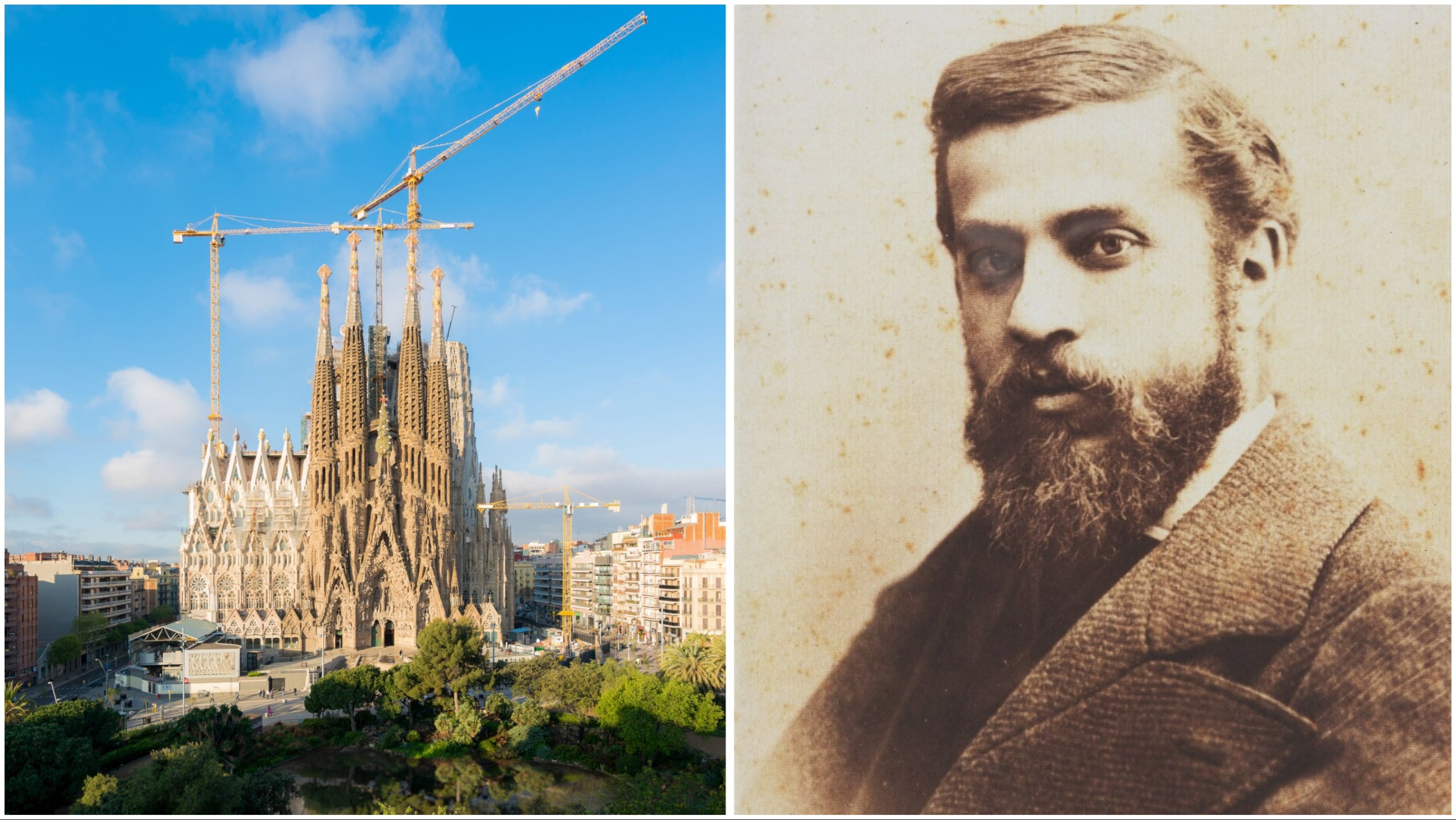
THE month of June is inextricably linked with Barcelona’s Antoni Gaudi.
This year will be extra special as a host of VIPs – including Pope Leo XIV and King Felipe – congregate at the site of his magnum opus this Wednesday to commemorate the centenary of his death.
LIFE
If you go to Barcelona, you’ll hear, read and see a lot about the characteristic Catalan art-form ‘modernism’ and its chief proponent, the architect Antoni Gaudi.
There are many good stories about Gaudi.
He didn’t like architectural drawings. His mind didn’t work that way. And he hated obvious geometric shapes – straight lines, regular circles.
Gaudi was feeling, instead, for complex shapes, based on medieval Gothic architecture. Models were his thing. Upside-down models.
To get his ideas right, he used cardboard and string designs, and to get the subtle lines exactly as he wanted them, he weighted his lengths of string with pebbles.
Animal fat was rubbed into the string to reduce friction.
On more than one occasion, he woke up in his apartment to find that, during the night, mice had gnawed his architectural model to ruin!
READ MORE: Spanish architect Antoni Gaudi one step closer to sainthood as Pope recognises his ‘heroic virtue’
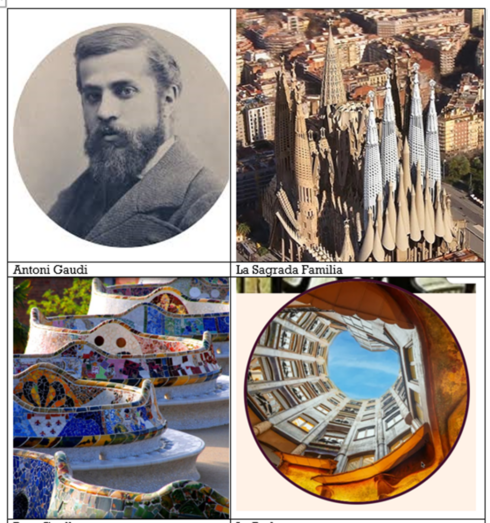
Gaudi was not a member of the glitterati. Religion and architecture filled his life, and he cared nothing for nice clothes, or girlfriends, or rodent-free accommodation.
In the street, shabbily-dressed, he was often taken for a beggar.
Though it’s by no means clear where Gaudi was born, there is no question that he was a passionate Catalan, and he believed that true creativity was impossible in northern Europe, where the skies were cloudy and the daylight unreliable.
It is Gaudi’s (and our) good fortune that Barcelona, in the years 1880 to 1930, was experiencing something special.
To tamp down Catalan unrest, successive Madrid governments encouraged companies to move to the north-east.
That’s why Spain’s industrial revolution happened in Barcelona.
The years of Gaudi’s maturity coincided with a ‘boom’: the flowering of Catalan self-confidence and the availability of vast sums of money.
Modernism was the result.
Barcelona exploded with exciting ideas and new projects (it is hardly an accident that a certain Pablo Picasso arrived in the city at exactly this moment).
SAGRADA FAMILIA
Spain’s most-visited monument is, in many ways, an oddity. Famously, it might even be finished soon!
Work began in 1882, but it started to get a bit special in the following year, when the architect, Villar, walked out and Antoni Gaudi took over.
READ MORE: Getting to know Gaudi: The Catalan architect’s masterpieces you’ve probably NEVER heard of
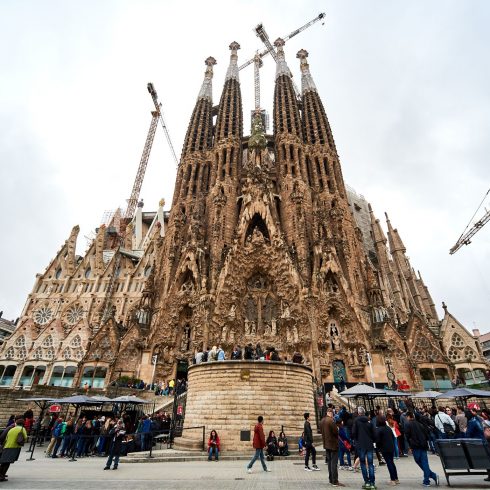
From that moment on it was one man’s passion. Gaudi invented a whole style of architecture for this project – ‘modernist gothic’: work has been slow because it is funded entirely by private contributions.
During the Spanish Civil War, anti-Franco forces very nearly burned it down.
When Gaudi died in 1926, it was only one-quarter completed. Today, he lies buried in the crypt.
LA PEDRERA
Its official name is the Casa Mila, but ever since work began in 1906, Catalans have known this block of flats affectionately as ‘La Pedrera’ (‘the stone quarry’).
It was shocking back in the day, with its wave-like stone shapes and twisted metal designs, but 21st-century observers recognise it as a masterpiece of Modernism.
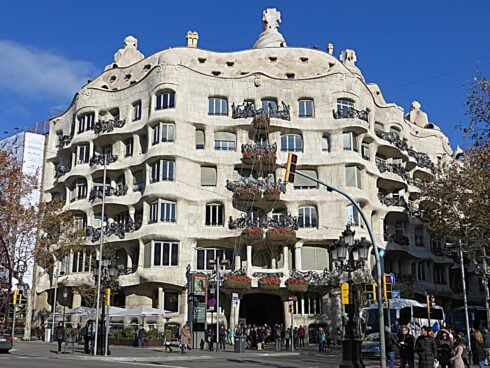
Various ideas incorporated into La Pedrera seem normal to us, but were revolutionary 120 years ago – a basement garage, open-plan apartments, a structure which supports itself and a magnificent roof terrace.
PARC GUELL
When it was decided, in the early years of the twentieth century, that Barcelona needed a park, there was only one man for the job – Antoni Gaudi.
He laid out this superb green space with its architectural elements in a flowing, colourful style which is two things at once: a massive modernist ‘gesture’, and one man’s unique vision.
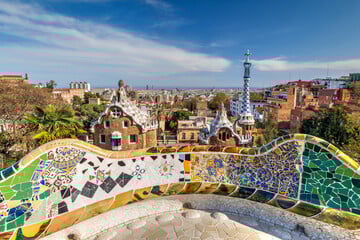
Its position on the Turo de Carmel hill gives it a commanding place (not to mention those terrific vistas) in the Barcelona cityscape.
DEATH
On 7 June, 1926, Gaudi (aged 73) was crossing the Gran Via de les Corts Catalanes in central Barcelona when he was hit by a tram.
People could see that he was hurt, but they thought he was a tramp, and ignored him. E
ventually a good Samaritan ran him to the hospital in a taxi, but it was too late. Gaudi died three days later, a fortnight before his 74th birthday.
SAINTHOOD
Antoni Gaudi was a sincere Christian.
A move is afoot in Catalunya to have him declared a saint. The first step came in 2025, when the Vatican announced that he is now ‘venerable’.
Click here to read more Spain News from The Olive Press.