

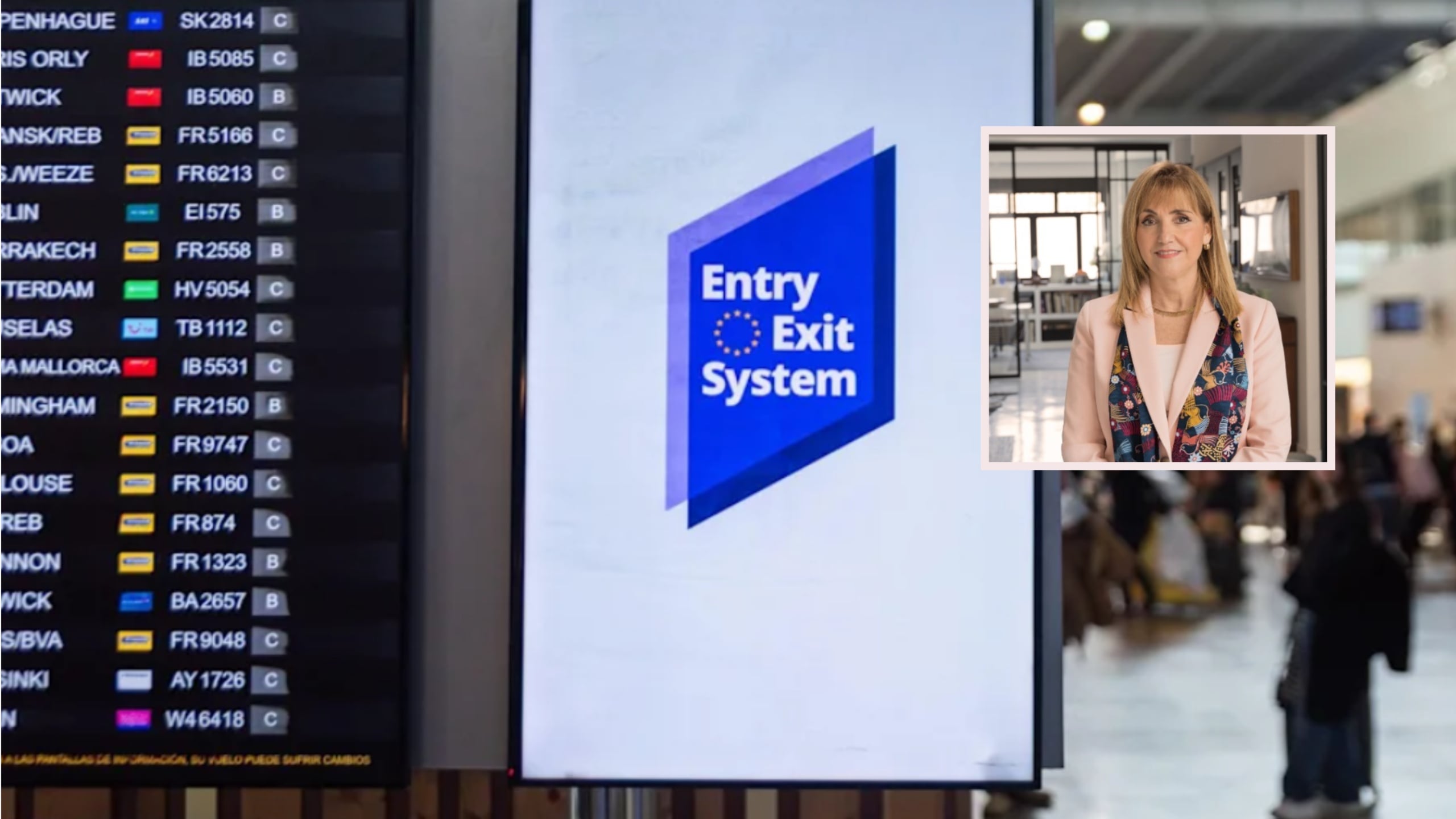
EUROPE’s entry and exit system (EES) is causing frustration for global travellers with 3+ hour lines, making Brits most likely to reconsider trips into the Schengen Area for holiday.
Vacationing in Spain may have just gotten a lot less appealing for tourists needing to enter through the digital EES.
An analysis by the World Travel & Tourism Council (WTTC) found that around a third of travellers will dodge the Schengen Area altogether if EES queues are consistently three to four hours long.
The council surveyed more than 2,500 people to see who may avoid visiting the 29 countries within the EU’s border-free travel zone given the prolonged lines caused by the new EES.
UK holidaygoers are the most likely to cut Schengen from their plans, with 39% of Brits saying they’d be less likely to go with a 3+ hour delay.
READ MORE: Action demanded to stop passport control delays for UK travellers at Costa Blanca airport
Americans and Canadians are tied for second at 33%, followed by Australians with 27%.
Europe’s new travel management is putting over 41 million potential visitors at risk, a number that could prevent around $45 billion in visitor spending through their most important source markets.
The UK represents the largest international source market for Spain, accounting for more than 20% of all inbound arrivals.
Within 2026, Spain is projected to welcome around 17 to 18 million tourists from the United Kingdom.
However, these numbers could change if people decide to change their route to avoid the EES.
Long lines and extensive stops have already been complained about by tourists entering Spain.
An American flying into Barcelona faced a line exceeding two hours, claiming she just barely made it to her gate as the flight was boarding.
‘The concept makes sense on paper,’ Instagram user @shaynamack shared in a post documenting her experience with the long queues. ‘The execution feels like nobody accounted for actual peak-season travel volume or what this experience would actually look like for travelers on the ground.’
However, others have said their airport journeys into the Schengen Area have been ‘a breeze.’
A separate tourist entering Barcelona said it only took them seven minutes.
‘I went there expecting hell but it was brilliant,’ they said. ‘They were so organized and efficient. I was nicely surprised!’
WTTC President & CEO, Gloria Guevara said there is good news in terms of solutions that already exist to help the current issues with EES.

‘The challenge now is not whether EES should proceed, but how governments, border authorities and the Travel & Tourism sector work together to ensure implementation is as smooth as possible,’ Guevara said.
The EES was launched in October 2025, but became fully operational on April 10, 2026.
In a report from May, a spokesperson with the European Commission said the system is ‘fully operational across all Schengen countries and works well at almost all border crossing points.’
Since its opening, an estimated 80 million people have crossed into the Schengen borders.
So far an estimated 35,000 were refused, with 900 people getting flagged as security threats.
The participating nations of the Schengen Area include Austria, Belgium, Bulgaria, Croatia, Czechia, Denmark, Estonia, Finland, France, Germany, Greece, Hungary, Italy, Latvia, Lithuania, Luxembourg, Malta, the Netherlands, Poland, Portugal, Romania, Slovakia, Slovenia, Spain, Sweden, Iceland, Liechtenstein, Norway and Switzerland.
Click here to read more Spain News from The Olive Press.