

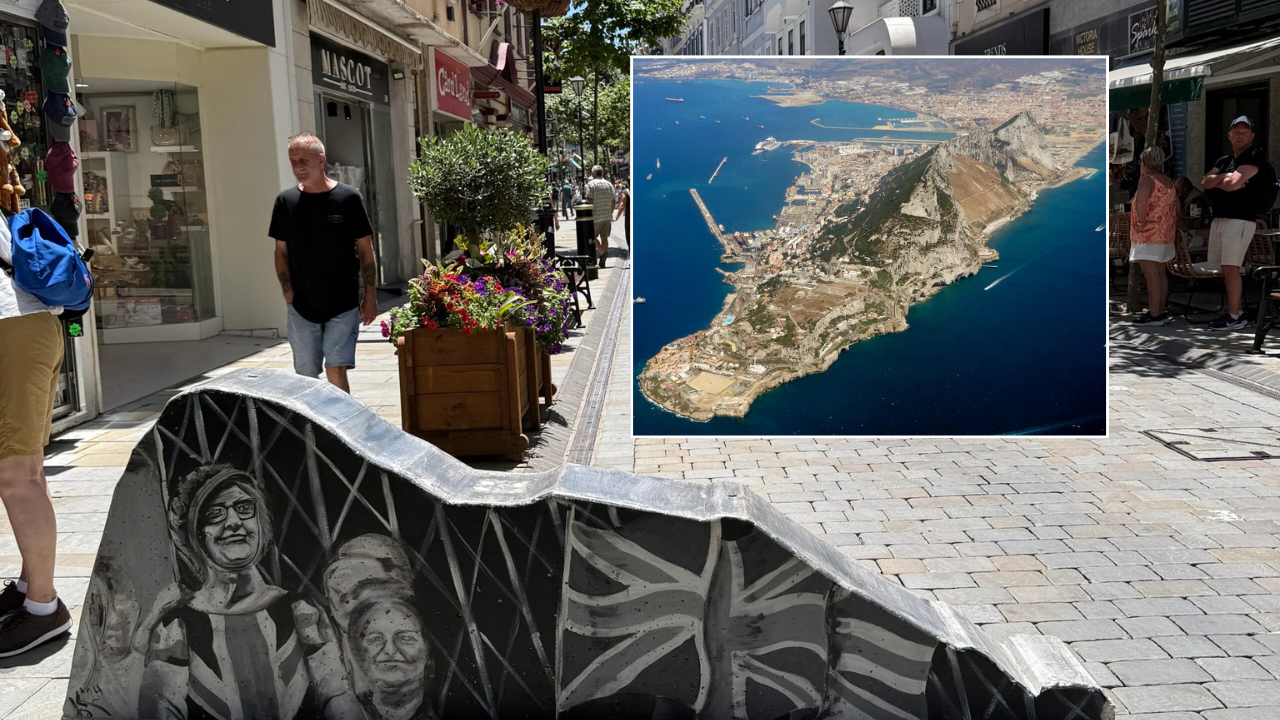
FOR Layla Igancio, a sales beauty advisor, and for many other citizens of the Rock, their territory will never be quite the same when July 15 arrives.
Layla was born and raised in Gibraltar and feels fortunate to be part of a welcoming and secure community.
She tells the Olive Press she often leaves her car keys inside the vehicle when she goes shopping and has always felt she lives in an ‘exceptionally safe place’.
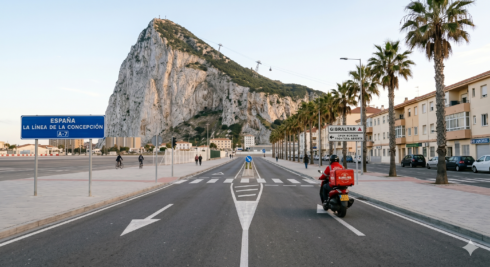
But now, as construction workers have started removing the barriers at the border with Spain, Leyla is not so sure.
“I am scared to be honest,” she explains. “We won’t know who will come in.”
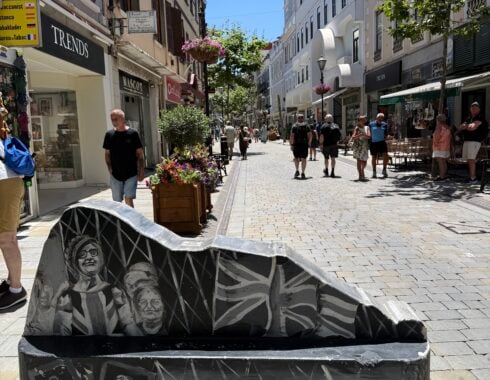
On Main Street, where tourists flock to browse the shops and buy duty-free cigars and alcohol, many Gibraltarians share the same concerns.
Lisette Hayone, working in SM Seruya perfumary, says that the future, quite frankly, is ‘scary’.
“I hope for the best for my son,” she says. “We grew up here, and we were spoiled. We were among the lucky ones.
“But will that way of life remain the same when anyone can simply come in?”
To address residents’ concerns, the government has announced the border will be replaced by a new fence stretching ‘from sea to sea’, creating a 150-metre corridor between the airport and the current border crossing.
According to the government, the new structure will have ‘advanced surveillance technology’, including facial recognition.
But for people such as Layla, this is not enough.
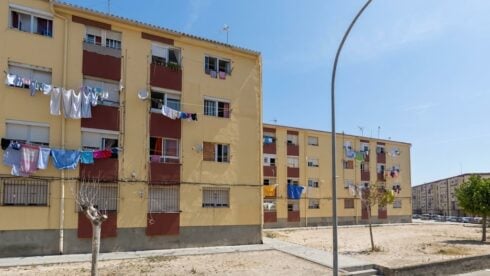
She is now considering installing security bars on windows of her ground-floor apartment to make her home more secure.
The uncertainty is not only around the security.
The territory was established in 1160, but in 1704 it was captured by Anglo-Dutch forces and then ceded to Great Britain in 1713.
Although the sovereignty of Gibraltar has been a point of contention in Anglo-Spanish relations, people love their territory with all its Britishness and showed that in a referendum in 1967 and in 2002.
Now, with the new treaty coming into force, some people are unsure what it will mean for Gibraltar’s sovereignty.
“We are sceptical. Are we going to lose our sovereigny little by little?” Paul Vassallo, an English and Spanish teacher who is a Gibraltarian of Maltese descent, says.
“We are a small community and we want to remain that way.”
Paul has an in-depth knowledge of the territory and, while sipping a glass of soda water at an Starbucks branch, depicts a history timeline of Gibraltar starting 1702.
He mentions that at certain points the Spanish entered the territory and now more might come.
Of course not everybody thinks like Paul.
“The new treaty doesn’t affect our sovereignty in any way,” Matvey Celcecia, a young Gibraltarian studying politics at a UK university says.
“It is good for us. It will be good for business and it will be good for thousands of workers who cross the border every day.”
Alongside the removal of the border, a new VAT system will also be introduced, and many people expect prices to rise.
Even Rafael Benitez, a Spanish worker who crossed the frontier every day to sell refreshing piña coladas at Cuba 29, a booth in the Grand Casemates Square, is not sure what the new treaty will bring.
“I am still curious about what will happen. The decision is good for crossing. But I don’t know changing taxes will it be good for business or not.
While a new future casts its shadow on Gibraltar, Lisette Hayone summs it best of all: “All is in the air. We are scared. We just pray for the best.”
Click here to read more Gibraltar News from The Olive Press.



I completely understand the security concerns being raised here…
Gibraltar has enjoyed an exceptionally safe and secure way of life for generations. Now the physical border is coming down and residents are seemingly expected to put their faith in facial recognition and “advanced surveillance technology”.
This isn’t anti-Spanish… thousands of decent, hardworking Spanish people cross the border every day and are vital to Gibraltar.
But let’s not pretend there isn’t an obvious question here… if you make it considerably easier for everyone to move freely in and out of a tiny territory, don’t you also risk making it easier for criminals to do exactly the same?
When lifelong residents who once felt safe enough to leave their car keys in the car are now talking about fitting bars to their windows, I think their concerns deserve rather more than being dismissed as “fear of change”. I sincerely hope they are proved wrong…
Because politicians can sign treaties and celebrate “historic agreements”… but if Gibraltar loses the unique sense of safety and security its residents have enjoyed for generations, who exactly will take responsibility for putting that right?