
THE fishing town of Estepona turns quiet, while the beat of the drums makes your neck hairs stand up straight.
The smell of incense, the singing in the distance and the men dressed in white blouses, waiting patiently.
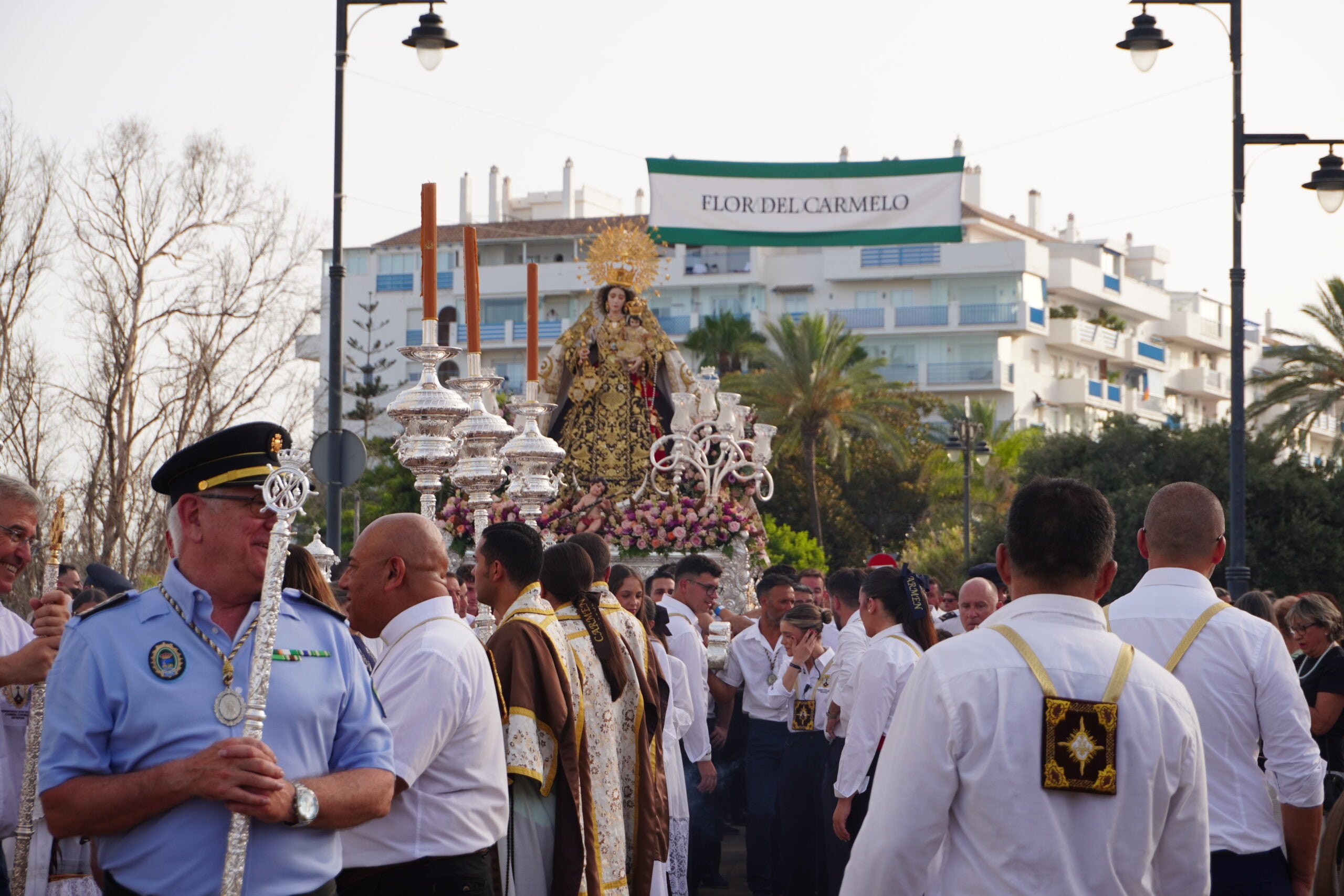
Then a seven-foot statue is hoisted out of a church, with crowds cheering as the 90 men carrying her lift her up.
The Virgen del Carmen tradition, celebrated in several coastal towns in Spain on July 16, drew hundreds to Estepona on this day.
During the procession, the statue is carried from the church to the sea, decorated in flowers and prayed to by believers.
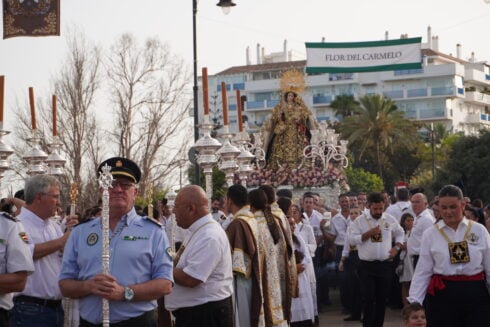
Carmen is known as ‘The Star of Sea’ and is the Saint of the fisherman, sailors and the navy.
People traditionally pray to her for an abundance in catch and fewer storms.
“She is the protector of the sailers,” says Luis Linares, 52.
He is originally from Spain but grew up in London most of his life.
Now he has swapped the gloomy clouds for the sun once again: “Today is a big day.”
The origins of the story dates back to the 12th century in what is present-day Israel.
In Spain, Carmen has over time been transformed into the protector against the dangers of the sea.
In Estepona, the tradition is more alive than ever; thousands of people have joined together – locals, and tourists, as the event gains more attraction each year.
“Estepona is originally a fishing town,” explains Linares: “I’ve been in Estepona since 2002, every year the event is getting busier and busier.”
The men swing the statue of Carmen slowly, as if in a trance, from left to right, while the voice of a woman singing is the only sound filling the silence on the square.
They then start the journey, heading towards the beach, where they will let their beloved Saint meet the sea once again.
People have gathered along the path Virgen del Carmen will take.
You can hear her coming from afar, she is being accompanied by a percussion band, playing traditional songs, called coplas.
The crowds cheer as she passes by.
Jose Luis, 85 sits with his wife and friend further down the road while he waits patiently for Carmen to pass.
He has lived in Estepona for 51 years. “It’s a beautiful tradition,” he says, “and important for our people.”
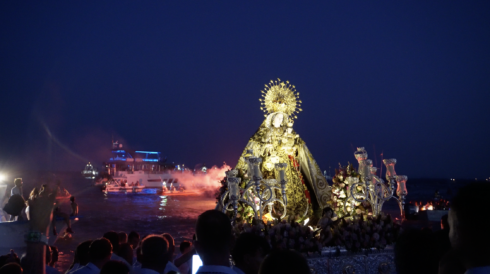
In the sea, boats filled with friends and families have gathered. Once the statue is near she is being lifted onto a traditional boat.
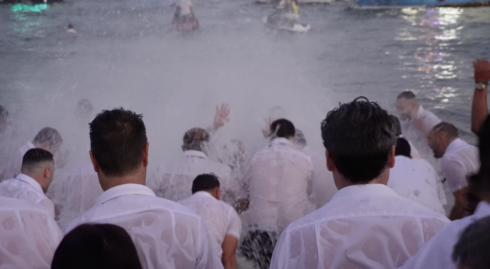
The group of men push her into the water, they sing an ode to their beloved saint, before jumping in themselves.
Carmen floats around at sea for half an hour, while the men in their soaking white blouses and black pants splash around in the water. Once she returns, it’s time to make the return journey home.
For the next year, Carmen will be in church, waiting to meet the sea again.
Click here to read more Spain News from The Olive Press.