

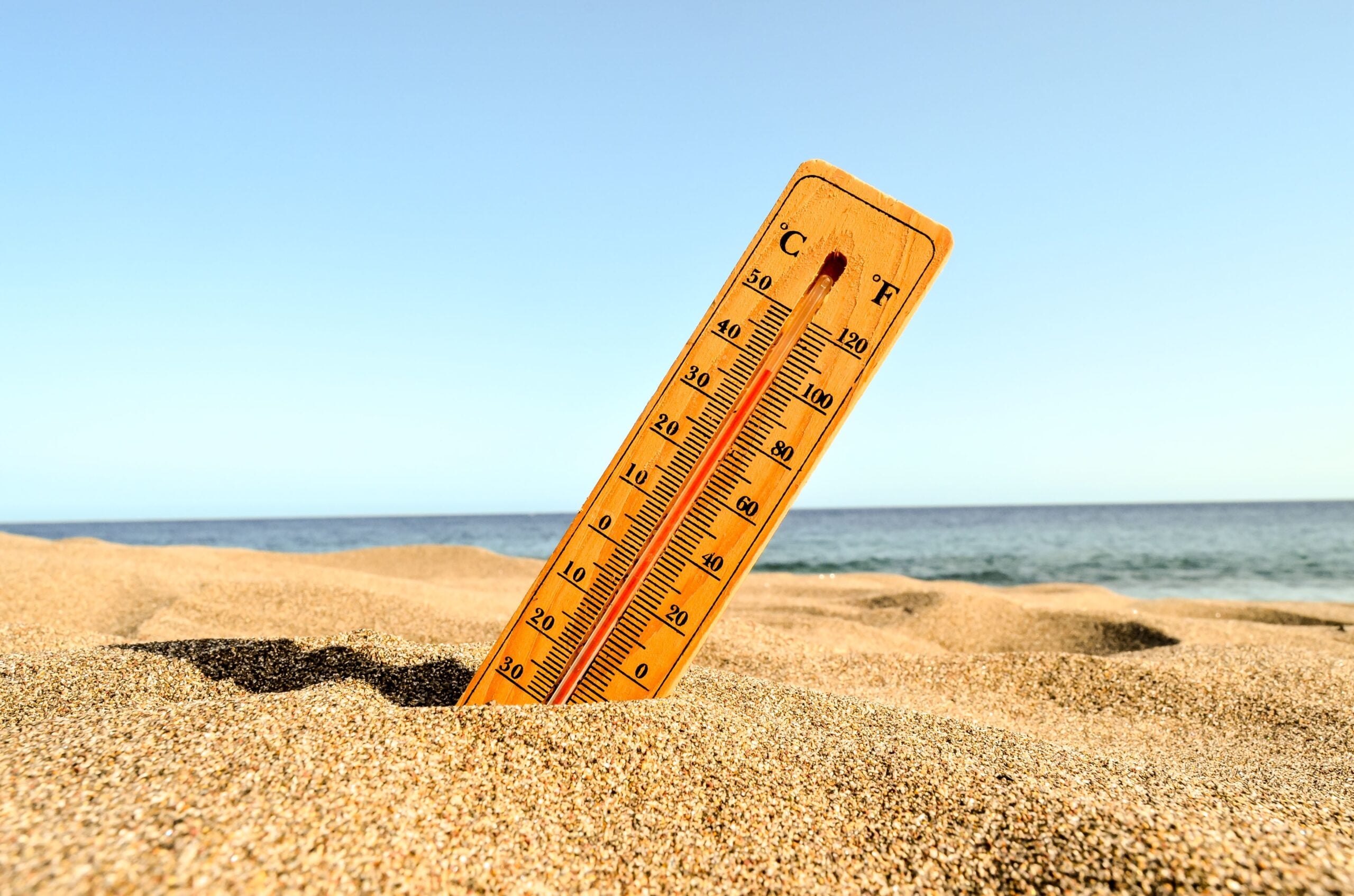
A NEW study has suggested that cleaner air over Europe could be making Spain’s notorious summer heatwaves more intense – although scientists stress it is only one part of a much bigger climate puzzle.
While soaring temperatures are overwhelmingly blamed on climate change and greenhouse gas emissions, new research suggests efforts to cut air pollution may also be having an unintended side effect.
By reducing the tiny particles that help reflect sunlight back into space, cleaner skies could be allowing more heat to reach the ground and intensify heatwaves.
Researchers from the Barcelona Supercomputing Centre found that lower levels of tiny airborne particles in the atmosphere known as sulphate aerosols may be strengthening extreme heat.
The study, published in the Geophysical Research Letters journal, suggests that clearer skies allow more solar radiation to reach the Earth’s surface and may also influence atmosphere circulation.
This can increase the likelihood of persistent high-pressure systems that trap hot air over Western Europe.
However, some climate experts point to other reasons as the main causes of Europe’s worsening heatwaves.
READ MORE: Open Cosmos shows how satellites are helping fight wildfires in Spain
According to the World Weather Attribution (WWA) initiative, the overwhelming driver of the increased temperatures remains human-caused climate change, fuelled by greenhouse gas emissions from burning fossil fuels.
The group says Europe is warming around twice as fast as the global average, with extreme heat events becoming dramatically more likely than they were just a few decades ago.
Researchers estimate that heatwaves like the ones currently seen across Spain and much of western Europe this summer would have been virtually impossible during the 1970s.
Today’s temperatures are significantly higher than those produced by similar weather patterns in the past.
Meteorologists say the current heatwave has been triggered by a so-called ‘heat dome’, which is a stubborn area of high pressure that has become locked over Western Europe.
The dome is claimed to draw scorching air in from North Africa while preventing cooler weather systems from breaking through.
Scientists say that warmer global temperatures mean these familiar weather patterns now produce much more intense and longer-lasting heatwaves than they once did.
Rather than contradicting climate science, experts say the Barcelona study highlights what is known as the ‘unmasking’ effect: cleaner air has removed some of the temporary cooling once provided by pollution, allowing the full impact of greenhouse gas warming to become more apparent.
The researchers behind the study emphasise that reducing air pollution remains essential for public health, while scientists agree that cutting fossil fuel emissions remains the most effective way to limit future heat extremes across Spain and Europe.
Laurie Parsons, a Human Geography reader from the University of London, has stressed that ‘people should be very concerned’ about the continued heat beating down on European countries.
“Heat stress is currently the world’s most lethal environment hazard with almost half a million people dying each year from heat-related illnesses,” Parsons said, quoting the WHO.
Extreme heat is estimated to have led to 1,000 excess deaths in Spain in June – the highest figure for the month since records began.
Click here to read more Spain News from The Olive Press.