
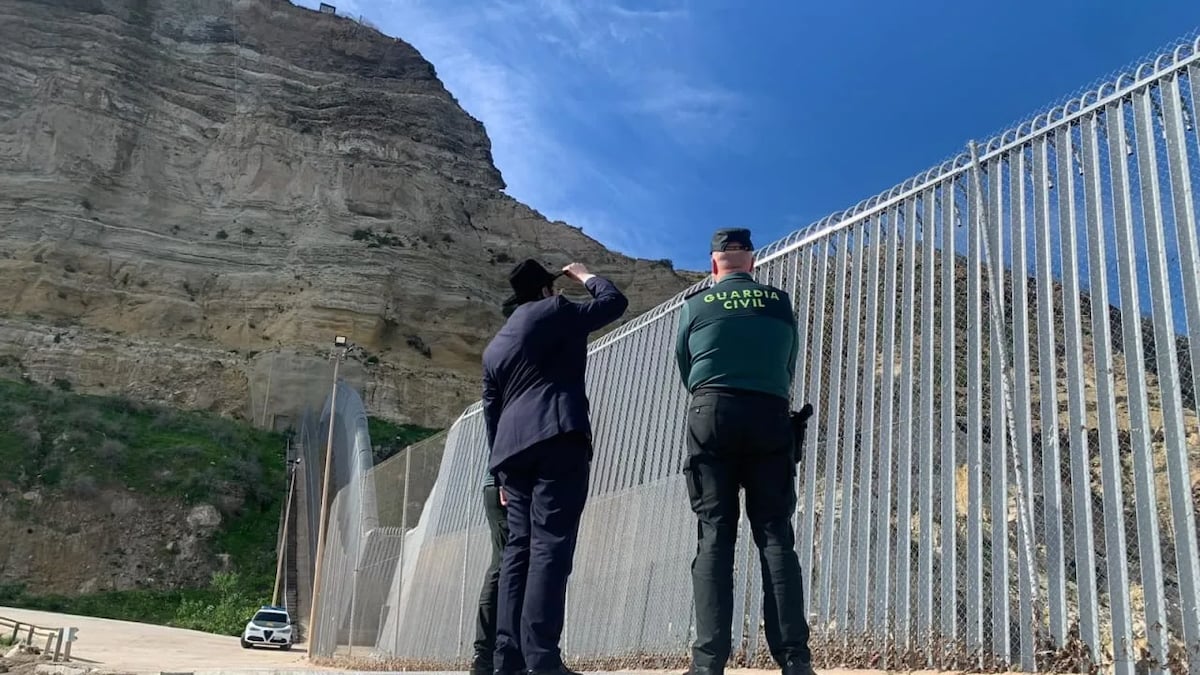
CEUTA is a city on edge again as it prepares for a rumoured second mass crossing.
Just over two weeks after an estimated 72,000 people crossed into the Spanish enclave from Morocco in the space of a single day, security forces are braced for a repeat performance this Saturday (Aug 15) a date that has spread rapidly across social media as the target for a new mass crossing attempt.
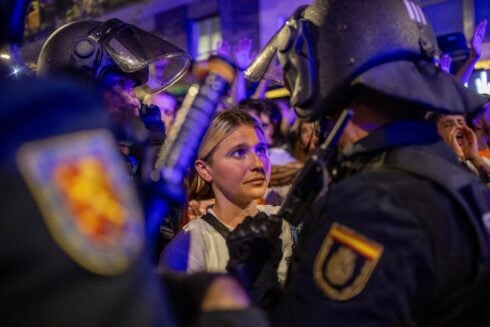
Military leave in Ceuta has been cancelled. Extra police, naval frigates and a floating sea barrier have all been deployed.
READ MORE: Morocco militarises border with Ceuta amid growing fears of new mass crossing on August 15
But whether Saturday actually brings anything like a repeat of July 30 remains unclear, even to the people tasked with planning for it.
Here is what has happened so far, why August 15 matters, and what remains unresolved.
WHAT HAPPENED ON JULY 30-31
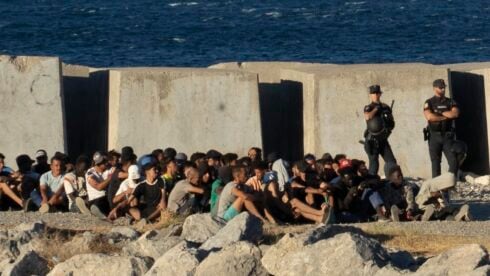
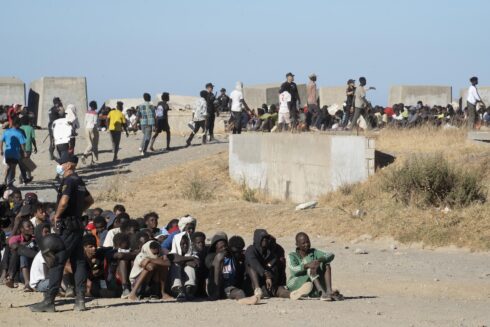
Spain’s Interior Ministry says around 72,000 people crossed into Ceuta from Morocco over July 30 and 31 — most swimming or wading around the maritime breakwaters, others crossing through the land border area.
It is one of the largest mass-crossing events ever recorded at Ceuta’s border.
At least 141 people are believed to have died in the crush, according to figures cited by a Moroccan human rights organisation, many of them trampled or drowned as crowds pushed towards the fence.
The vast majority who crossed returned to Morocco within days. Spanish authorities say some 70,000 had gone back by August 4, either voluntarily or through coordinated returns, after finding no food or shelter waiting for them in Ceuta.
However a two-day Olive Press investigation estimated that around 10.000 remained, including hundreds, if not thousands, of unaccompanied children, in a city of roughly 84,000 people. By a week ago 1400 children had been officially registered.
It was the second mass crossing of its kind in five years. Around 8,000 to 12,000 people crossed in similarly dramatic scenes in May 2021, an episode widely blamed on Morocco loosening its border controls during a row with Madrid over Western Sahara.
READ MORE: Snapshots of Ceuta still counting the cost of 72,000 people arriving from Morocco
Small but deadly rushes have happened before too – 23 people died trying to storm the Melilla fence in June 2022, and 14 died near Ceuta in February 2014.
THE ‘HOAX’ BEHIND THE CROSSING
Exactly why so many people moved at once in July remains disputed, and readers should treat the competing explanations with some caution.
On June 29, Spain’s Supreme Court issued a narrow, technical ruling on migrant returns. It found that people intercepted while swimming towards Ceuta or Melilla – rather than climbing the physical border fence – could not be subject to the fast-track ‘hot return’ procedure used at the fence itself.
It did not mean anyone reaching Ceuta could simply stay in Spain, only that they were entitled to an individual administrative process before any return.
That nuance was lost in the version that spread through Facebook, WhatsApp and TikTok groups used by would-be migrants in Morocco, where the ruling was widely – and wrongly – interpreted as a green light to cross.
Spanish and Moroccan officials, including Prime Minister Pedro Sanchez, have blamed organized networks for deliberately spreading that misreading, alongside maps and practical crossing advice. Fact-checkers have confirmed viral posts did selectively cite the ruling this way.
Not everyone is convinced that is the whole story. Some observers have pointed to the wider rivalry between Morocco and Algeria.
Sanchez travelled to Algiers on July 20 – just ten days before the crisis broke – in the first such visit in four years, working to repair a relationship that Morocco regards with suspicion.
Some analysts believe Morocco eased its own border controls, deliberately or through inaction, as a pointed message to Madrid, echoing the pattern seen in 2021.
Morocco denies any responsibility, and says its forces have intercepted hundreds of thousands of attempted crossings in recent years.
WHY AUGUST 15
Since the start of August, Spanish security services have been tracking calls circulating online – mostly on Facebook, Instagram and TikTok – for a repeat mass crossing on August 15. One Facebook group involved has more than 100,000 members.
Some reports have referred to the campaign by the name ‘Asalto Karyaj a Ceuta,’ or Karyaj assault on Ceuta, a reference to slang term for the border wall.
Spain’s Defence Ministry has cancelled leave for military personnel in Ceuta from August 13 until further notice, covering logistics, engineering, artillery, cavalry and medical units.
Extra Guardia Civil officers and National Police intervention units have been sent in, alongside naval frigates, a floating sea barrier, drones, divers and a helicopter.
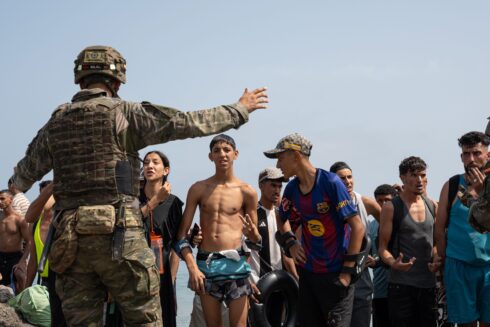
Morocco says it has stepped up its own security around Tangier, Fnideq and other departure points, with gendarmerie units intercepting people believed to be heading for the border before they even arrive, and shutting down access routes.
Moroccan digital monitoring has also led to several arrests over online posts promoting collective crossing attempts.
Crucially, officials on both sides of the border are careful to say this is precaution, not prophecy.
Nobody is claiming to know for certain that August 15 will bring a repeat of July 30 – only that it would be reckless not to prepare for one.
THE CHILDREN LEFT BEHIND
While attention turns to this weekend, a second crisis from the July crossing is still in full effect.
READ MORE: Inside Ceuta: thousands of migrant children on the pavement – and thousands more in the hills
Spain’s Youth Minister, Sira Rego, said on August 7 that 1,342 unaccompanied minors had been formally registered in Ceuta -though NGOs and residents believe the true number is higher.
The Olive Press has seen thousands of young migrants across the city, almost all with nowhere to go.
The city’s official reception capacity is around 90 children. It was already holding some 1,100 unaccompanied minors before the July crisis even began.
Images of children sleeping on Ceuta’s streets forced the opening of temporary shelter in two schools, with more sites under review.
Rego said the profile of arriving children has shifted since 2021, with more unaccompanied girls and more very young children now arriving.
Madrid wants to move minors out of Ceuta to reception centres on the mainland, with Rego saying in early August she hoped transfers could begin “within a few weeks,” prioritising girls and under-13s. But the plan has run straight into a political wall.
Spain’s Sectoral Commission on Childhood and Adolescence was due to discuss the transfers on August 13.
Three regional governments – Extremadura, Aragón and Castilla y León – said they would not even attend, all three reliant on far-right party Vox, whose regional leaders have refused to take part in redistributing the minors.
The Partido Popular, Vox’s usual coalition partner, has said publicly that regions are legally obliged to comply, a statement that is straining their alliances in several regions.
Spain’s public prosecutor has now instructed prosecutors to intervene wherever regions refuse to take their share.
Morocco, for its part, says it is willing to help identify and return unaccompanied Moroccan minors – though Spanish and Moroccan sources give conflicting accounts of how much progress that offer has actually made.
THE VIEW FROM THE GROUND: SUR ACOGE AGENCY
Sur Acoge, one of the region’s longest-established migrant and refugee support organisations, has been working in Ceuta throughout the crisis. Its director general, José Miguel Morales, spoke to Olive Press about what he’s seen so far, and what he expects to happen on Saturday..
On the current situation, Morales said the charity’s focus remains on finding and protecting unaccompanied children and other vulnerable arrivals — mothers with children, and LGBTQI+ people — who have not yet entered the formal protection system.
Sur Acoge says it has supported hundreds of people with food, identification of needs and legal support, working alongside other charities, residents and the Autonomous City authorities as new reception spaces for minors are opened.
Asked for his broader view, Morales said the priority has to be guaranteeing the rights of everyone who has arrived, “especially minors and other profiles in situations of great vulnerability.”
He argued that the protection of children and of life itself “cannot depend on the political or economic interests of governments,” and said the answer cannot keep being to look away or feed a narrative of crisis .
Morales says the future must instead mean safe routes, stronger reception capacity, and people placed at the centre of the response, rather than bigger border walls and stronger recriminations.
On whether more crossings are coming on Friday, Sur Acoge was careful not to speculate. Forecasting new arrivals, Morales said, is “the responsibility of the authorities,” not his organisation.
If new arrivals do happen, he said, the charity’s priority “will remain the same: to identify the most vulnerable people, especially minors, and ensure they can access protection and care.”
Looking further ahead, Morales linked the recurring crises to the EU’s Pact on Migration and Asylum, now being implemented, warning that “as long as this measure remains in force, this type of crisis will continue to occur.”
He described Ceuta and Melilla as cities “especially exposed to migratory dynamics and to the inequalities between north and south,” and said that without sufficient safe and legal routes, similar scenes are likely to happen again.
BACKGROUND: WHAT IS CEUTA
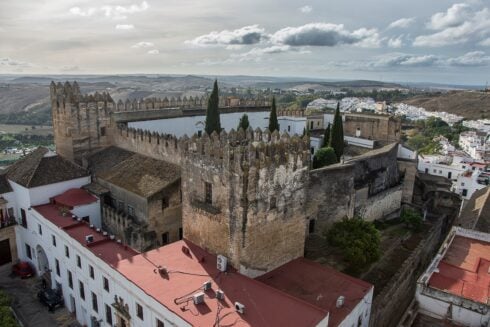
Ceuta is a Spanish city of around 84,000 people on the North African coast, cut off from mainland Spain by the Strait of Gibraltar and bordered on land only by Morocco.
Spain has held the city since 1580. Along with Melilla, it is one of only two Spanish cities on the African continent.
Morocco has never recognised Spanish sovereignty over Ceuta and Melilla, regarding both as territory it expects to eventually reclaim.
That position resurfaces periodically in Moroccan state-aligned media, and it colours every crisis at the border, since Rabat’s cooperation on migration control is never something Madrid can fully take for granted.
THE WIDER FALLOUT
The crisis has already rattled the EU. Italy briefly suspended parts of the Schengen arrangement with Spain in response to footage of the crossing, and several European governments have criticised Sánchez’s handling of migration policy.
Spain’s interior, foreign, defence and presidency ministers are all due to appear before parliamentary committees to explain the government’s response. The opposition PP wants Sánchez himself to testify.
EU Migration Commissioner Magnus Brunner has argued Brussels should be ready to use visa and trade policy as leverage over Rabat, warning that European border security cannot keep depending on “the goodwill of one neighbouring state.”
Ceuta’s regional president, Juan Jesús Vivas, has been openly critical of Morocco and has argued that responsibility for securing what is, in effect, Europe’s only land border with Africa should ultimately sit with Brussels — not with Ceuta alone.
WHAT COULD HAPPEN
Nobody with direct experience on the ground is willing to put a number on Friday.
Asked directly whether more crossings are expected, Sur Acoge declined to speculate. Forecasting new arrivals, or their scale, “is the responsibility of the administrations,”Morales said.
That reluctance to guess is echoed by Spanish and Moroccan officials, whose show of force this week reflects readiness rather than a confirmed prediction.
What Sur Acoge is clear about is what happens next, whatever the scale of any crossing.
If new arrivals do occur, Morales said, the charity’s priority “will remain the same: to identify the most vulnerable people, especially minors, and ensure they can access protection and care” – the same triage that has defined its work since July 30.
In his view, Ceuta and Melilla are simply more exposed than most European territory to the pressures building along the Mediterranean’s southern edge – and will keep seeing episodes like this one for as long as legal, safe routes into Europe remain scarce.
Click here to read more Explainer News from The Olive Press.