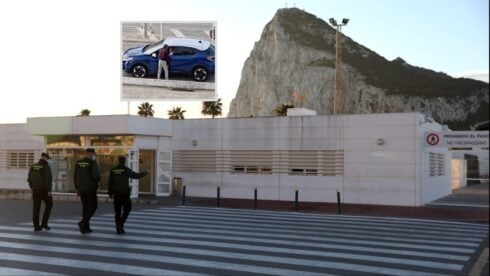
CEUTA is used to migration. The Spanish city sits on the north coast of Africa, with Morocco immediately beyond its frontier.
For years its fences and breakwaters have been the scene of countless attempts to enter European territory.
With a population of 83,000, however, nothing in its recent history compares easily with what happened at the end of July.
READ MORE: Inside Ceuta: thousands of migrant children on the pavement – and thousands more in the hills
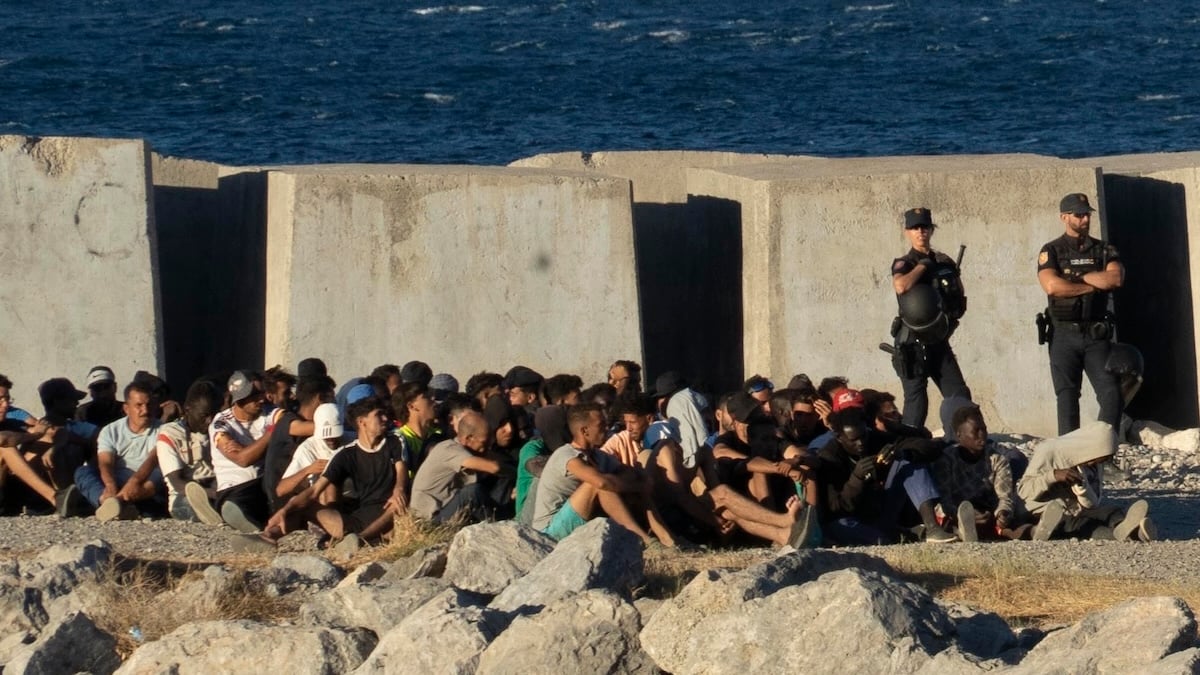
On July 30 and 31, tens of thousands of people entered the enclave in little more than a day. Many swam around the maritime barriers, while others crossed through the border area.
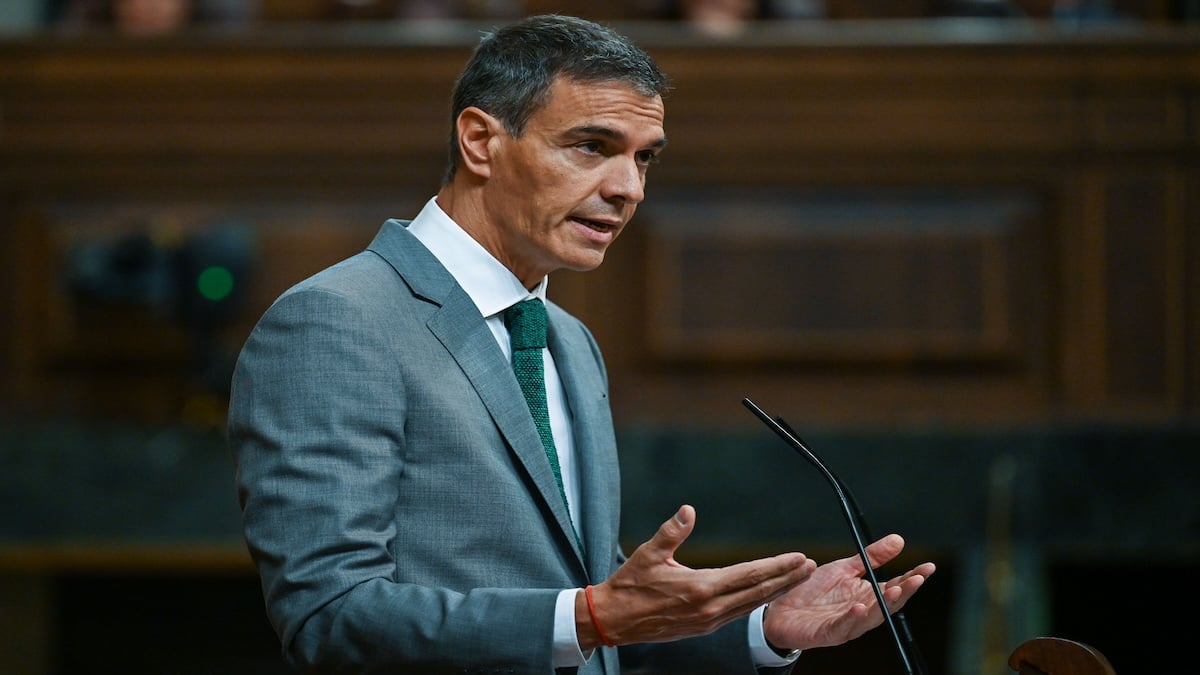
The videos made international news, sparking outrage from right wing parties around Europe and leading to Italy even closing its borders with Spain by suspending the Schengen agreement.
Spain’s Interior Ministry confirmed the number of entries reached around 72,000, but insisted that some 70,000 had returned to Morocco by August 4.
Our 48 hour trip suggests the exact opposite. The Olive Press believes that the figures are likely out by around 10,000.
The locals of Ceuta are nervous in the extreme.
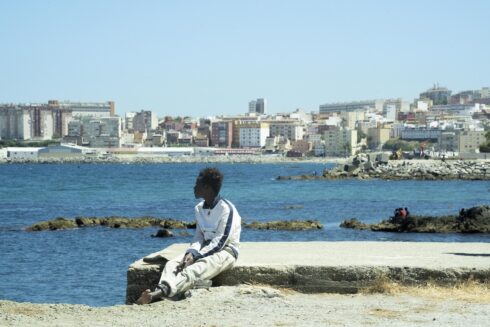
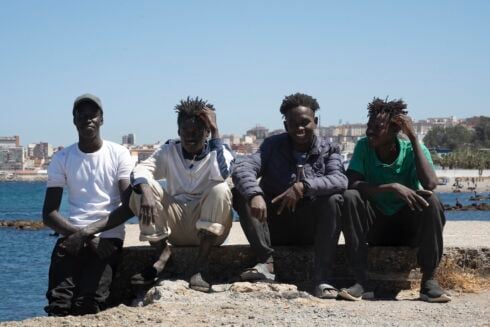
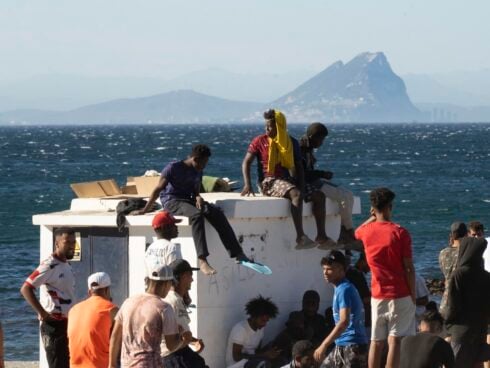
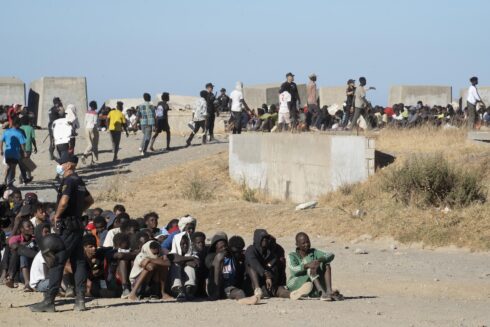
What we saw were thousands of migrants sleeping on beaches, on benches, beside roads and in the hills, while hundreds of unaccompanied minors queued up to be registered for the right to apply for new lives in Europe.
READ MORE: The history behind Ceuta and Melilla – how Spain came to own two cities on mainland Africa
While police and social workers were working around the clock trying to identify those who remained, even the authorities disagreed over how many were still in the enclave.
The explanation for the sudden rush lies in what happened online in the weeks before.
July 8 seems to be the start of the ticking timebomb with Spain’s Supreme Court ruling that migrants intercepted while swimming towards Ceuta or Melilla could not simply be subjected to the fast procedure commonly known as a ‘hot return’.
The court ruling was narrower than many of the messages later circulating online suggested. And crucially it did not mean that anyone who reached Ceuta could simply stay in Spain.
Yet that was how the news was being interpreted in some of the Facebook and WhatsApp groups used by would-be migrants.
Several boys we met said they had heard that this was a moment when crossing might be easier. Spanish investigators are now looking at the role played by social networks, also including TikTok and Instagram, in spreading those messages and directing people towards Ceuta.
Javier Cepero, a 21-year-old nursing student born and raised in Ceuta, was less interested in theories than in showing us what had happened to his city.
He offered to drive us through neighbourhoods and areas that he thought reporters arriving from outside would otherwise miss.
He was clearly emotional as he explained friends and neighbours had actually ‘become nervous about going out’ and felt that Madrid had left Ceuta to cope with a crisis far beyond what a city of 85,000 people could reasonably absorb.
“We were very scared,” he told us and said he was ‘convinced’ the movement had been planned in some form, a view we heard repeatedly during our time there, though one that goes further than the evidence currently available.
It was not difficult to understand where the sense of being overwhelmed came from. As we drove up towards the CETI, the official immigration centre, high up in the hills above the main city, the strain on Ceuta’s reception system was already visible from the roadside.
Men were sleeping under trees, on patches of scrub and wherever they could find a little shade. The centre itself has room for 512 people, but earlier that week we were told more than 900 were already inside and over 1,000 more were waiting patiently nearby.
It was much the same down at Playa Benítez, where groups of migrants were sleeping in the open with their belongings packed into plastic bags beside them.
Much of the story has been largely overlooked by the international media: that in the melee that unravelled at least 141 people lost their lives.
Many of them were minors, who were trampled on or drowned as they approached the border fence.
It must have been agonising for many families around Africa as they waited for news for days that their loved ones had survived.
A number of the boys we spoke to had taken their phones into the water with them.
Some lost them during the swim; others reached Ceuta only to find that the salt water had destroyed them.
READ MORE: Inside Ceuta: thousands of migrant children on the pavement – and thousands more in the hills
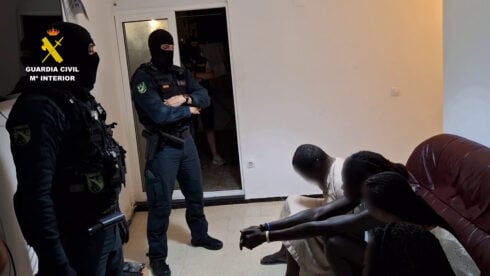
A Guardia Civil officer we spoke to at the border mentioned a Moroccan mother he knew.
Her son had crossed towards Ceuta and then ‘completely disappeared’ from contact.
“For three days she heard nothing. She did not know if he had made it, if police had picked him up or if he had drowned. When he eventually managed to call, she learned he was alive. She was so relieved,” he said.
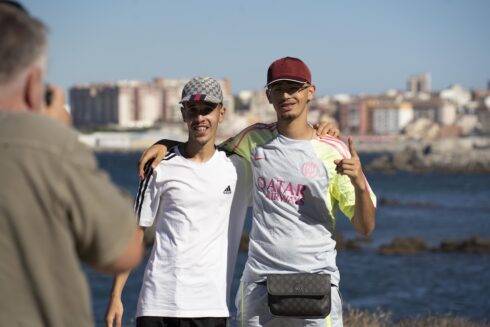
In the barrio of El Príncipe we saw young migrants sleeping wherever there was room, some on mattresses, some directly on the ground.
Neighbours were taking them food, clothes and medicine, and writing down names and ages by hand for boys who had not yet been properly registered.
Some families had taken children into their homes. The neighbourhood is often described from outside as one of Ceuta’s most troubled areas. What we found was more complicated than that.
A few streets away in Los Rosales, Sabah Hamed’s house had become a place people came to when they needed the basics.
Clothes were piled over beds and chairs, boxes of food filled the rooms and neighbours were constantly moving in and out, cooking or sorting what had been donated.
Sabah told us around 400 people had been passing through a day. Most came for something simple: food, water, clean clothes, a shower.
“There was simply nowhere for them to sleep and nowhere to clean up. We helped them and afterwards they went back to the city,” he said.
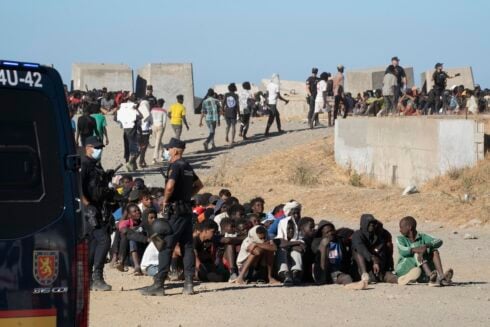
By the end of our second day, Ceuta felt less like a city divided into residents and migrants than a place in which everyone was waiting for something.
Ceutí families wanted their streets, services and sense of normality back; young migrants wanted to know whether Spain would let them move on, where they would sleep and when somebody would finally tell them what came next.
Javier had shown us the fear that the crossing had left behind, while many of the young boys sleeping outside showed us the uncertainty on the other side of it.
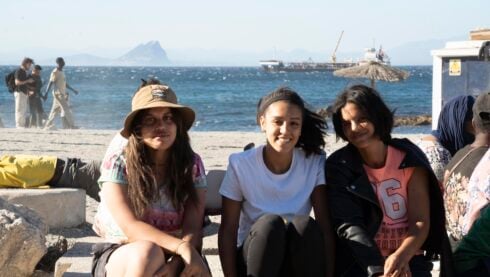
In El Príncipe, those two realities met without much ceremony. Residents who felt their own city had been neglected were bringing food, clothes and medicine to children the authorities had not yet managed to process.
Names were still being added to handwritten lists as evening approached. Nobody there could answer the larger questions hanging over Ceuta, or undo what had happened at the border.
For the moment, they were dealing with the people in front of them: a city trying to recover its footing, and children who had crossed into it still waiting to find theirs.
Click here to read more Spain News from The Olive Press.