
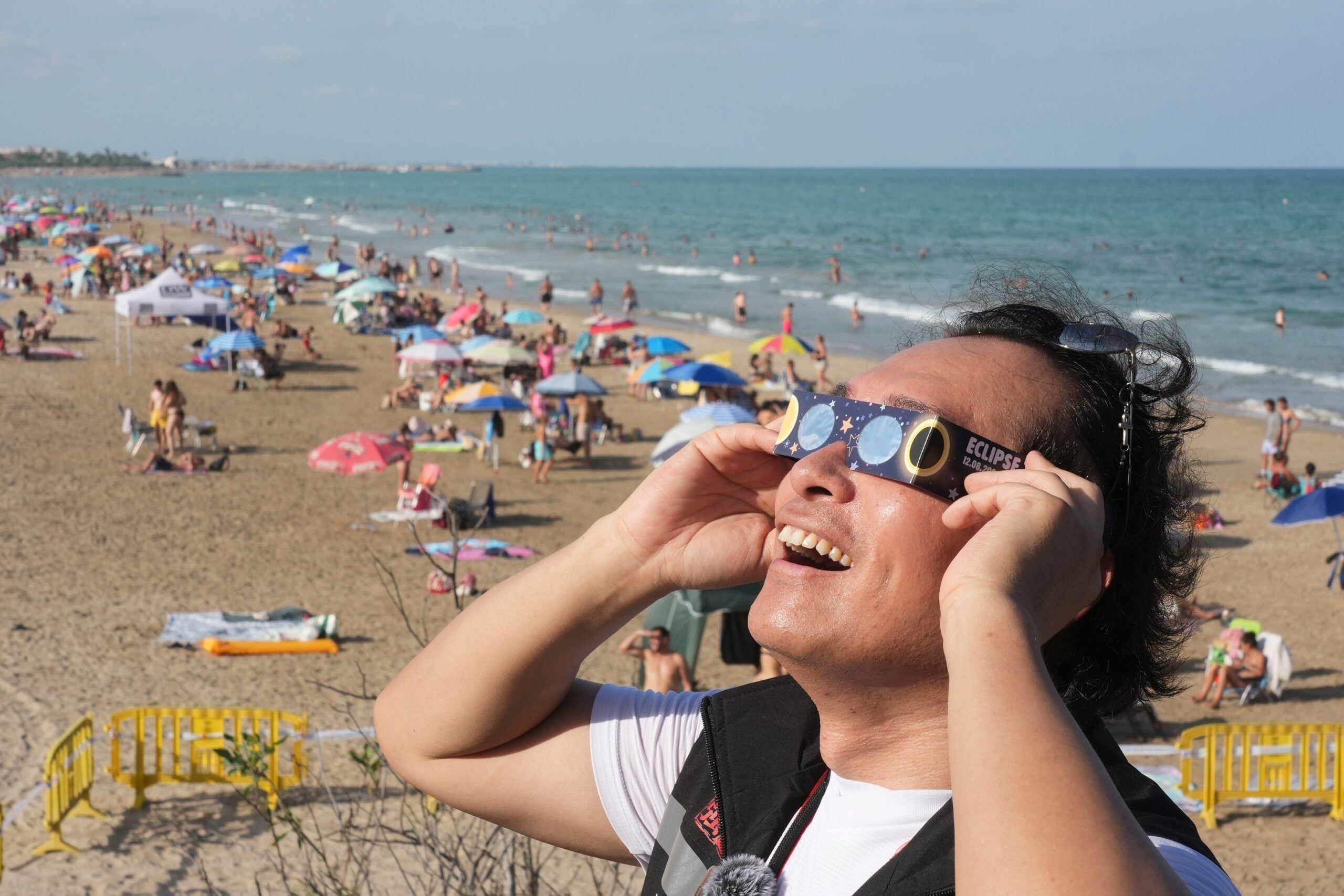
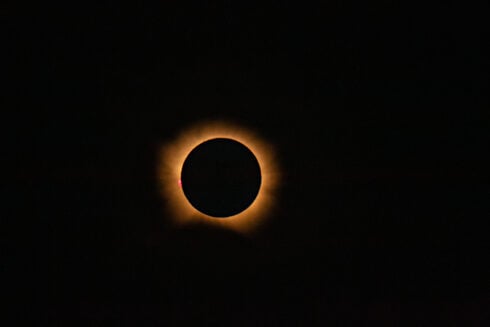
SPAIN may have only just experienced its first total solar eclipse for more than a century – but millions are already looking ahead to the next one.
Fortunately, they will not have to wait long, with another eclipse set to cast swathes of Spain into darkness next year.
The phenomenon, set to be even more spectacular than the 2026 version, will cover southern Spain at around 10.45am on August 2 in what experts have dubbed ‘the eclipse of the century’, sending excitement levels soaring.
But the spread of eclipse fever comes at a price, with accommodation providers across southern Spain already hiking rates in response to a surge in demand from visitors desperate to experience next year’s spectacle first hand.
An apartment in Estepona for four is being advertised at €4,233 for the night, while a three-bedroom property with a shared pool in Las Negras, in Almeria province, is listed at €3,436.
In Malaga city, a double room at the Hotel Larios is being offered for an eye-watering €7,592, while the Room Mate Valeria has just three rooms left at €743 apiece.
It is the same story on Airbnb, where a room in a central Malaga hostel is priced at €999 for August 1 – compared with €110 a month earlier and just €58 during the spring.
The most extreme example can be found at Bolonia, near Tarifa, where a six-person property is being advertised for €10,000 a night.
The same accommodation can be snapped up for just €344 on other dates, meaning guests hoping to see the eclipse are being asked to pay almost 30 times more than the going rate.
But the extraordinary prices have not stopped people booking, according to the Association of Professionals of Tourist Homes and Apartments in Andalucia, with the accommodation market already showing a significantly higher level of occupancy than at the same point ahead of this year’s eclipse.
That was supported by accommodation platform Holidu, who said demand in the areas where next year’s eclipse will be total had increased six-fold compared with an average day.
The path of totality, in contrast to this year’s spectacle, will cut a narrow route across the southern Iberian peninsula, taking in parts of Almeria, Granada, Gibraltar, the Costa del Sol, Cadiz and the two north African enclaves of Ceuta and Melilla.
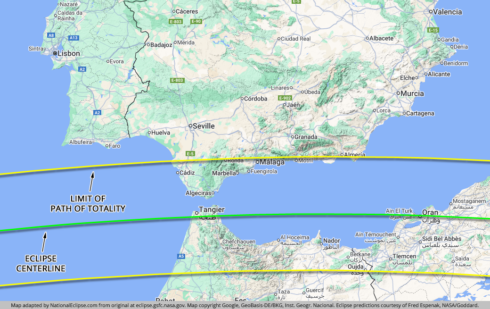
Cadiz will enjoy the longest period of totality, lasting more than four minutes, while the Costa del Sol will see the eclipse from Nerja through to Estepona.
Ruben Sanchez, general secretary of the consumer group FACUA, said he was concerned about accommodation providers hiking their prices but admitted there was little authorities could do to combat the trend.
“Are they abusive prices? Yes. Can anything be done? No,” he said, adding that tourist accommodation providers currently have the freedom to set prices according to demand.
The government has acknowledged that dynamic pricing – where prices rise and fall according to demand – is an increasing concern, particularly when consumers may not realise quite how sharply prices have surged.
But Spain’s consumer protection law currently only prohibits the practice in certain situations classified as public emergencies, such as natural disasters, and not rare events such as a total solar eclipse.
Click here to read more Travel News from The Olive Press.