HISTORIANS believe they have discovered the remains of celebrated female fighter hidden among six men in a Spanish Civil War mass grave in Malaga.
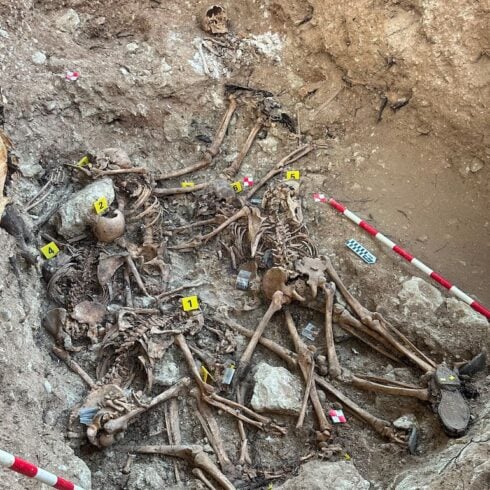
The excavation team unearthed her among seven bodies in Arriate, a town close to Ronda.
They were expecting to find the remains of nine local men based on oral testimonies and official war records.
But they also uncovered the bones of a woman showing severe signs of violence, including gunshot wounds to both legs.
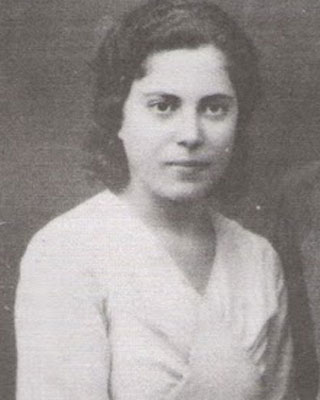
Lead excavation historian Angel Medina told the Olive Press the team believes the woman is Antonia Salgado, a prominent anti-fascist militia fighter originally from Lisbon and known as ‘La Portuguesa’.
They were surprised to find a woman. “We found six men and one woman, which was not what we were expecting,” he said.
“We can’t be certain the remains belong to her yet, but the date and the storyline add up,” he added.
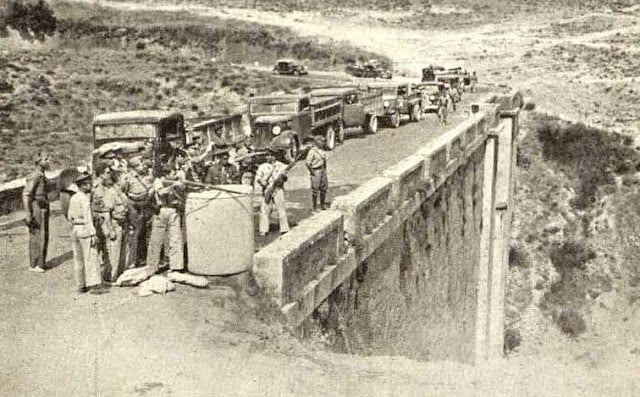
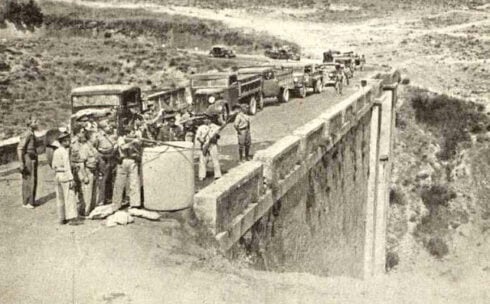
Salgado was killed in a ‘hail of machine-gun fire’ on September 18, 1936, while defending the key Ventilla bridge, located just 2km from Arriate.
Franco’s fascist forces had been slowly inching their way into the Serrania de Ronda, in their attempt to surround Malaga city.
Republican troops were joined by anti-fascist militias, many with women attached, to attempt to hold the line.
READ MORE: Mass grave shock in Malaga: 73 Civil War victims exhumed – one in five were women
“It would be logical to imagine that she was killed near the bridge, then hoisted onto a mule by the (Francoistas) and, when they were passing Arriate, they saw the open mass grave and simply threw her body in there,” Medina said.
“We still don’t know her age yet, but the bullet wounds in her legs and the signs of violence point to a struggle, torture and rape.”
The team is still waiting for DNA testing to confirm her identity.
The unexpected discovery of a woman’s high-heeled shoe in the grave has added an element of doubt, as it is a footwear choice considered highly unusual for a frontline fighter.
Medina admitted that Arriate locals were initially reluctant to reopen old wounds stemming from the civil war and the mass graves.
But ultimately they did, and their testimonies have been essential to both locating the grave itself and to figuring out the identity of the mystery woman.
It is a process that has been complicated by historical propaganda.
READ MORE: Spain to pardon over 50 women locked up by wife of dictator during Franco regime
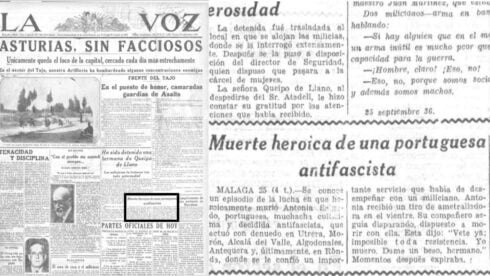
Fascist general Queipo de Llano wrongly referred to the fallen fighter as ‘La Libertaria’, who he added was ‘the spawn of hell’ in the right wing ABC newspaper at the time.
That nickname actually belonged to Maria Silva Cruz, a 21-year-old militiawoman executed near Tarifa a month earlier, but it was often mistakenly used by right-wing forces as a blanket term for all republican women.
The true account of Salgado’s final moments was documented, surprisingly, by Silva Cruz’s widower, Miguel Cordon, who published an obituary in Malaga newspaper El Popular on September 25, 1936.
His piece read: “A woman has died! She was known as ‘La Portuguesa’. Of an agile body, penetrating eyes. All nerve. She acted bravely in Utrera. With her gun, she defended every corner of the land, against a numerous enemy.
“From Utrera she went on to Moron. The tragedy of shrapnel, blood and tears continued… In Moron she somehow survived, going through countless calamities and (finally) reaching Ronda.
“What a happy day for her when she met comrades from Moron and Utrera that she thought were dead!”
READ MORE: The curious link between Spain’s Easter processions and a fascist ally of dictator Franco
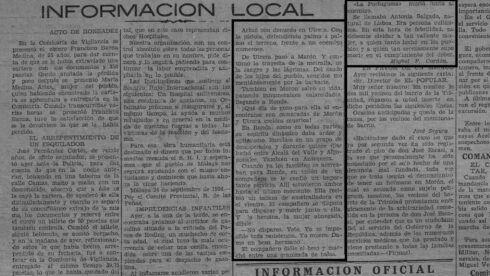
But her story would not end well: “As the fascists were closing in on Ronda, she and a comrade were entrusted with an important mission (to hold the bridge). They remained there together until the very last moment.”
He added that comrade was preparing to die by her side, but Salgado bravely ordered him to flee.
“Don’t shoot. Go,” she reportedly told him. “All resistance is now futile. I’m dying. Give me a kiss, brother.”
In a moving testimony in the now defunct newspaper, he continued: “Her comrade kissed her and set off amid a hail of bullets. ‘La Portuguesa’ died alongside the enemy. Her name was Antonia Salgado and she was originally from Lisbon.”
Cordon concluded: “She was a highly cultured woman. In these feverish times, we must not forget such a brave woman, who fought so hard in the villages and who died so serenely in the line of duty.”
Arriate town hall now plans to create a memorial space to honour the victims of the dictatorship under Spain’s Democratic Memory Law.
Medina estimates that up to 40 victims from Arriate were buried in mass graves in Ronda, while others were taken to the San Rafael cemetery in Malaga city.
Click here to read more Malaga News from The Olive Press.