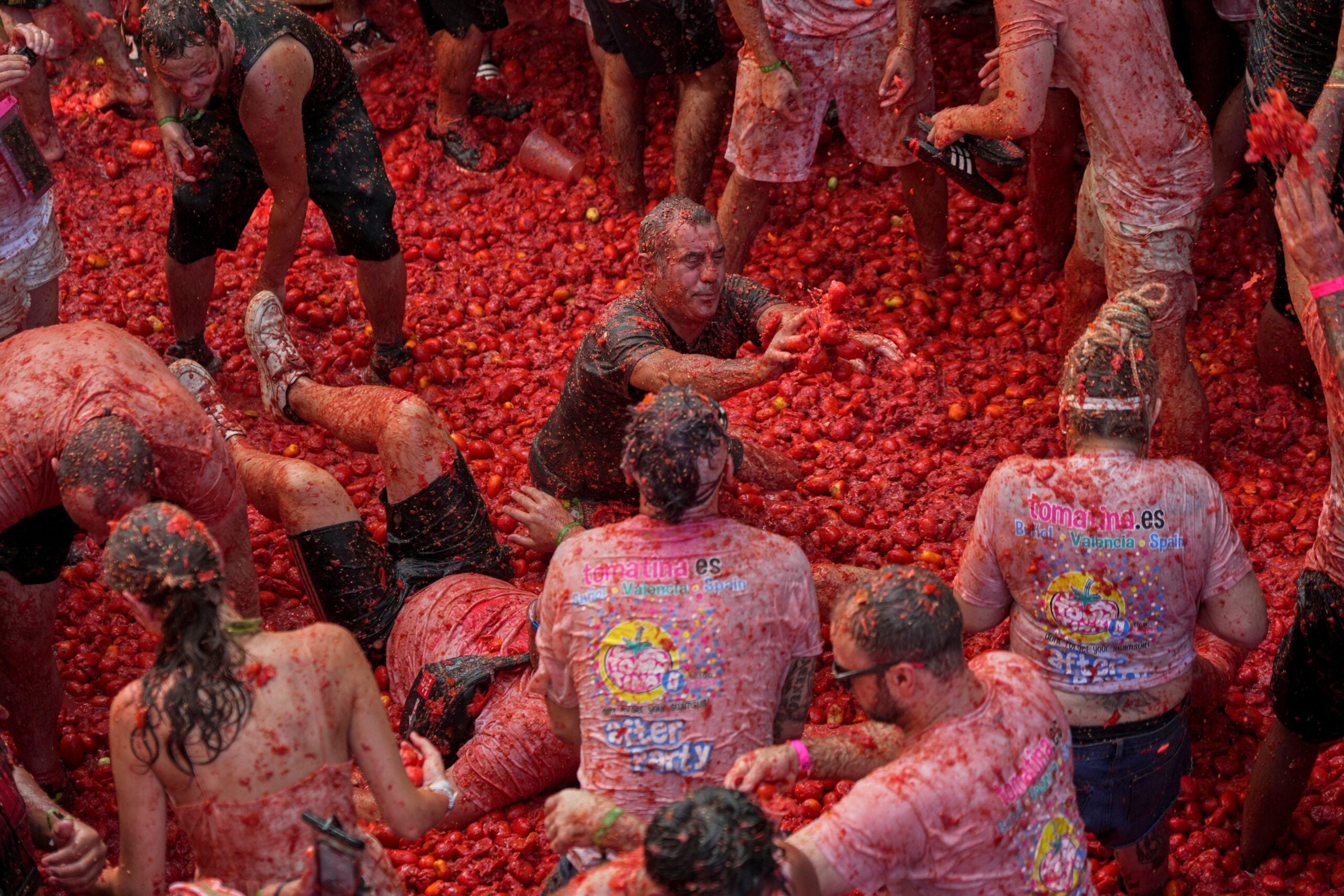
THOUSANDS of people descended on the Valencian region town of Buñol on Wednesday for the annual tomato fight known as La Tomatina.
22,000 participants got tickets to take part with non-Buñol residents paying €15 each.
150 thousand tons of overripe tomatoes-30 thousand tons more than last year- were brought in by seven lorries from Don Benito in Badajoz province.
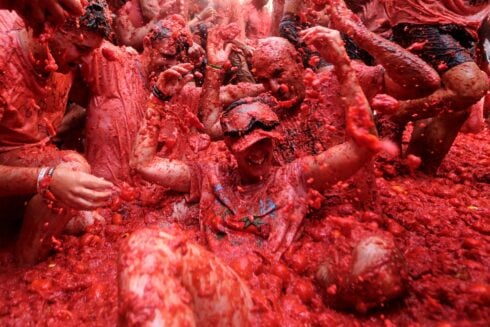
The tomatoes were specially chosen with very special characteristics as they have to be at a point where they can be crushed and their juice released, in order they do not cause any injuries to people by being hard.
The only rule during the fight was to squash the tomatoes before throwing them to reduce the chance of an injury.
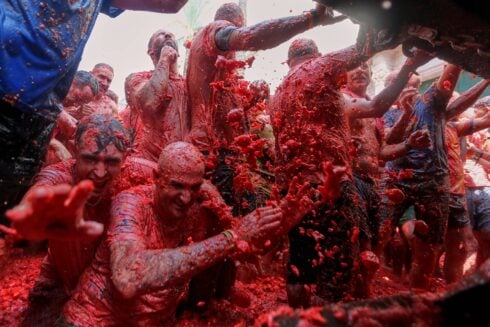
The 79th staging of La Tomatina saw the lorries at midday go through the crowd with the tomatoes thrown at the revellers, who in turn chucked them at one another.
Shirts tuned pink and red, and at one point, the Policia Local appeared to use pepper spray to disperse an unruly area of the crowd, but a festive vibe quickly resumed.
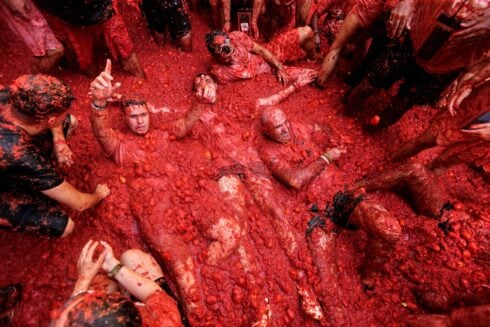
The messy event which lasted an hour from midday is traditionally held on the last Wednesday of August and dates back to 1945.
Once the hour is up, the sound of a cannon blast marks the end of festivities and crowds wash off at communal showers nearby, while the streets are hosed down by fire trucks.
Though stains on clothes can be permanent, the tomatoes’ citric acid acts as a cleaning agent, often leaving Buñol’s streets cleaner than before.
The history of La Tomatina dates back 81 years and was prompted by young people trying to get a better view of a Buñol parade.
As they pushed their way through the by-standers, an unexpected consequence was that one of the parade participants was pushed over and lost his temper.
The jolly crowd did not take things seriously and responded by grabbing tomatoes from a stall and hurling them at him- resulting in what became the first La Tomatina.
Televised media attention in the 1980s helped turn the festival into a national event, and eventually, an international attraction.
Around 40% of participants over the past three years have been tourists from outside Spain.
Click here to read more La Cultura News from The Olive Press.