
SPAIN is leading calls for the EU to tax private jets and the profits of fossil fuel companies to bankroll a Europe-wide climate resilience fund, including extra money to fight wildfires.
The ministry for ecological transition, led by Sara Aagesen, has sent a document to EU climate commissioner Wopke Hoekstra outlining plans for a permanent climate emergency response system – including a dedicated European aerial firefighting fleet.
The proposal comes after Spain endured its hottest summer since records began, with temperatures 2.5C above the seasonal average nationwide, according to preliminary data from state meteorological agency Aemet.
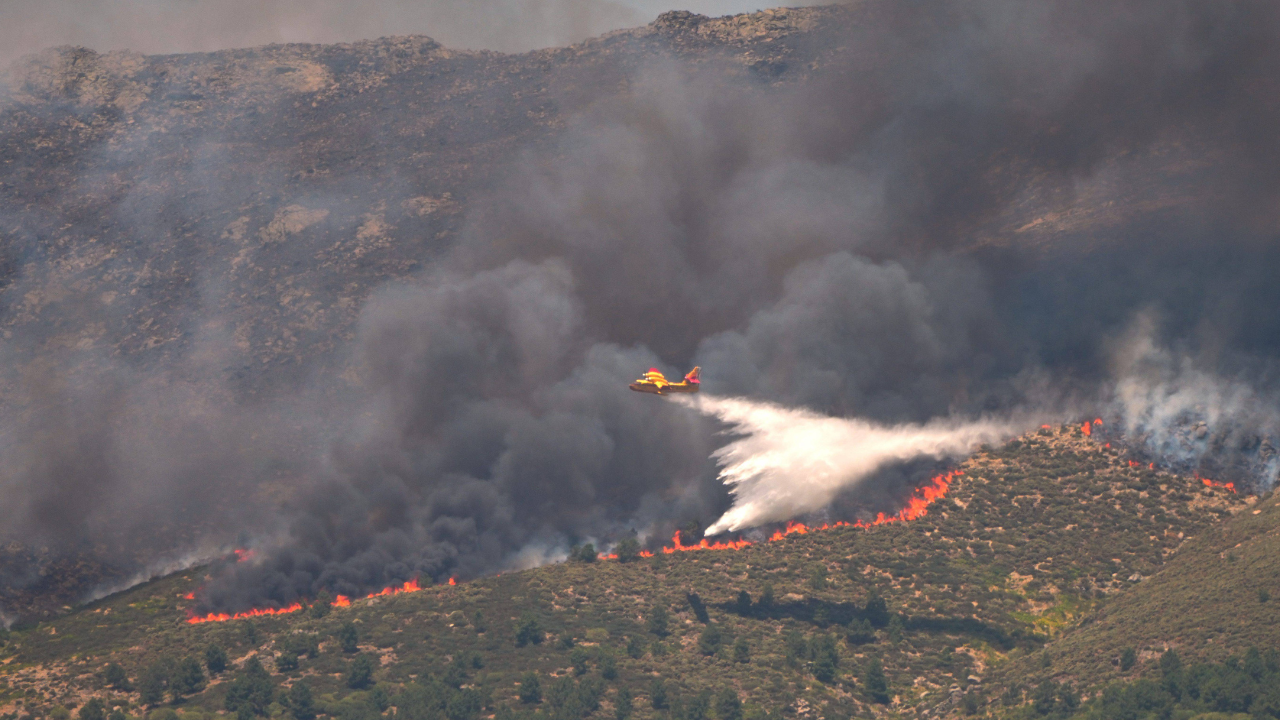
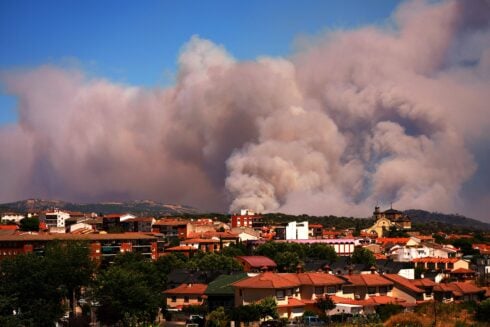
The heat fuelled a devastating wildfire season in Spain – including the Almeria blaze that killed 14 people – with France, Portugal, Greece and even the UK also hit by major fires.
READ MORE: Spain records hottest summer since records began as Barcelona smashes both air and sea temperatures

“Many member states are highly exposed, as recent events have clearly demonstrated,” Aagesen wrote.
“Climate impacts represent not only an environmental challenge but a growing risk to European security, competitiveness and our prosperity.”
She urged Brussels to adopt a strategy ‘capable of anticipating and collectively responding to climate risks’ and ‘mobilising the resources needed to deliver the necessary investments’.
That would include a comprehensive approach to climate adaptation covering water, health, forests, infrastructure, biodiversity, tourism, agriculture and fisheries, eventually extending to all economic and social sectors.

The document sent to Brussels proposes two main funding mechanisms.
Firstly, a tax on luxury flights, such as the use of private jets – a position France has also long advocated.
Secondly, a European climate resilience tax levied on the profits of oil and gas companies, designed to be stable and not tied to sudden price rises linked to crisis moments such as the invasion of Ukraine or the war in Iran.
The idea of a fossil fuel tax has the support of six EU countries – Germany, Italy, Austria, Portugal, Poland and Spain.
Spain is also calling for the EU to introduce binding climate adaptation targets covering the short, medium and long term, with every member state required to take climate risks into account when planning infrastructure, investment and land use.
The government argues that Europe can no longer afford to simply react when extreme weather strikes, with EU countries accumulating an estimated €822 billion in losses from extreme weather events since 1980.
Around €208 billion of that shortfall came between 2021 and 2024 alone.
Spain also wants the EU to establish a public-private insurance scheme, pooling risks between member states and using climate risk bonds that could be activated when major disasters strike.
A similar idea was proposed by the European Commission in 2017 but was ultimately blocked by Germany.
Madrid believes the increasingly severe consequences of climate change make the case for such a system considerably stronger today, with Europe warming faster than any other continent.
The European Commission is expected to publish its European Integrated Climate Resilience Framework this autumn, with Spain now urging other member states to back its proposals.
Click here to read more Spain News from The Olive Press.