MARBELLA has finally approved a sweeping new masterplan that ends four decades of planning paralysis and opens the door to legalising roughly 18,000 homes built outside the law.
The blueprint formally replaces the obsolete 1986 regulations that left thousands of expat homeowners and investors trapped in legal limbo for decades.
Passed during an extraordinary council meeting on Friday, the document, known as a PGOM, draws a definitive line under the corruption-tainted legacy of the notorious Jesus Gil era.
Jesus Gil y Gil served as mayor of Marbella between 1991 and 2002, running the Costa del Sol city under his own populist GIL party.
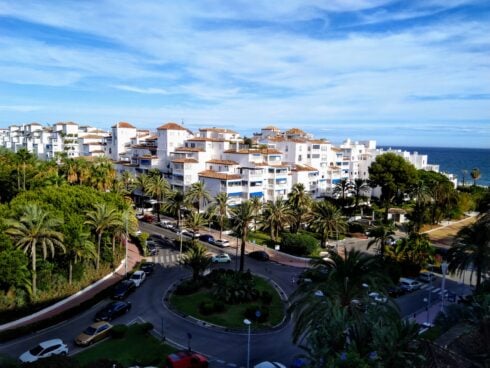
During his decade in power, the town hall operated a sprawling kickback scheme, granting thousands of illegal building licences to developers in exchange for bribes.
Builders were given free rein to construct luxury towers and residential complexes on land that the city’s 1986 masterplan had strictly reserved for green zones, schools, and public health centres.
The rampant speculation culminated in the infamous Operation Malaya police probe, which exposed a massive web of municipal corruption and saw the entire Marbella council dissolved by the national government in 2006.
This ‘Wild West’ approach to urban planning left a toxic legacy of up to 30,000 irregularly built homes across the municipality.
It trapped thousands of innocent buyers — including a large number of British expats — in decades of legal limbo as the courts systematically struck down the dodgy permits.
READ MORE: Game changer: New Marbella regenerative medicine clinic targets sports injuries and faster recovery

Finally, however, for residents who bought properties in good faith, the new framework restores legal certainty and sets up the mechanism to regularise rogue properties across the municipality.
Mayor Angeles Muñoz insisted the plan provides a permanent answer for families caught up in historical planning abuses.
“The new framework provides a guarantee for third parties acting in good faith and for the families tied to these properties,” Muñoz said, describing the blueprint as a tool designed to safeguard the city’s future.
Alongside property rights, the plan lays the legal groundwork for a coastal railway connecting Marbella directly to Malaga.
Marbella currently holds the unwanted record of being the only Spanish city with more than 100,000 residents without a single train station.
Planners must now find a way to thread this rail corridor through a dense tangle of housing estates, golf courses, and shopping centres that have blanketed the Costa del Sol over the last four decades.
To tackle spiralling property costs and local housing shortages, town hall chiefs have introduced a strict rule requiring developers to set aside 20% of buildable space in new urban developments for affordable, price-capped housing.
The measure is aimed at ensuring workers, local families, and young people are not completely priced out of Spain’s most glamorous resort.
According to town hall figures, some 2,000 residents are currently on the waiting list for official protected housing in a municipality famous for hosting some of Spain’s most luxurious real estate.
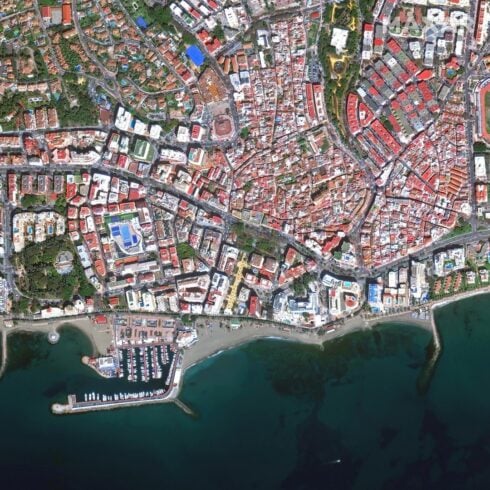
The masterplan also expands Marbella’s total urban footprint to 53 sq km, up from the 40 sq km designated under the annulled 1986 layout.
Key infrastructure improvements include new water storage tanks and upgrades to coastal sewage networks that frequently collapse during torrential downpours.
Urban planning councillor Jose Eduardo Diaz confirmed that the blueprint also locks in land for road upgrades, cycle paths, car parks, and green corridors linking the mountains to the sea.
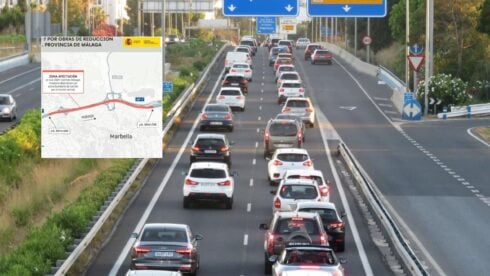
The document also plans for vital road upgrades to tackle frequent summer gridlock on the stretch between Marbella and San Pedro Alcantara, alongside new connections to the A-7 and AP-7 motorways.
The PGOM dictates a network of new junctions linking the municipality to both the A-7 dual carriageway and the AP-7 toll motorway.
The masterplan also reserves urban space to expand the city’s cycle-path network and build desperately needed parking facilities.
Marbella will be the first town in Andalucia to adapt to LISTA, the regional government’s updated land-use and sustainability law.
However, the council warned that individual plot boundaries and specific neighbourhood questions are not resolved overnight.
READ MORE: Plans to build new luxury hotel on Marbella’s Golden Mile triggers outcry from environmental groups
Property owners must now wait for the drafting and approval of a secondary, detailed document known as an Urban Planning Plan before individual building plots are settled.
The masterplan passed with the backing of the ruling Partido Popular, local party OSP, and Vox, while the socialist PSOE chose to abstain.
The council still remains burdened by crippling legacy debts owed to the Spanish tax agency, Hacienda, and Social Security, which have dragged on since the Gil administrations.
Since 2021, the town hall has been forced to request €130 million in State loans simply to pay off court rulings without bankrupting municipal coffers.
The financial strain has forced the ruling team to hike local taxes under a strict municipal adjustment plan that will remain in force until 2040.
Click here to read more Marbella News from The Olive Press.