- Andalucia
- Almeria
- Cadiz
- Cordoba
- Granada
- Huelva
- Jaen
- Malaga
- Sevilla
- National
- Gibraltar
- OP Xtreme
- Features
- Business & Finance
- Celebrities
- Crime & Law
- Food Drink
- Entertainment
- Environment
- Health
- Nature
- News Features
- Property
- Sport
- Travel
- Blogs
- Eating Out
- Almeria
- Cadiz
- Cordoba
- Granada
- Huelva
- Jaen
- Malaga
- Sevilla
- Andalucia Property Search

Green Guide
Spanish scientists make robot to help stroke victims
PUBLISHED:
November 17, 2012 at
8:56 am • LAST EDITED:
December 7, 2012 at
9:53 am
Features, Health, National News •
1 Comments
|
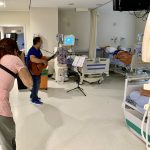
| • Some of the team behind the new Robotherapist 3D |
A PIONEERING robot designed to help stroke victims recover more quickly has been developed by Spanish scientists.
Robotherapist 3D lets patients start exercising while still lying down, allowing them to practise arm movements more easily.
It is hoped the prototype, created by Instead Technologies – one of the only companies in the world developing such robots – will be trialled in Spanish hospitals soon.
The company, linked to Miguel Hernandez University of Elche in Alicante, already has a Robotherapist 2D which has sensors to determine the patient’s condition.
“The robot allows you to follow all of the steps involved in rehabilitation, firstly with passive movements of the upper limbs,” said an Instead Technologies spokesman.
“When you have reached a certain level of mobility, you continue with occupational therapy, performing everyday tasks such as eating and drinking, all by means of virtual reality.”
While the company is focusing on developing technology to help stroke victims, it is also working with associations linked to Parkinson’s disease, Alzheimer’s and multiple sclerosis.

Reader Comments »
November 17th, 2012 8:02 pm
Messages will be moderated or deleted if they:
• Are considered likely to disrupt, provoke, attack or offend others
• Are racist, sexist, homophobic, sexually explicit, abusive or otherwise objectionable
• Contain swear words or other language likely to offend
• Break the law or condone or encourage unlawful activity. This includes breach of copyright, defamation and contempt of court
• Advertise products or services for profit or gain
• Are seen to impersonate someone else
• Include contact details such as phone numbers, postal or email addresses
• Describe or encourage activities which could endanger the safety or well-being of others


Wow looks like a great breakthrough, through experience I know its very tough for stroke victims as there is no operations.