 Frances Leate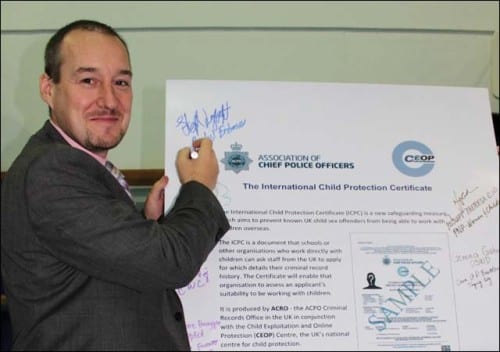
UK LAW enforcers have launched a new police check that will help British schools in Spain identify and screen people who are unsuitable to be working with children.
The new International Child Protection Certificate (ICPC) was presented to more than 200 delegates from 60 authorised British schools at the annual conference of the National Association of British Schools in Seville on March 8.
The UK national law enforcement agency dedicated to protecting children from abuse – the Child Exploitation and Online Protection Centre (CEOP) – launched the new certificate after finding that some international schools, charities and other agencies overseas do not have the same level of police checks available to organisations in the UK, sometimes enabling sex offenders to gain positions of trust with children.
British Ambassador Giles Paxman attended the NABSS conference where he spoke to representatives of the Spanish authorities and several school delegates.
He said: “Schools have a critical role to play in guaranteeing the safety and wellbeing of children.
“The new International Child Protection Certificate is an effective tool designed to reduce the chances of sex offenders gaining access to children.
“I encourage all schools in Spain to include it as part of their staff recruitment.”
Click here to read more News from The Olive Press.