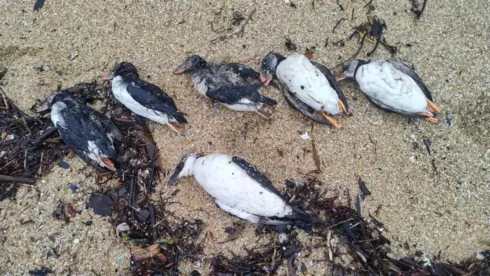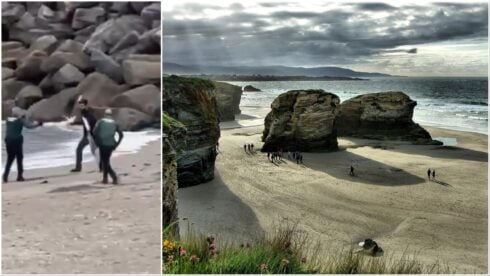


A YEAR after millions of tiny plastic pellets were spilled off the coast of Galicia, how has the environmental disaster impacted Spain?
On December 8 2023, the Liberian cargo ship ‘Toconao’ lost six containers, including one with 1,000 25kg sacks of tiny balls used to manufacture plastic products.
Dubbed a ‘nightmare environmental crisis’ by Spanish ecologists, over 25 tonnes of the pellets washed up in northern Spain, prompting hundreds to volunteer in clean up operations.
Despite Portuguese authorities alerting the central Spanish government of the issue immediately, the regional government claims they were not informed until 25 days later, leading to greater damage and heightened costs.
READ MORE: Pollution causes 60,000 hospitalisations per year in Spain, experts warn
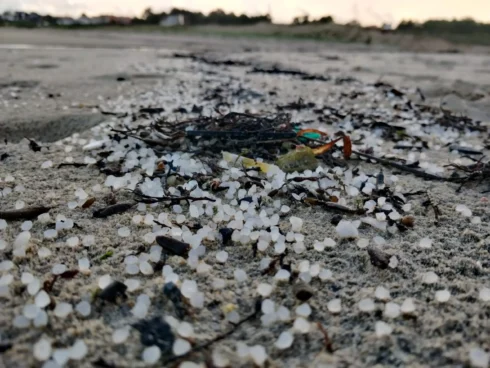
Photo: Greenpeace
Over 400 people searched 630 beaches to collect the pellets, reaching a cost of €2.3 million.
Alongside volunteers, just 5,000 kilos were removed from the coast by Spanish waste management service Sogama.
But according to experts, the damage is still being felt a year later. According to Greenpeace Spain the incident not only ‘damaged the marine ecosystem but also put the fishing industry at risk.’
“A year later, chronic pollution persists…we need to put more ambitious rules in place to prevent this from happening again,” they said in a statement.
“One year after the Toconao disaster, protecting the future of our coasts and sea should be an immediate priority. ”
Plastic pollution expert consulted by the Olive Press, Natacha Claire Tullis, agrees: “Spain has faced significant issues with plastic pellet pollution,” the Officer for Preventing Ocean Plastics at Pew Charitable Trusts said.
READ MORE: These are the 48 beaches handed ‘black flags’ for pollution, mass tourism and over development

“The spill caused significant environmental harm. Plastic pellet pollution is pervasive and often invisible to the naked eye, yet its impact on ecosystems and human health is profound. These tiny particles are everywhere, lurking in the air we breathe, the water we drink and the food we eat.”
“If we do nothing they will continue to accumulate, harming marine life, disrupting food chains and posing health risks to humans.”
Galicia’s regional government is now pursuing compensation and legal ramifications against the shipping company responsible, while urging the central government to provide updates on their claims.
In a statement released in December 2024, they said: “The central government hardly helped to stop the pellets reaching our coasts.
“These incidents must serve as a lesson to move forward at a European level.”
It comes as the EU takes a ‘vital’ step forward towards curbing microplastic pollution.
In December, the Council of the EU finalised its position by setting out specific obligations for pellet transporters to prevent such disasters from repeating.
“Spain has directly suffered the consequences of a maritime pellet spill and is supportive of an ambitious legal framework to limit accidents from happening in the future,” said Tullis.
However, PEW’s Preventing Oceans Plastics project has criticised the legislation, saying more cleanup, reporting and risk management measures are necessary.
Each year, some 180,000 tonnes of plastic pellets are released into the environment in Europe alone.

“As the legislation moves through the final stages, policymakers should strengthen it. There needs to be a consistent framework of obligations for all actors involved in plastic pellet transport to ensure a level playing field,” they said.
Although the Toconao spill caught the attention of the media worldwide, it is not the only worry for marine conservationists.
In nearby Tarragona, southern Europe’s largest petrochemical complex leads to ‘chronic plastic pellet pollution’ at La Pineda beach.
“Millions of pellets are washed into rivers and the Mediterranean Sea, leading to heavy contamination of the shoreline and beyond,” said Tullis.
“The proximity of petrochemical plants to beaches, like in Tarragona has resulted in significant and persistent pollution. Rainfall often carries these pellets from industrial areas into rivers and eventually the sea, not only impacting marine ecosystems but threatening local economies reliant on tourism and fishing.”
READ MORE: Barcelona bans ALL cruise liners from docking at main port to reduce city centre pollution

This leads to microplastics entering the human food chain, being found in tap and bottled water as well as the fish we eat.
“Studies have already detected microplastics in human organs such as the digestive tract, brain and lungs. Their presence is insidious and challenging to avoid. Although individual actions like reducing plastic use can help limit exposure, tackling this issue requires systemic changes to reduce microplastic pollution at its source.”

One such example of this is the new UN Plastics Treaty designed to prevent global plastic pollution.
Tullis recently attended negotiations into the treaty in Busan, South Korea and hopes it will be the ‘most successful environmental agreement of our time.’
“The global plastics treaty must be ambitious, legally binding and include comprehensive actions across the full plastic life cycle, from production and use through to recycling and disposal,” she said.
While states failed to reach an agreement at the talks in December, the EU states it is ‘strongly in favour’ of the global, legally binding legislation and hopes fresh talks will lead to a resolution.
Jessika Roswall, European Commissioner for the Environment, Water Resilience and a Competitive Circular Economy said: “I strongly regret that there is no agreement on a new global plastics treaty. If business as usual continues, plastic production will triple by 2060.
“The EU will remain firmly committed to finding a global solution. Our oceans, our environment and citizens around the globe need it.”
Click here to read more Spain News from The Olive Press.