

IMMIGRANTS looking to obtain Spanish nationality could have to speak Castilian to a B2 level – equivalent to a strong grade at A-level – under plans set out by the leader of the conservative opposition.
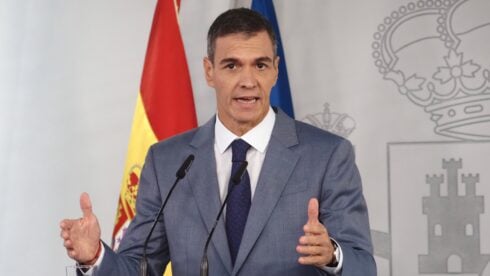
The proposal forms part of a new immigration strategy laid out on Wednesday by Alberto Nuñez Feijoo, the leader of the Partido Popular (PP), in an attempt to wrestle the political momentum away from far-right Vox and Pedro Sanchez’s resurgent socialist PSOE.
Speaking in Barcelona, a city deliberately chosen due to its high proportion of foreign-born residents, Feijoo expressed his concern at seeing ‘entire neighbourhoods in Spain turned into unrecognizable places’ and vowed to ‘restore order once and for all’.
As part of a ten-point plan that Feijoo hopes will help to push his party towards power at the next general elections, which can be held no later than 22 August 2027, people seeking Spanish nationality will have to pass a ‘strengthened test’ of institutional, legal, cultural and historical knowledge of the country in order to ‘verify and guarantee commitment to common values’.
The move prompted ridicule from the ruling socialists with Carlos Prieto, the government’s delegate in Catalunya, challenging Feijoo to ‘answer all the questions’ of the test.

“Perhaps he wouldn’t pass it and would end up stateless,” he quipped on social media.
Additionally, Feijoo vowed to raise ‘the level of linguistic, cultural and constitutional requirements’ for foreigners coming to Spain, claiming that language proficiency ‘is the best path to integration’.
Immigrants would require a B2 Spanish certificate, equivalent to a strong grade at A-level in the UK.
The B2 certificate certifies the ability to understand complex texts, interact fluently and produce clear, detailed writing on a variety of topics.
His plan also includes a vow to implement tougher criteria for nationality and long-term residence, arguing that citizenship ‘must be earned, not granted automatically’ with the passing of time.
Social benefits, such as the minimum basic income (IMV), would be linked to active job seeking, while immigration powers would be centralised with the creation of one new authority, replacing what Feijoo slammed as ‘five ministers who talk about immigration, and none of them do anything’.
Additionally, the PP would introduce a points-based system linked to labour shortages with a preference for applicants from countries ‘culturally close’ to Spain.
Rules would also be tightened on residency through social or family ties, while foreign nationals who commit serious or repeated crimes could face expulsion, even if they are legal residents.
READ MORE: LEARN THE LINGO: A brief A to Z of the Spanish language that a text book won’t tell you
Currently, residents seeking Spanish citizenship through naturalisation must have experienced Spanish residency for ten years and have no criminal record.
Would-be nationals must then pass the CCSE (‘Constitutional and Sociocultural Aspects of Spain’) and DELE (‘Diploma of Spanish’) tests – the latter being equivalent to A2 in Spanish.
Spanish citizenship allows the right to vote and move around the European Union freely.
Like many other European countries, immigration is likely to be a hot topic at the next general election.
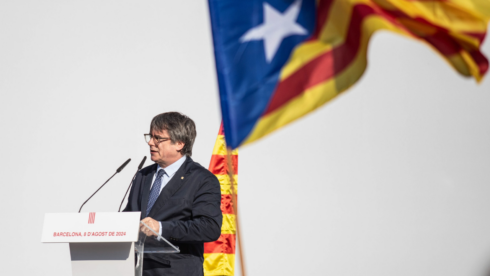
In Catalunya, the location chosen by Feijoo to announce his ten-point immigration plan, competition on the right of politics is fierce with Vox and the pro-independence, right-wing Junts per Catalunya and far-right Alianca Catalana all exceeding 10% in recent polls.
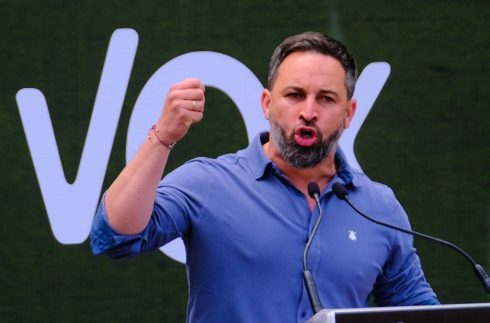
Nationally, the PP is currently leading most polls with over 30% of the vote. The PSOE are second with around 28%, while Vox trail in third, although their estimated share has almost doubled to just below 20% since this time last year.
Click here to read more Spain News from The Olive Press.