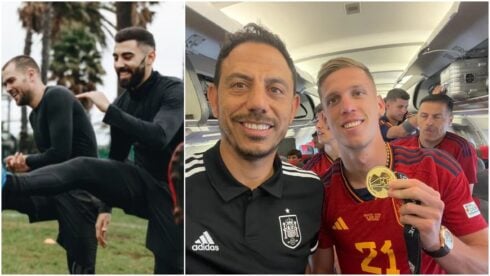
As he begins a new exclusive health column for the Olive Press, Jon Clarke talks to Spain’s national football team doctor Claudio Colomo about the strains and stresses of keeping the world’s No1 team in peak fitness, especially with the World Cup looming
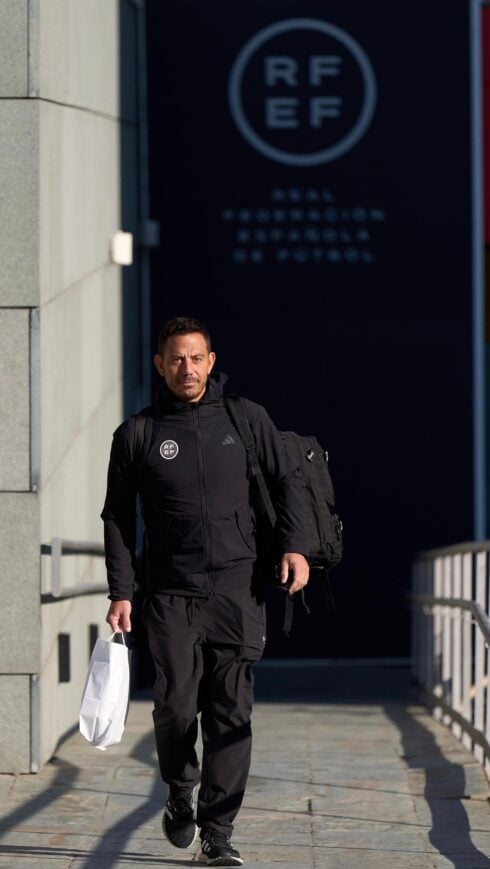
IT’S 8.40am during the recent international break and Spain’s Head Doctor Claudio Vazquez Colomo is beginning to wrap up our interview.
He’s already brought it forward by an hour because of a last-minute emergency and it’s not hard to understand the pressure he’s under.
An orthopedic surgeon by trade, he’s got to take one of his young stars for an MRI scan and, given the current heated debate on Spain’s La Liga teams using players ‘too young’, it’s more contentious than ever.
“He felt a tweak and we fear the worst,” he explains from his office at the Spanish FA’s Madrid headquarters. “We really need to get to the hospital to get it double checked.”
While he’s not allowed to tell me who (it will all come out during a press conference later that day), he offers a tantalising hint. “We’ve actually talked about him quite a bit already,” he smiles.
I immediately know it’s Dean Huijsen, a local expat lad who grew up on the Costa del Sol, and who at 20 has just become a starter for Real Madrid, having spent a season at Bournemouth in the UK.
My kids know him from local schools and I’ve met his dad Donny a few times at one of his businesses in Marbella, Costa Jump, and have closely followed his trajectory.
“He’s an extraordinary talent,” confirms Claudio, already wearing his Spain tracksuit, even at this unusual hour of the morning for interviews. “Quite different from anyone else, particularly growing up in Marbella.
“The way he moved up the ladder so fast and so young is remarkable. Very tall, very fast, it is incredible to see him on the ball and mentally he is very strong and calm.
“I mean his first game for the national team was against the Netherlands this year, a big team. And the minute he got the ball all the opposition were understandably all over him. But he took it all in his stride and had a great, great game.”
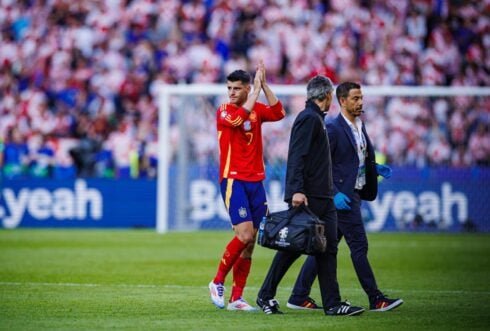
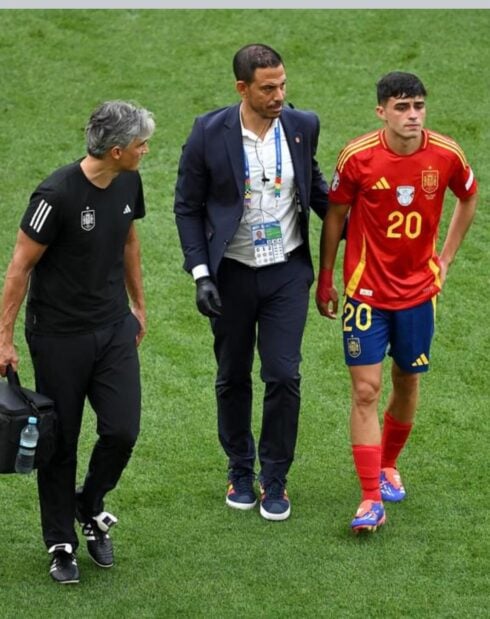
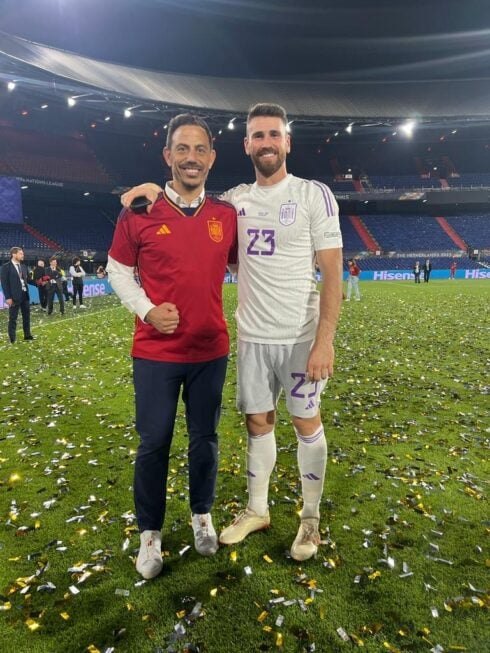
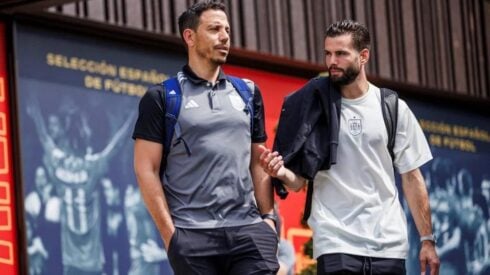
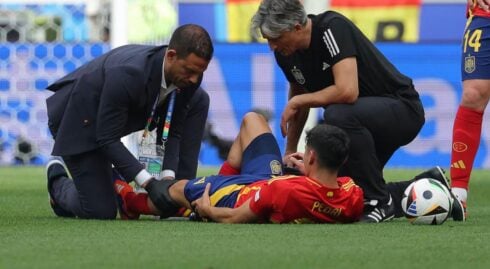
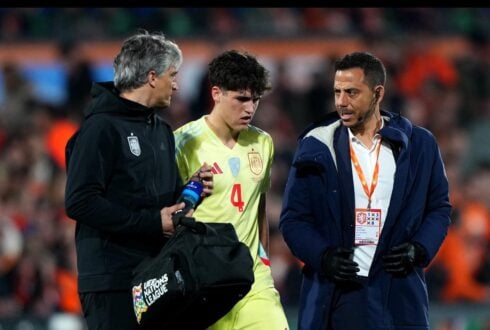
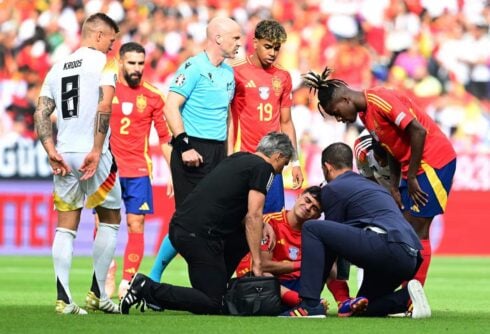
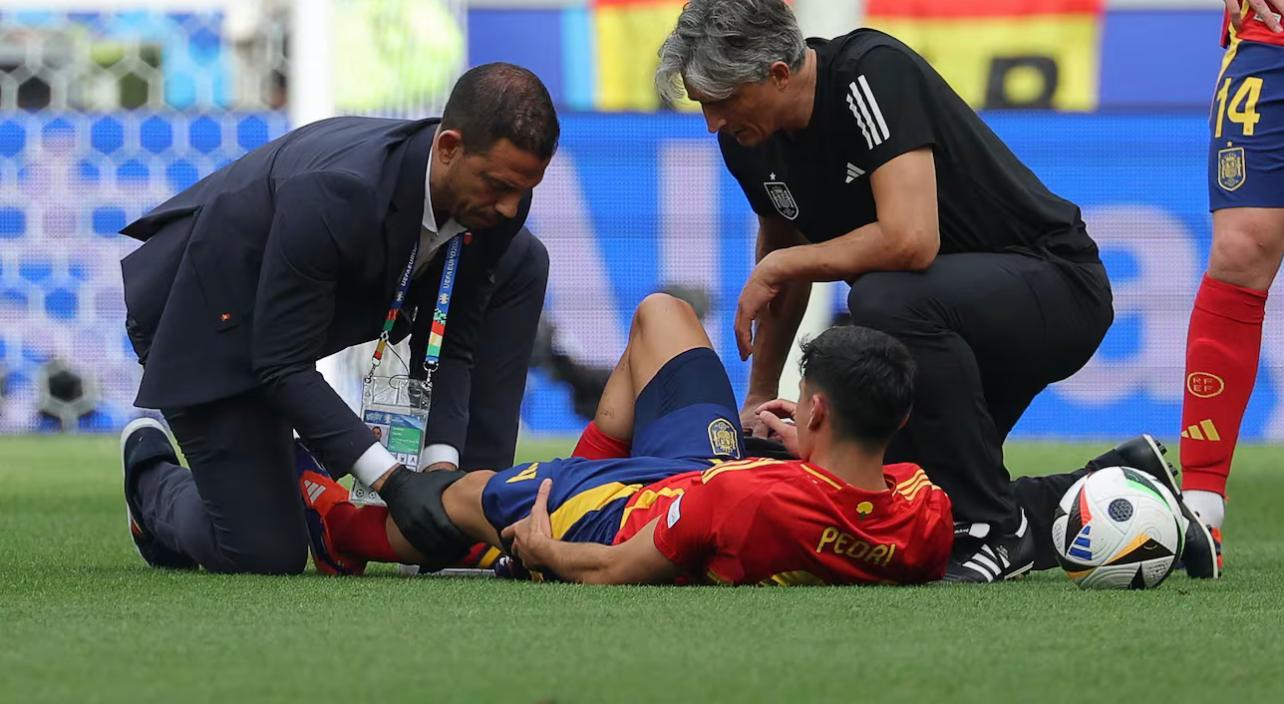
He continues: “But of course being young, we are under so much pressure to protect him and we don’t want any of the problems we have seen the likes of Pedri and others over recent seasons.”
And, ultimately, the buck stops with him.
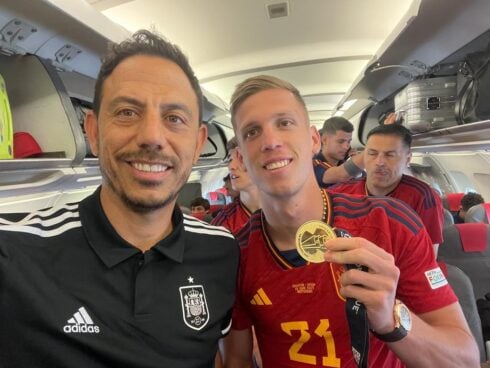
In charge of an incredible 27 Spanish national teams (including the women’s and youth squads) it is up to Doctor Claudio to make the final decision on whether a player is fit enough to play for his country…or even be on the training pitch.
It is a high pressure job, unsurprisingly with the Spanish team currently the world No1 and likely to enter the World Cup in America as likely favourites next year.
It’s his second year in the job at the Real Federacion Española de Futbol (RFEF) and it means he’s away working with the team for many months of the year – an incredible 46 consecutive days alone at the Euros last year!
“It’s a very full on role and you have to be completely committed,” he continues. “Saying that it is an absolute pleasure to work with some of the world’s top sportsmen. Players like Yamal, who come around once in a lifetime. To see them close up and get to know them is great.”
Claudio is talking to the Olive Press in advance of the launch of an exciting new column he is writing for us about staying fit into middle age and onwards.
A traumatologist who specialises in hip, knee and shoulder surgery, he understands more than anyone the key to longevity and how to avoid injuries.
While half Spanish, half Puerto Rican, his English is impeccable and developed during spells living in Canada, while much of his medical training was in English.
“Everything is about prevention and good practice,” he explains. “With the young sportsmen I work with, diet is increasingly important. An incredible 99% of teams have nutritionists days, and players such as Barcelona’s David Villa have said his career could have been two or three years longer if he had eaten better.”
He continues that the key to being healthy is a balanced diet and everybody is slightly different.
Surprisingly he doesn’t rule out chocolate or bread, albeit in small quantities and meat is ‘very important’ for protein.
“You need meat every day, particularly for top sportsmen and a range is very important particularly when you are away on camp,” explains the father-of-four, who lives in Almeria.
One of the key aspects of his job is communication and having a good relationship with the clubs is very important.
“Above all, we want to protect the players. We will not take any risks and the clubs must trust us. We understand any small niggles they have and we send updates every day, exact minutes if you like of their progress and issues.”
He continues: “The clubs do realise that the players want to be here especially when the Euros or the World Cup is coming up. And on top of that if you have a player with the national team his value is going to be higher so it is good for the club as well.
“It is also great that we are ranked number one in the world so who wouldn’t want to be playing here.”
On top of that he says the current squad is a ‘really nice group’ who come from all around Spain and are playing all over the world, many in the UK, such as Pedro Porro, Mikel Merino and David Raya.
“They love coming back home and playing with old friends,” he explains.
Above all, they are the ‘most amazing’ group of players, but apart from being good players they need ‘1000 other details’.
“You need commitment, responsibility, team spirit and be mentally very strong. You need to be able to fit into a big family. You have breakfast, lunch and dinner together. Two days, three days or more. You need to be able to take the pressure. If you don’t have those details you won’t make it to the very top level.
“I’ve seen so many players who couldn’t quite make it to the top as they lacked this.
“There are only 3% of professionals like Messi, Ronadlo, Lamin, players who are so talented they don’t need the rest. Most players have to have all the other factors.”
What about the sort of bad behaviour we have seen over the years with the English national football team with the likes of Paul Gasgoigne?
“Well these days they never drink alcohol,” insists Claudio. “They are so disciplined these days. OK, they can have a beer after we win a tournament. But it is so different to the 80s and 90s. The intensity and speed right now is completely different. They are focused on nutrition, sleeping well, strength in their muscles, high and low intensity, speed. They know that alcohol can affect things. They need to be in perfect shape, so they just avoid it.”
And one final thing, the Spanish team are really focussing on these days is sleep.
“Winding down is very important and we have a special sleeping disorder specialist working with us at the moment.
“Sleep is very important, but you don’t need eight hours. Some people need just six hours. It depends on the person, but what is certain is you have to have rest.
To be at the top of your game you need to be restful. We are trying to change some things like turning off the phone before going to bed. Better lighting, reading, etc. We think it will make a difference.”
Why did you become a doctor?
Claudio became inspired to become a doctor when he visited his father, also an orthopedic surgeon, when he was working at his local hospital in Jaen as a kid.
He had arrived from the Dominican Republic in 1965 after a revolution and went on to meet his wife at Granada University..
“When I was eight or nine I remember one young guy who came in with a dislocated shoulder and in a split second my father put it back in place. In just three seconds the agony totally disappeared.
Why live in southern Spain?
“I always wanted to be an orthopedic surgeon in the south of Spain and I got my residency in Almeria, after spending a year in Oviedo. It’s got great weather in Almeria and it is near the beach. Plus I knew some of the doctors there. Then I ended up meeting my wife, who is a paediatrician. We have four kids. 13, 11, 8 and 5 and we love going to the nearby beaches and places like Cabo de Gata. Nice wines, good food, the key to a good life.”
The importance of diet
Nutrition is so important we now have a whole unit inside the medical department. We analyse the food every player eats and give them individual strategies. We actually prepare special bags for each player every day. In 2008 only 5% of teams had nutritionists, now in 2025 99% of teams have them.
My role as Spain’s national football doctor
My job is different from that of a club doctor. We work with healthy players, who come from their clubs to train a couple of days before a match. In a club about 12% of the players are injured at any time during the season. That means that the risk per player is 1.9 a season. Nearly twice a season.
Players starting too young
So many good players are now starting at the top level at 18 years old. But the risk of young players getting injured in football is high, but also in basketball, tennis and volleyball. We have to really watch out, especially with prevention of injuries.
All the veterans know their bodies. They know their bodies. With young players, we have to teach them about sleep, diet and how to deal with their environment. We work with them every day on this.”
Click here to read more Health News from The Olive Press.