
THE legendary architect who designed Bilbao’s iconic Guggenheim Museum has died aged 96 following a brief respiratory illness, his chief of staff confirmed on Friday.
Frank Gehry, widely hailed as one of the most influential architectural figures of his generation, is survived by two daughters from his first marriage, his wife Berta Isabel Aguilera, and their two sons.
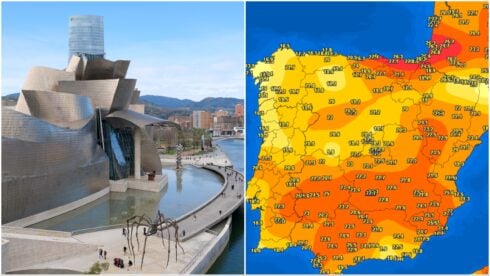
Born in Toronto before moving to the United States aged 18, Gehry’s magnum opus was his design of the avant-garde, titanium-covered Guggenheim Museum in Bilbao in 1997, described by peer Philip Johnson as ‘the greatest building of our time’.
READ MORE: An architect’s eye of Bilbao – ‘Spain’s industrial capital is much more than just the Guggenheim’

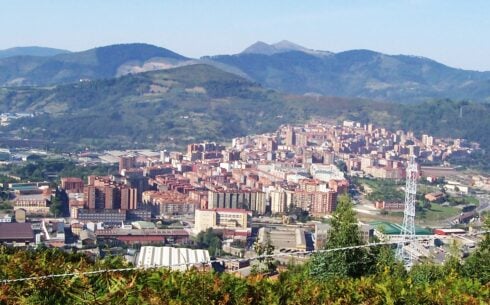
Built in the run-down port area of the Basque Country’s largest city, the project revitalised Bilbao, boosting tourism to the city and local economy.
The project lent its name to a phenomenon known as the ‘Bilbao effect’ – a term given to ambitious works of art or architecture aimed at revitalising stagnant areas.
In its first three years, almost four million tourists visited the museum, generating over €500 million in economic activity.
Gehry also designed the Walt Disney Concert Hall in Los Angeles, Miami’s New World Center, and the Foundation Louis Vuitton, a museum in Paris.
In a video tribute posted on social media, Guggenheim Museum Bilbao said: “Today is a sad day for the worlds of art and architecture due to the passing of one of their masters and a very dear member of the Guggenheim family.
READ MORE: ‘I spent three incredible days in Bilbao – here are my top sight-seeing tips’

“We will be forever grateful to Frank Gehry, and his spirit and legacy will always remain connected to Bilbao.”
One of the largest museums in Spain, the Guggenheim Museum is one of several museums affiliated to the Solomon R. Guggenheim Foundation, set up by an American philanthropist of the same name in 1937.
The museum features permanent and visiting exhibits of works by Spanish and international artists.
In 2024, over 1.3 million people visited the museum, located on the banks of the Nervion River.
Click here to read more Spain News from The Olive Press.