
SPANISH researchers have successfully trained dogs to detect lung cancer in human patients – in a medical breakthrough that experts say could save millions of lives.
In a decade-long study involving more than 5,800 tests, five dogs were trained to sniff out cancer in human breath samples with an accuracy rate of 99.9%, researchers have said.
The initiative, known as Project Biodogtor, was conducted in collaboration with the oncology department at Valdecilla Research Institute in Cantabria.
READ MORE: Ozempic and other anti-diabetes drugs lead medicine spending in Spain’s health service
Remarkably, the dogs were able to distinguish among four different types of lung cancer – adenocarcinoma, small cell, large cell, and epidemoid – as well as detect colon cancer.
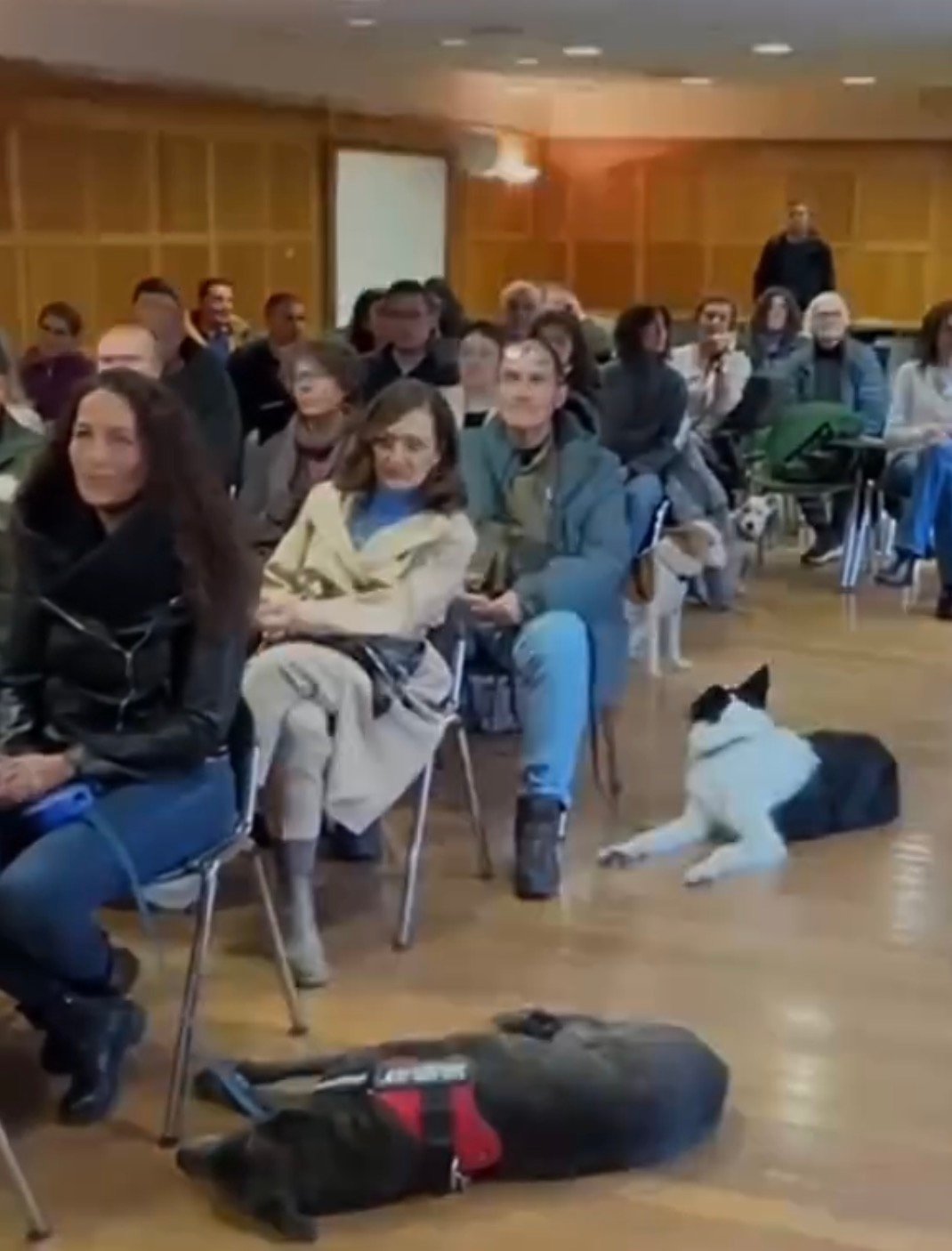
Launched in 2016 by police dog handlers Nuria Gonzalez and Jose Luis Garcia, the study was recently presented at the European Society for Medical Oncology (ESMO) congress in Berlin, where the researchers described its results as a “resounding success.”
“There have been funny moments, difficult moments, and some desperate ones,” Gonzalez said. “But [the dogs] gave it all their heart and loyalty. They love it, they have a great time. They are like children playing.”
The specially trained dogs – Laia, Dobby, Chester, Iñaki, and Fredi – demonstrated extraordinary precision in sniffing out disease.
The dogs were selected through a competitive process: around three and a half years ago, the team issued a call for applications from pet owners, receiving 150 responses.
After a series of behavioural and aptitude tests, this was narrowed down to 30 dogs and finally to the six handlers and animals considered most suitable.
A sixth dog, a mongrel named Rommel, was initially chosen but sadly died before the final trial.
Once selected, the dogs underwent about six months of specialised training to ensure they could perform a consistent behavioural response – pausing in front of a sample – when they detected the specific smell signature of lung cancer.
Positive reinforcement through food and play was used to encourage accurate detection.
The double-blind scientific trial – where neither the dogs nor their handlers knew which samples were from cancer patients – involved breath samples collected by the oncology nursing team at Valdecilla Hospital.
Samples from 174 cancer patients were placed randomly among 995 samples from healthy volunteers on a carousel device with eight arms.
Each dog analysed 1,169 samples, and the collective total across all five animals added up to more than 5,800 individual tests.
In every case, the dogs always paused in front of the same samples – confirming their ability to distinguish between cancerous and healthy breath with maximum precision.
READ MORE: Andalucia pharmacies to start screening for colon cancer
Researchers documented the process extensively on video – not only to validate the methodology, but also to demonstrate that family dogs can be trained as reliable diagnostic aids.
The team emphasised that this procedure could become both a diagnostic method and a complementary tool to existing medical techniques.
“This has become a milestone in Spanish medicine that will save lives,” the researchers said.
Lung cancer remains one of the deadliest forms of cancer worldwide. It is the leading cause of cancer death, responsible for roughly 1.8 million deaths each year and nearly 2.5 million new cases annually — about one in five cancer deaths globally.
Major risk factors include tobacco smoke, air pollution, and occupational exposures, among others.
Colon cancer is also a significant global killer. In 2022, it caused more than 530,000 deaths worldwide and had over 1.1 million new cases, making it one of the top causes of cancer mortality.
Early detection dramatically improves survival outcomes, but late-stage diagnoses remain common.
Click here to read more Health News from The Olive Press.