

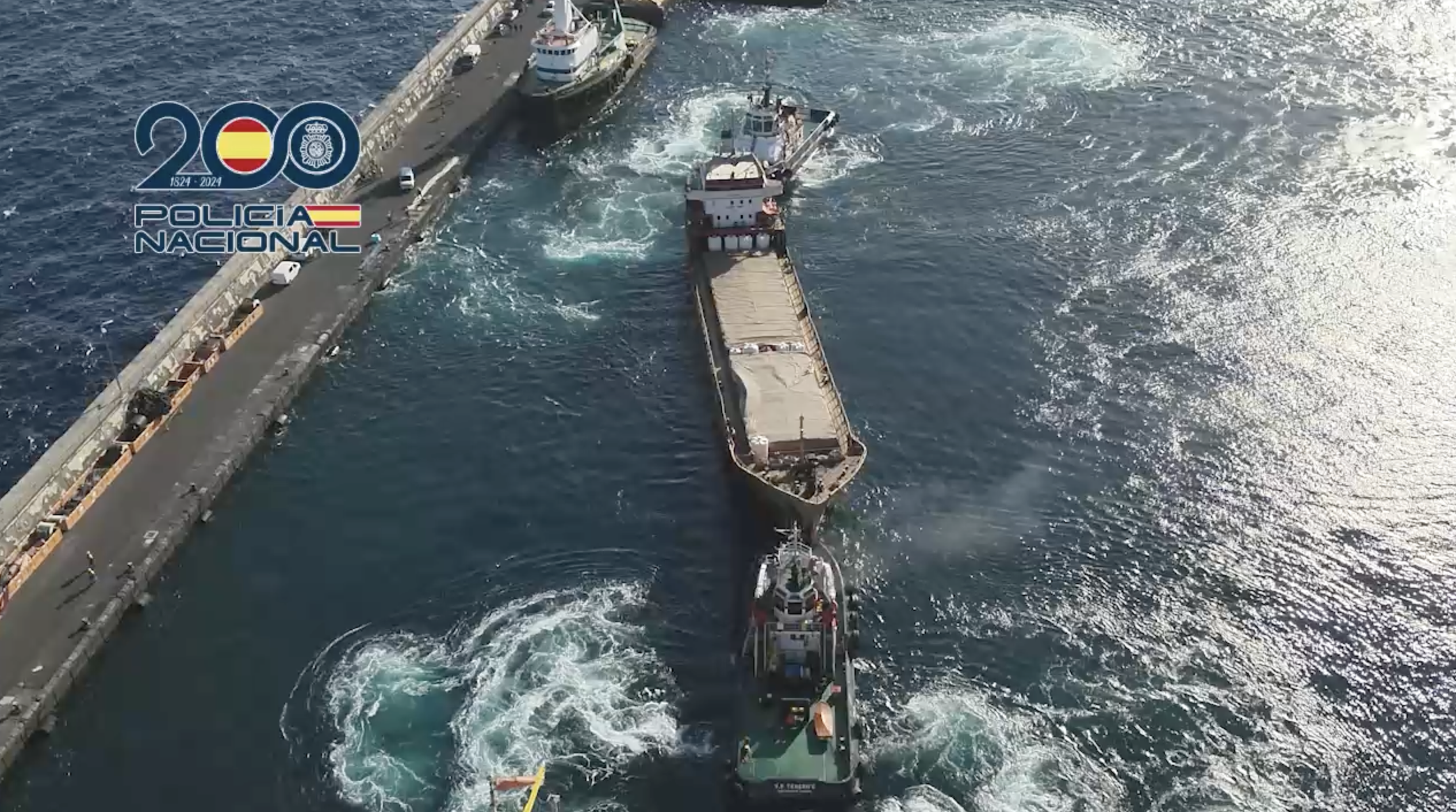
RUSTING against the dock in Santa Cruz de Tenerife sits the United S, a vessel that looks like it belongs in the scrapyard.
Instead, it finds itself at the centre of a multi-million-euro criminal investigation.
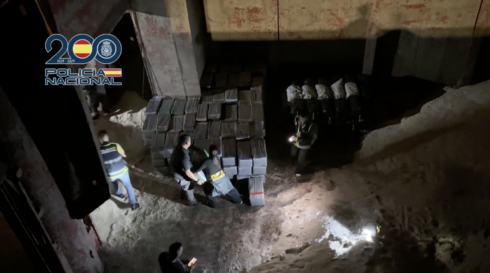
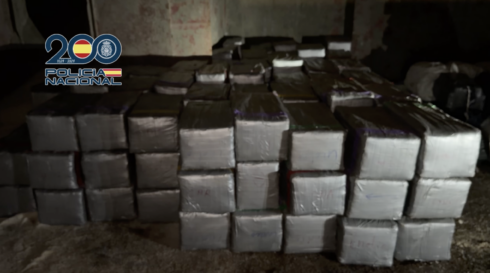
The aging cargo ship has been the subject of intense police scrutiny since elite Spanish police officers stormed its deck to find a record-breaking 10 tonnes of cocaine hidden in its hold.
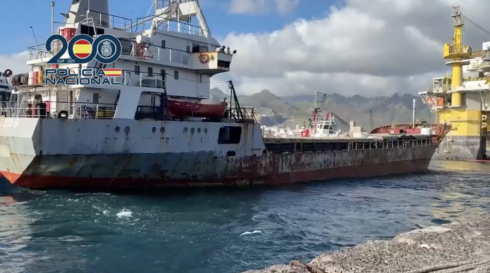
While police dismantle the mountain of salt used to hide the drugs, an Olive Press examination of the United S’s history reveals the fingerprints of the perfect narco-transport.
Built in 1975, the United S fits the classic profile of a ‘burner’ ship – a disposable asset used by cartels for one-way trips where the risk of seizure is priced in.
At 51 years old, the vessel is a maritime dinosaur. Its safety classification was withdrawn by Bureau Veritas back in 2013, meaning that for the world of legitimate, insured commerce, this ship has been ‘dead’ for over a decade.
READ MORE: Cocaine price slump is driving traffickers to recycle narco-submarines, Spanish police warn
For years, the ancient vessel pottered around the Mediterranean, never venturing far from the coast.
Then, the pattern changed.
On June 12, 2024, the ship was purchased by Kamer Shipping & Trading Co, a company based in Istanbul, Turkey, and renamed to United S – its sixth name in 11 years.
According to the Equasis maritime database, this acquisition marked the beginning of its transformation from a coastal hugger to a trans-Atlantic smuggler.
Before setting sail for the drugs, the operators attempted to wipe the ship’s legal footprints.
Having previously flown the flags of Belize, Sierra Leone and Togo, its flag status simply became ‘Not Known’ just months before the bust. In the event, it was raided flying the Cameroonian flag – another black-listed jurisdiction.
With its identity concealed, the vessel left the Mediterranean in November 2025, heading first to West Africa and then the Brazilian port of Fortaleza to load its illicit cargo.
The ship’s movements prior to the police raid followed a suspicious pattern.
After heading out across the Atlantic around December 6, the United S did not declare a specific European port as its final stop.
Instead, maritime tracking data listed its destination simply as ‘For Order’.
This is a common tactic in maritime smuggling, implying the captain was planning to loiter in international waters, acting as a floating warehouse from where smaller boats could offload the 294 bales of cocaine piecemeal.
A full month passed between its departure and its bust for a journey that usually takes around two weeks, indicating that the ship had been idling in the Atlantic for many days.
The drugs are usually then passed on to the ubiquitous high-speed ‘narco-boats’ that infest Spanish waters and run the gauntlet to deliver the drugs to the coast in smaller, harder-to-detect batches.
Once empty and its job is done, the burner ship is often scuttled or abandoned.
READ MORE: Raids on Costa del Sol topple cocaine gang shipping drugs to the UK
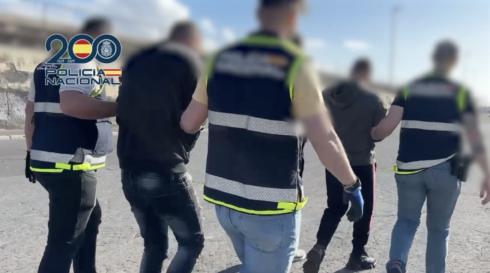
The fact that all 13 crew members were arrested indicates that investigators don’t buy claims of ignorance or being unaware of what they were carrying.
Furthermore, shortly after the Policia Nacional GEO team secured the bridge 535km from the Canary Islands, the ship ran out of fuel.
It was left drifting helplessly for 12 hours before it had to be towed into Tenerife on Sunday afternoon by maritime rescue services.
This is yet another red flag – in the world of legitimate shipping, running out of fuel in open water is virtually unheard of.

It would be a catastrophic failure of planning that would end a captain’s career.
But for the United S, this was likely a calculated risk that backfired.
The fact the ship ran dry suggests its logistics chain collapsed before it was unable to unload: either the pick-up boats were delayed, or an illegal sea-bunkering (refuelling) rendezvous failed to materialise.
But what did it for the United S may well have been the recent Atlantic storms, including the tail end of Storm Goretti, that wracked the region last week.
They would have generated significant swells off the coast of West Africa and the Canaries and rough sea conditions that likely would have made a ship-to-ship transfer to small ‘go-fast’ boats impossible.
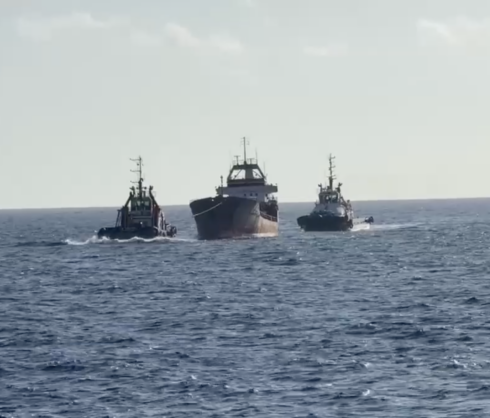
She likely had to hold her position and burn through her final fuel reserves while waiting for a calm window that never opened.
Instead, the dwindling fuel supplies left them sitting ducks for the Spanish police, turning a 35-year-old rust bucket into the scene of Spain’s biggest ever high-seas bust.
Now under police guard, the United S has surely made its final voyage, having unwittingly delivered the largest high-seas cocaine haul in the history of the Policia Nacional.
Click here to read more Explainer News from The Olive Press.




Cocaine from Brazil. One of the members of Mercosur with whom the EU have just signed a trade agreement I suppose the ministers involved in this from the EU side never expected trade to include cocaine! How naive can they get?