


SPAIN is preparing to switch on EES biometric scanners at the Gibraltar border next month leaving many wondering when the long-awaited EU-UK treaty will be approved and implemented.
The EES activation will start to be used at the Gibraltar border in trial phases in February with the intention that it will be fully operative by April, along with the rest of the systems in EU countries.
It is, however, not expected to apply to Gibraltar residents.
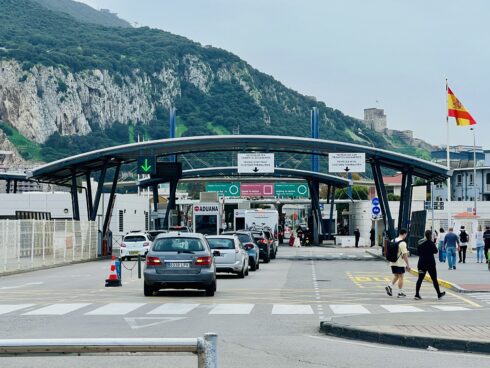
Machines and fingerprint systems are already installed at La Verja, the physical border crossing between La Linea de la Concepcion and Gibraltar, with Spain preparing to put them into use in the coming weeks.
The activation of the scanners in the limbo period before the treaty is ratified and the border dismantled could prove to be a headache for Gibraltar.
As it stands the Gibraltar government has reviewed and approved a version of the treaty text but it has not undergone ‘legal cleaning’ by the UK and EU.
This ‘cleaning’ process will see both parties review the exact wording before they give formal approval.
Following legalisation Gibraltar’s parliament will debate and vote on the treaty and, if approved in Gibraltar, it will then be put through the UK’s ratification processes.
The EU will also gain approval from their council and put the treaty to a vote in the European Parliament. It will be an exclusive agreement of the EU meaning that confirmation comes from the European Parliament and not the national parliament of each EU member.
This entire process should culminate in ‘weeks, not months’, according to Gibraltar leaders.
READ MORE: Spain sets new foreign tourist record with 97 million visitors in 2025
Once accepted, Gibraltar will act as if it is in the Schengen area for travel purposes without formally joining it, meaning that EES will not be necessary at La Verja.
This is argued to be particularly necessary because of the crowds of people that move through the La Verja border during rush hour every day – while EES is in place, before the treaty is approved, queues are set to grow during peak times.
Until now Gibraltar has operated under special border conditions with Spain not checking Gibraltar residents’ passports in a move of political goodwill rather than legal obligation.
Therefore until the treaty enters force EES can be implemented and, as mentioned above, is set to be put into place from next month.
Last Thursday officials from various Spanish government ministries visited the border at La Linea which controls traffic in and out of Gibraltar.
READ MORE: TRAVEL: All high-speed trains cancelled between Madrid and Andalucia after deadly Cordoba crash
The Spanish visitors included Carlos Moreno, Secretary General for the European Union at the Spanish Ministry of Foreign Affairs; Carlos Rios-Miranda Iglesias, Head of the Central Border Unit of the National Police; and a senior customs official from the Ministry of Finance.
They met with the technical team at Gibraltar airport where the town hall has proposed a redesign of the current La Verja space and plans to access the airport and coast.
Doing so to study how new controls will be implemented once the treaty comes into force, the group discussed ‘eliminating physical barriers and improving urban permeability’ and ‘implanting a Plan de Movilidad Transfronteriza Compartida, with walls, payment systems and uniform signposting’ to help pedestrians.
The physical space at La Linea, where police cabins and equipment are currently placed, will no longer be necessary with the town council having applied to acquire it.
READ MORE: Heading to the US any time soon? Be prepared to hand over your social media to Trump’s border police
If granted the space, it intends to incorporate satellites and a cybersecurity technology centre project into the space which would be promoted by two La Linea businessmen, Carlos Moreira and Julian Fernandez who head WISekey and Fossa Systems.
Click here to read more Spain News from The Olive Press.







I’m confused. You say it is an EU ‘exclusive agreement’. That means it comes straight into law from the EU.
Yet you say that the Gib government gets to vote on it, so does the UK governmen and then the EU themselves debate it.
Help !