

NEARLY 35% of teenagers aged 15 to 18 reported having sexual intercourse in 2022, while condom use fell to its lowest level since records began in 2002.
Almost one in three teenagers in Spain had sexual intercourse by the age of 18, according to the latest Health Behaviour in School-aged Children (HBSC) study presented by the Ministry of Health.
The survey, carried out in 2022 as part of a World Health Organization-backed project, tracks long-term trends in adolescent health and behaviour and compares data collected every four years since 2002.
The report shows that 34.8% of adolescents aged 15 to 18 said they had engaged in sexual intercourse, with similar rates among boys and girls, although prevalence rises sharply in the 17 to 18 age group.
More than one in ten respondents reported first having sex at the age of 13 or younger.
Condoms remain the most widely used contraceptive method, but their use has fallen steadily over two decades and now stands at its lowest level since the study began.
READ MORE: Digital sex crimes against children increase in Spain, new report finds
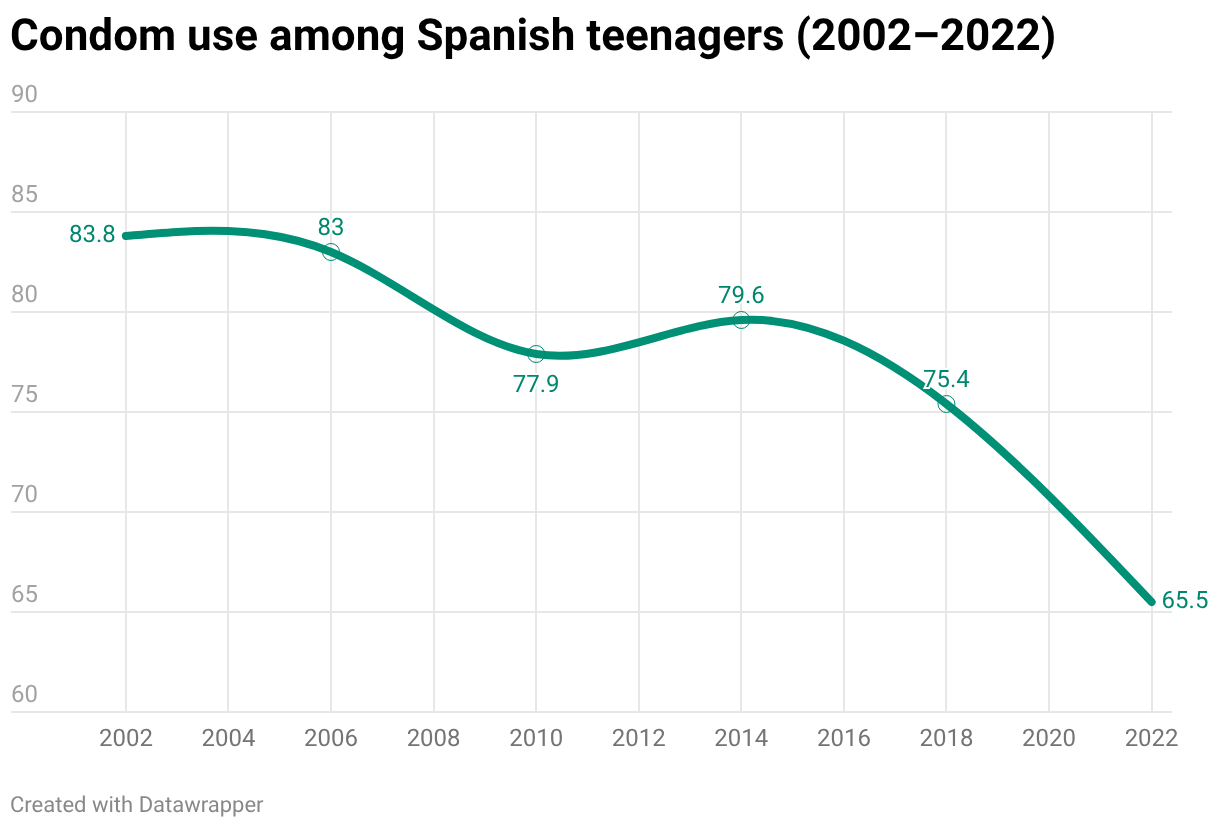
In 2002, total condom use at last sexual intercourse stood above 83%, but by 2022 it had dropped to 65.5%.
The sharpest fall occurred between 2018 and 2022, reversing the relative stability seen in earlier survey waves.
The decline is more pronounced among girls, widening a gender gap that was virtually non-existent in the early 2000s.
By 2022, just over 60% of girls reported using a condom during their last sexual encounter, compared with more than 70% of boys.
Among younger girls aged 15 and 16, the drop in recent years has been particularly marked.
While condom use has decreased, the use of the contraceptive pill has remained relatively stable over the past decade, with around one in five girls reporting its use.
The withdrawal method continues to be reported by a notable minority, despite being considered medically unreliable for preventing pregnancy.
Emergency contraception is also widespread, with roughly one in three sexually active girls saying they have used the morning-after pill at least once, and a smaller proportion reporting repeated use.
Although pregnancy among minors remains relatively uncommon, a small percentage of sexually active girls aged 15 to 18 reported having been pregnant.
The study also highlights clear socioeconomic differences in sexual health outcomes.
READ MORE: New survey finds one in four people in Spain don’t take any care of their sexual health
Youth from lower-income families are more likely to report earlier sexual initiation, lower condom use and greater reliance on less effective methods.
By contrast, those from higher-income households tend to show stronger prevention indicators and greater access to both regular and emergency contraception.
Note that the data was collected in 2022, meaning behavioural patterns may have evolved since then, particularly given the social disruption caused by the Covid-19 pandemic during preceding years.
Click here to read more Health News from The Olive Press.