
A STAGGERING majority of Spain’s population now lives on just 2% of its territory, new data reveals, leaving rural areas deserted while cities and coasts burst at the seams.
In a trend unmatched anywhere else in Europe, 90% of Spaniards are now packed into just 2.6% of the country’s land, Eurostat figures show.
That means roughly 40 million people are crammed into hotspots like Madrid, Barcelona, Valencia, Malaga, and the Costa del Sol, while Spain’s interior continues to empty out as residents move away.
READ MORE: Spain hits record population of almost 50 million, mainly driven by immigration
“This is not a Spain of two paces; it is a country shaped by two ways of occupying the land,” said Jose Maria Ezquiaga, the former dean of the Madrid College of Architects.
“There has never been such a high concentration of people in cities and along the coast,” he added. “We need national policies that promote balance in our development.”
According to the Eurostat data, Madrid now holds the largest chunk of the population – more than 14%.
The capital is followed by Barcelona at 12%, Valencia at nearly 6%, and southern and eastern coastal areas – including Malaga, Sevilla, Cadiz, Murcia, and Alicante – trailing at between 3% and 4%.
Experts warn the trend is sending property prices through the roof.
A 2025 study by CaixaBank, one of Spain’s biggest banking groups, found that the country was short some 765,000 homes between 2021 and 2024.
The shortfall was concentrated in a few major cities – Madrid, Barcelona, Valencia, Alicante, and Malaga – which together accounted for about half of the total deficit.
The lack of available properties accounts for around 39% of the national price increase, the study warns.
Real estate expert Raul Garcia Molina, of Ysabika Inmobiliaria, told the Olive Press. “This is a feedback loop. Unless we build more, prices are going to keep surging.”
“The higher they go, the more people invest, and the fewer homes are left for everyone else,” he added.
The squeeze comes amid an unprecedented population boom, with Spain’s National Institute of Statistics (INE) reporting that the country has now reached a record 49.6 million residents.
The INE added that immigration was driving the growth, with an unprecedented 10 million foreign-born residents now living in Spain.
With one of Europe’s lowest birth rates, experts warn that without this inflow, the population would actually be shrinking.
Foreign residents now make up roughly one in five Spaniards, with Colombians, Venezuelans, and Moroccans among the fastest-growing groups.
READ MORE: Revealed: The areas of Spain which are seeing the biggest population growth
Their arrival has reshaped demographics in cities and coastal hotspots, piling pressure on already strained housing and services.
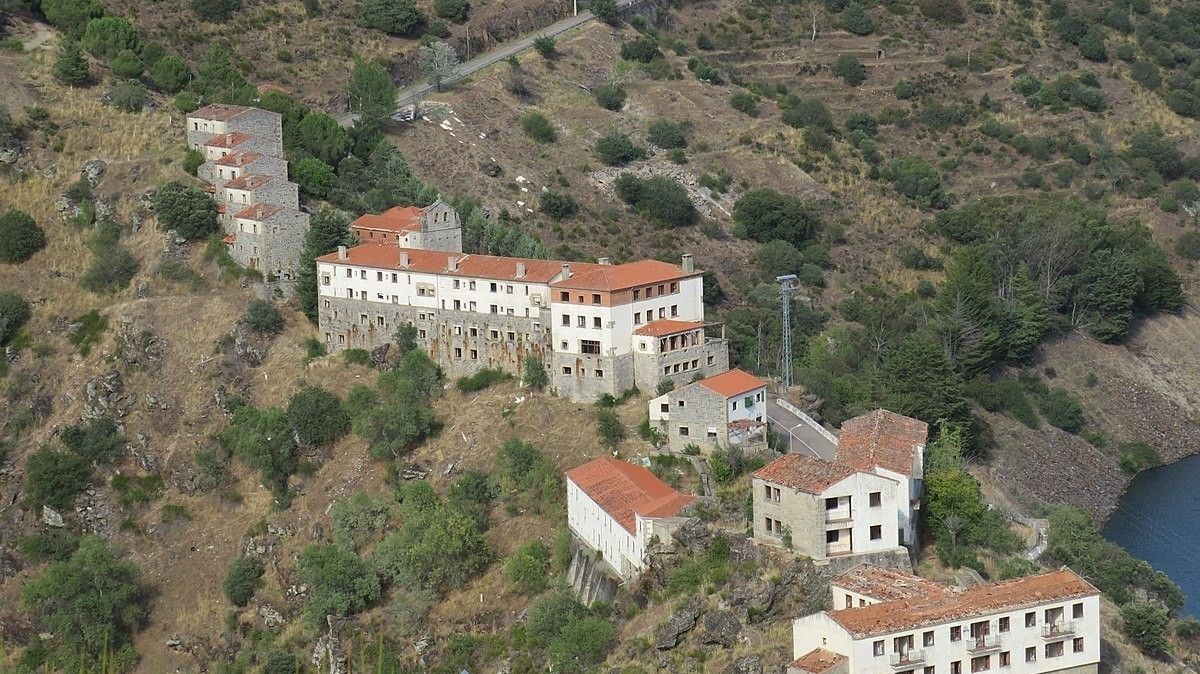
Meanwhile, Spain’s interior tells a very different story. Known as ‘empty Spain’ or ‘España vaciada’, vast swathes of the country are losing residents fast.
Some provinces, like Soria, Teruel, and Cuenca, now have fewer than 10 inhabitants per square kilometre – far below the national average of 93, according to Spain’s Ministry for Territorial Policy.
Over the past decade, rural areas have shed tens of thousands of residents, with young people leaving for cities in search of work and opportunity.
By 2024, the INE estimates that nearly 15% of municipalities are at risk of disappearing due to depopulation.
The hollowing out threatens local services, schools, and healthcare – and leaves whole regions aging and isolated, experts have warned.
“Spain needs a national urban policy to encourage more balanced development,” Ezquiaga said.
“But this debate has to happen at the national level, because each region alone sees only part of the problem.”
Click here to read more Spain News from The Olive Press.