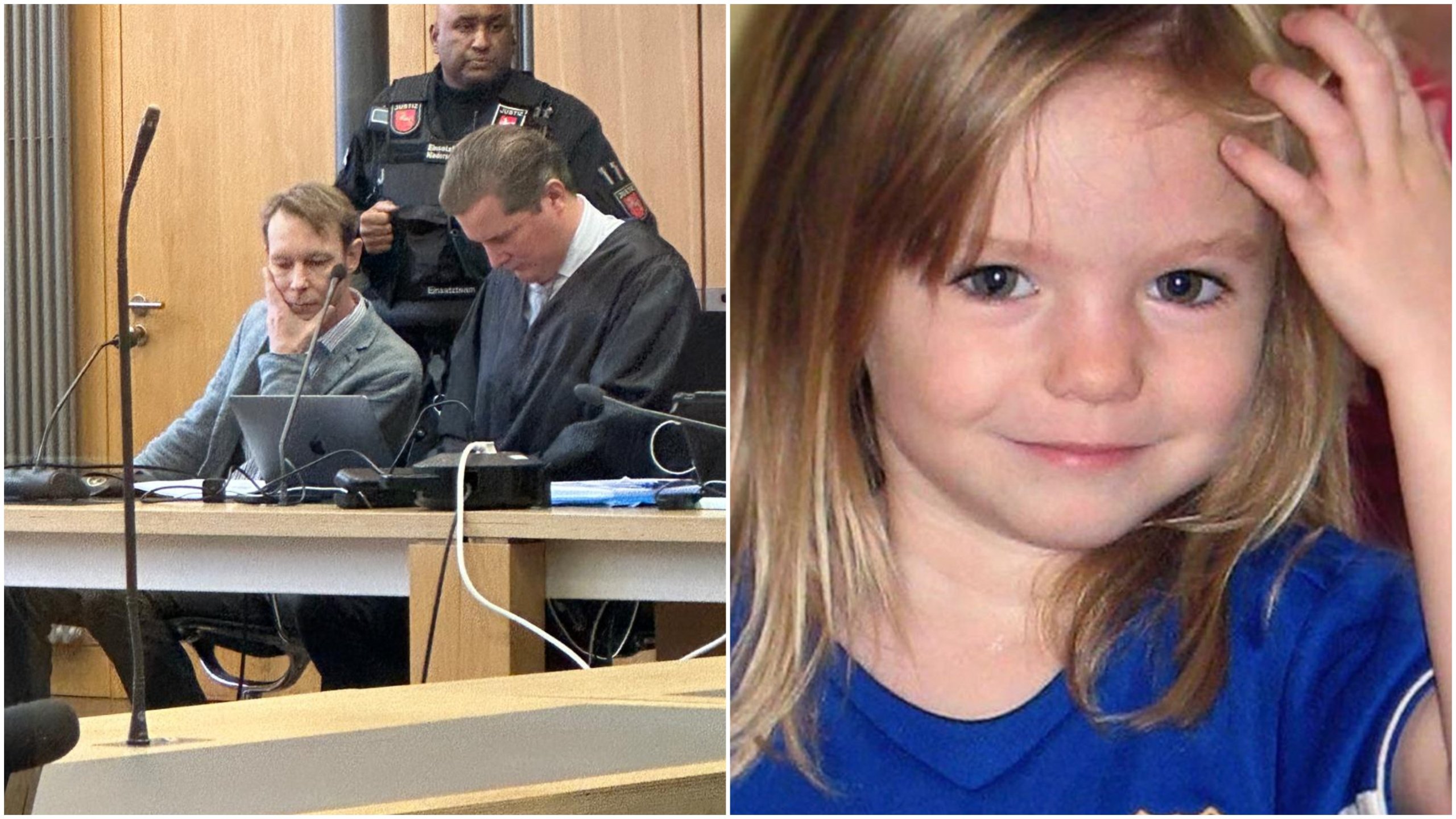
GERMANY’S Federal Public Prosecutor has launched a sweeping appeal against Christian Brueckner’s 2024 acquittal on rape and child abuse charges.
A 44-page report slams the court in Braunschweig ruling it mishandled key evidence, wrongly discredited witnesses, and failed to assess important circumstantial evidence.
In particular it backs the claims of ‘bias’ of the judge to release the prime suspect in the missing Madeleine McCann case onto the streets.
It rules that the judgment of the serial sex offender and paedophile was seriously flawed and should be overturned.
Now, in a detailed appeal filing seen by the Olive Press, a retrial is being sought over the rape of an elderly woman, the aggravated rape of Irish victim Hazel Behan in 2004, the sexual abuse of a child in 2007, and alleged child abuse involving children in 2017. All took place in Portugal.

The federal prosecutor’s position is clear: the acquittals ‘do not withstand legal review’ and Judge Engemann mishandled the evidence.
At the heart of the appeal, prepared by senior legal expert Stefan Schmandt, is the claim that Judge Engemann’s court failed to properly assess the overall body of circumstantial evidence.
German law allows acquittals if judges cannot overcome reasonable doubt. However, appeal courts can intervene if a trial court’s reasoning is contradictory, incomplete, illogical, or sets excessively high standards for conviction.
The federal prosecutor accuses the Braunschweig chamber of examining each piece of evidence in isolation and discarding it prematurely, rather than weighing the combined force of multiple circumstantial evidence pointing toward the sex offender.
In the Behan case, prosecutors listed numerous circumstances they say should have been considered together. They include:
- Brueckner lived under 30 kilometres from the crime scene in Portimao at the time
- He was familiar with the hotel complex and apartment layout
- A cash box was stolen from the victim’s apartment shortly before the attack
- A defective balcony door was known to be a problem among staff
- Brueckner admitted breaking into holiday apartments at night wearing a stocking mask
- He owned a black video camera
- He had already been convicted of raping a 72-year-old woman nearby
- His emails and chats revealed sadistic rape fantasies
- He wrote first-person stories describing binding victims, gags, scissors and filming
However, the court dismissed many of these as not ‘uniquely identifying’, even though police sources told the Olive Press the likelihood of there being two similar sadistic rapists on the Algarve at the time as being ‘less than 1%’.
The report insists that in cases involving important circumstantial cases, it is precisely the cumulative pattern that can establish guilt.
Another major criticism in the February 3 report concerns the court’s treatment of key witnesses, including Helge Büsching and Manfred Seyferth, who both knew the suspect well from Portugal and Spain.
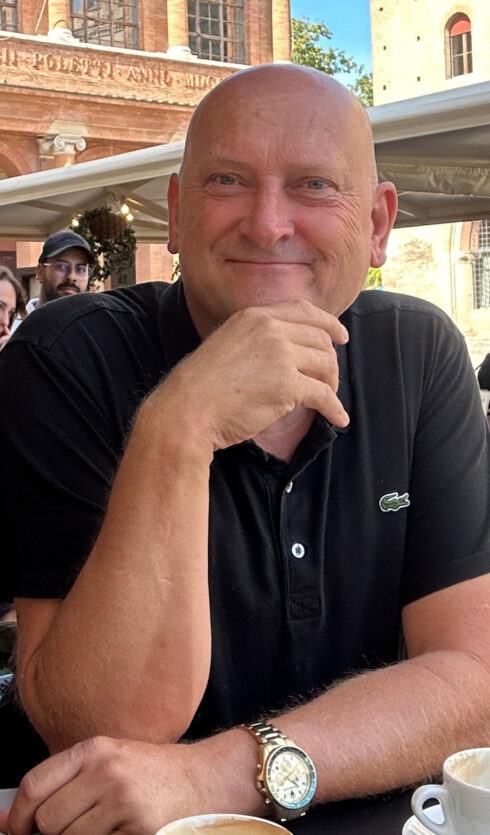
The chamber found their testimony unreliable or false, even though their detailed and credible evidence helped to convict Brueckner of the 2005 Praia da Luz rape of American pensioner Diana Menkes, 72, in 2019.
The federal prosecutor argues this was reached without properly examining supporting evidence and without recognising that minor inconsistencies across repeated statements is entirely normal.
The Federal Prosecutor also raises procedural complaints, saying the chamber wrongly rejected prosecution motions for further evidence.
One example involves the refusal to re-examine retired judge Kerstin Dreyer, whose testimony could have clarified contradictions about what Büsching said in an earlier trial, including references to the location of videotapes.
The court also rejected a motion to introduce a dental report from Brueckner’s prison medical file, calling it irrelevant. The federal prosecutor argues the reasoning was inadequate and inconsistent with the written judgment.
It also failed to take into account key evidence given by his ex-girlfriend Silke B, who lived with Brueckner in Praia da Luz for at least a year.
Allegations of bias
Perhaps the most shocking issue is the prosecution’s claim that the judge appeared bias.
This became apparent when half way through proceedings, the court lifted the accused’s arrest warrant, stating that strong suspicion no longer existed.
Prosecutors argue this suggested the chamber had effectively formed a settled view of innocence before all evidence was complete.
Motions to recuse the judges were rejected, but the federal prosecutor says the handling of this issue raises serious legal concern.
What happens next
The federal prosecutor is asking Germany’s Federal Court of Justice to schedule a full appeal hearing and reverse the acquittal.
If successful, the case would likely be sent back for retrial before a different chamber, possibly in Göttingen or Leipzig.
This week, Helge Busching told the Olive Press he was ‘delighted’ with the report that came on his birthday.
“It was the perfect birthday present and shows we were not lying as the judge claimed,” he slammed.
Meanwhile, mother-of-three Behan said: “Let’s hope justice can still be done. I’m 100% sure it was Brueckner who raped me. He’s a sick and evil man.
“That judge got it completely wrong and the way she treated me and other witnesses was disgusting.”

Brueckner is currently living as a free man in the city of Kiel in northern Germany.
Although he has to wear an ankle tag, he has been given a council flat and gets hundreds of euros as an allowance every month.
Protests by locals to have him locked up, while he’s still named as the prime suspect in the Madeleine McCann case both in Germany and Portugal, have so far been ignored.
Scotland Yard and German police continue to liaise over when and where to prosecute him over the missing three-year-old who was snatched from her holiday apartment in Praia da Luz in 2007.
German prosecutor Hans Christian Wolters says he’s certain she is dead, and is convinced that Brueckner is behind her abduction and murder.
Click here to read more Crime & Law News from The Olive Press.