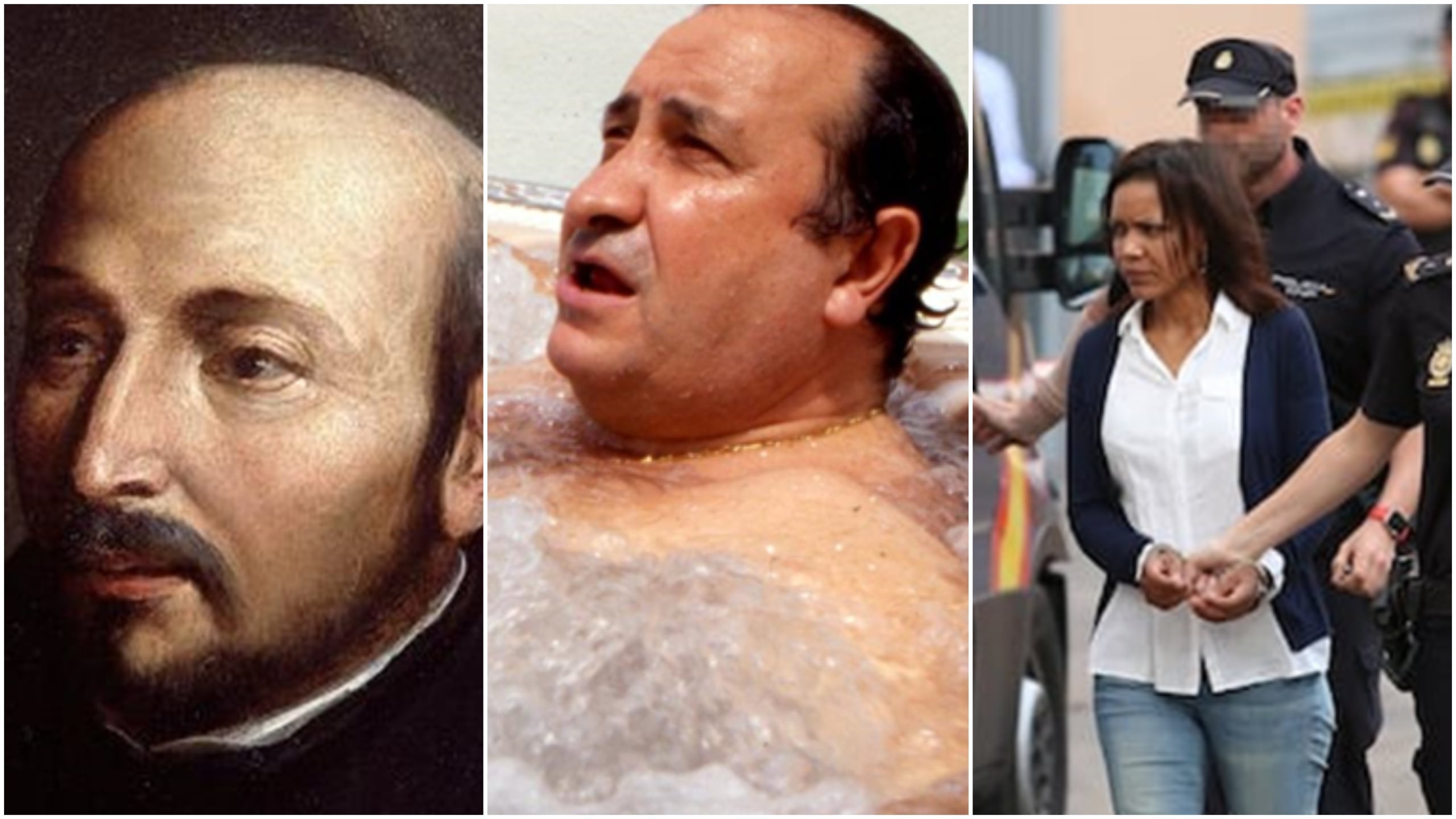
MARCH 12 is a date that binds together three extreme facets of Spanish history: religious fervour, spectacular political corruption and a devastating betrayal.
The historical anchor for this day stretches back to 1622, when Ignatius Loyola was officially canonised as a saint.
Any Spain aficionados should be familiar with Ignatius Loyola, who was canonised a saint on March 12, 1622, and forms a significant part of the Spanish collective DNA.
As a young man, Iñigo was a stereotypical Basque who was physically strong and aggressive by temperament.
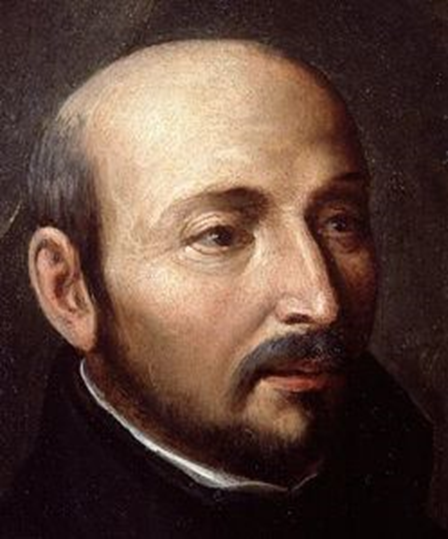
Injured by a cannonball while fighting the French in 1521, he was bedridden for a long time.
He found religion, latinised his Basque name to ‘Ignatius’, and launched a new order of monks known as the Society of Jesus, better known as the Jesuits.
His religious awakening coincided with the rise of Protestantism, and the Vatican saw him as the perfect antidote to Martin Luther.
His followers took the three usual monk vows of poverty, chastity and obedience, but he added a fourth of absolute loyalty to the Pope.
By the time of his death in 1556, he was seen as the ‘world master’ of the struggle against the Protestants, a movement which became known as the Counter-Reformation.
Centuries later, and we shift to a new ‘world master’.
The former mayor of Marbella, in the hot seat between 1991 and 2002, was a highly controversial character – though ‘outrageous’ would perhaps be a better word.
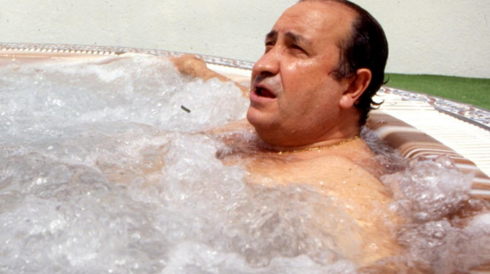
Gregorio Jesus Gil y Gil was born on March 12, 1933, in El Burgo de Osma, a small village in the north of Spain halfway between Valladolid and Zaragoza.
‘Dodgy’ might be a good adjective to describe him, as he made a lot of money in the 1960s building gated communities with standards that were less than scrupulous.
Skimping on materials led to the catastrophic collapse of a complex in Segovia, where 58 people were tragically killed.
When Gil was investigated, it turned out that not only was the cement he had used defective, but he had built the entire development without letting inspectors onto the site, without hiring an architect, and without any plans.
He was sentenced to five years in prison, but dictator Francisco Franco, who liked rogues, pardoned him after just 18 months.
He showed up in Marbella in 1991, formed his own political party called ‘the gilistas‘, and got himself elected mayor.
He was a well-known character on the Costa del Sol, constantly on television and often seen on the streets of Marbella hurling verbal abuse at homeless people.
Gil died in May 2004, leaving behind a legacy defined by three lingering points.
By dying he had the last laugh, as he was about to be prosecuted for enormous corruption – but ultimately avoided it.
Despite his controversies, an astonishing 20,000 people attended his funeral.
His famous boast also rang true, as he had found Marbella a simple fishing village and left it a world-class resort.
While the Costa del Sol remembers a rogue mayor, the province of Almeria observes March 12 as the tragic anniversary of the discovery of little Gabriel Cruz.
On this day in 2018, the lifeless body of the eight-year-old boy was found in the boot of Ana Julia Quezada’s car in what became one of the most bizarre murder stories in modern Spanish history.
Gabriel had gone missing almost two weeks earlier, vanishing while walking the 100 yards between the homes of two family members.
The last time the child was seen alive by anyone other than the killer was on the afternoon of February 27 in the village of Las Hortichuelas.
He had left his grandmother’s house to walk the short distance to where his cousin lived, with plans to play together that afternoon, but Gabriel never made it.
What followed was Almeria’s biggest-ever search, with officers from the Guardia Civil, firefighters and volunteers checking dozens of old mineshafts, farmers’ wells and natural ravines without success.
Quezada, who was Gabriel’s informal stepmother and the lover of his father, appeared on television saying how sad she was over the child’s disappearance and even participated in the searches.
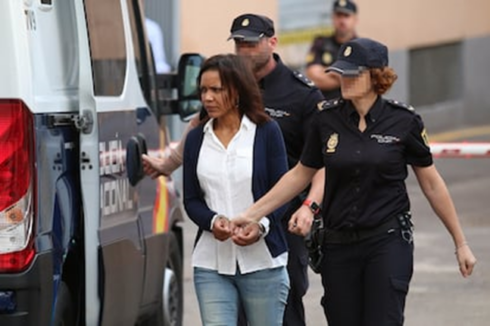
Originally from the Dominican Republic, the 53-year-old had moved to Spain with her daughter in 1995.
In what seemed like a tragic accident at the time, her four-year-old daughter died by falling from an apartment window.
The horrific truth soon emerged that Quezada had kidnapped Gabriel, taken him to a nearby village, suffocated him with a pillow, and hidden his body under an improvised grave of stones and planks.
She did not know that investigators were watching her every move.
As the search got nearer to Rodalquilar, the village where she lived and where she had hidden the corpse, she panicked.
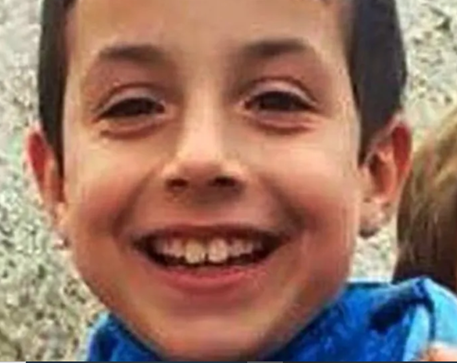
Packing the boy’s body into the boot of her car, she tried to leave the area but was caught red-handed by the authorities.
Following the devastating betrayal, it is now widely believed that she also murdered her own daughter all those years ago.
In September 2019, a jury in Almeria found her guilty of murder with malice aforethought.
She was subsequently sentenced to ‘permanent reviewable prison’ (prisión permanente revisable), which serves as the Spanish equivalent of a life sentence.
Click here to read more La Cultura News from The Olive Press.