
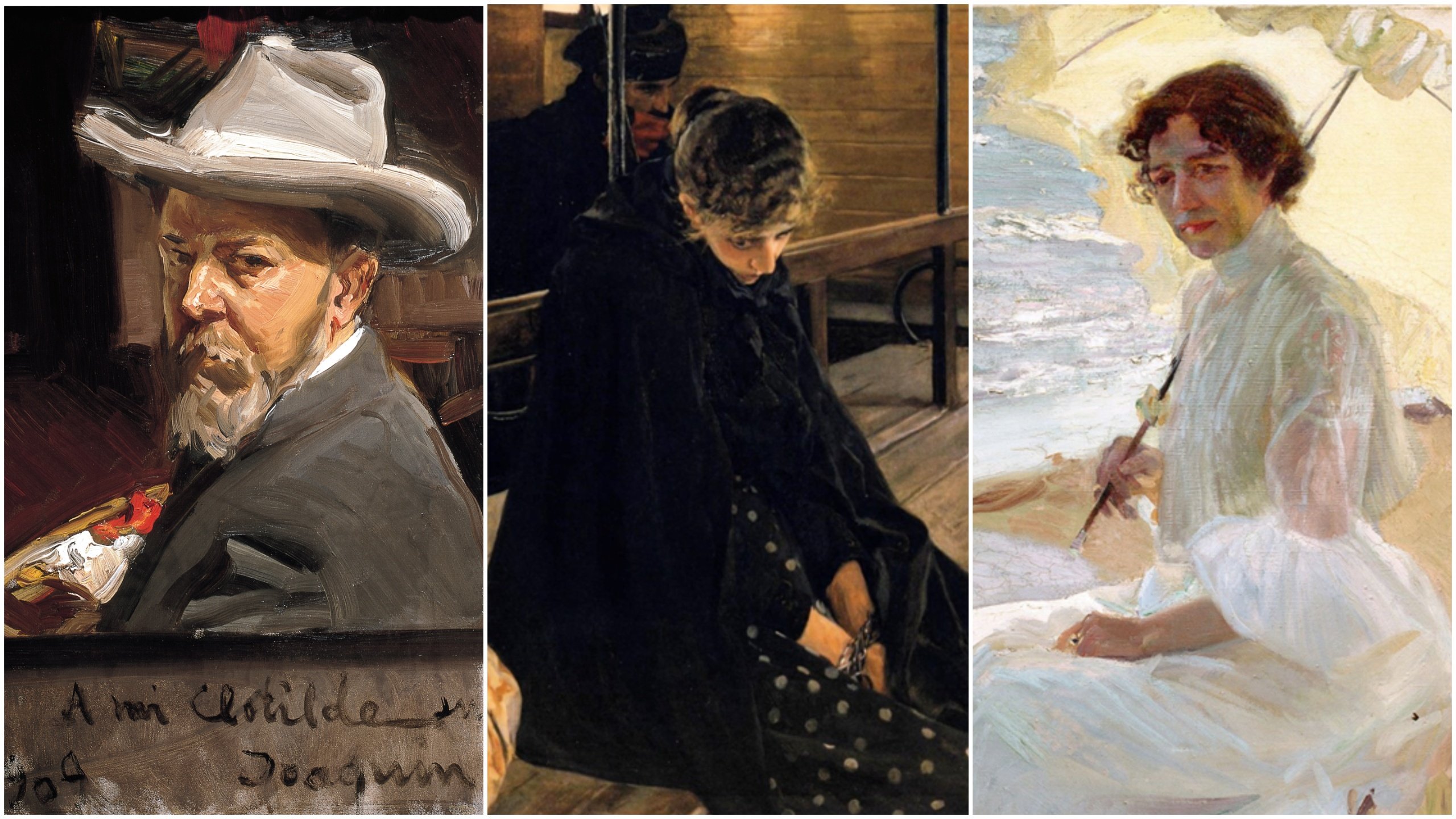
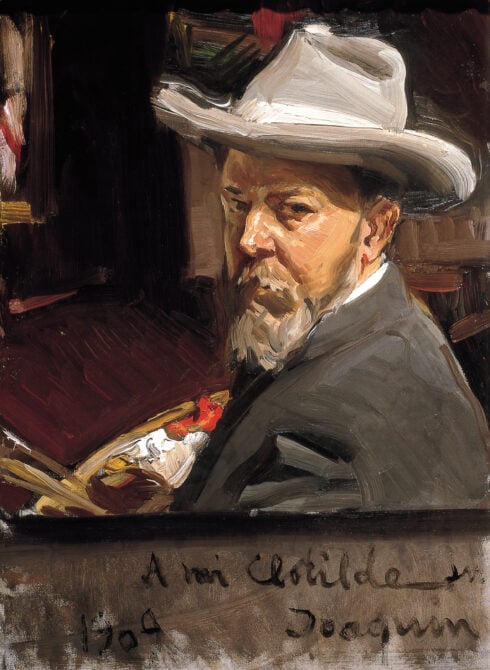
THE great Joaquin Sorolla y Bastida was born in Valencia on 27 February, 1863.
A contemporary of John Singer Sargent, and starting to achieve fame at the same time as Pablo Picasso, he was feted in New York, Paris and Berlin in his day.
Yet curiously, the genius remains little-known in his own country.
Sorolla’s first love was always Spain, and he returned many times to the Alhambra of Granada, where he painted the Courtyard of Lindaraxa over and over again, obsessively.
His great genius was for painting the beach, and he was the master when it came to depicting water and sunshine, as is befitting a Spanish artist.
One of his ‘social conscience’ canvases shows some children, afflicted by polio, being helped by a priest to paddle in the sea.
His empathy for people in unfortunate circumstances likely stemmed from his tragic early life.
When he was two years old, both his parents died during an outbreak of cholera.
In London at exactly the same time, a young doctor named John Snow was proving that cholera was caused by drinking bacteria-infected water.
The prevailing idea of the time was that invisible clouds of ‘miasma’ carried the disease.
The toddler Sorolla was raised by a local locksmith and his family, who were distantly related to him.
When he was in his teens, Sorolla knew that he wanted to dedicate his life to painting.
It wasn’t easy for him, because a career in art was considered the domain of rich and privileged young men who didn’t need to work for a living and who had the resources to visit Rome and Paris.
Sorolla moved to Madrid in 1880 and, lacking the money to enrol on an art course, spent all his free time in the Prado Museum, copying the masterpieces of Velazquez and Goya.
Throughout his twenties, he worked at various jobs and scraped together the money to buy oils and canvases, entering his paintings in as many free competitions as he could.
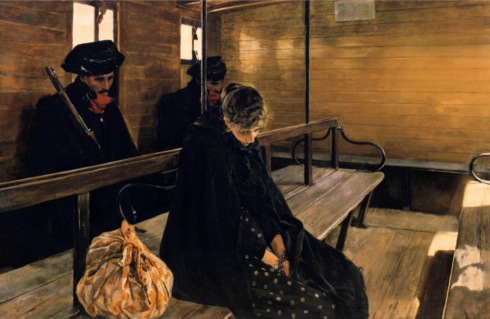
The major breakthrough came in 1892, when he was 29, as his painting ‘Another Marguerite’ won awards in Madrid.
One of the prizes was having the canvas sent to Chicago for the World’s Fair, where it won acclaim and was purchased by a wealthy American.
Today it hangs in a Kansas gallery.
The painting displays an almost photographic reality, showing a young woman sitting on a bench in the magistrates’ court, watched over by two Guardia Civil officers.
Her posture suggests deep shame and exhaustion, hinting she has been arrested for prostitution, a fate forced on her by poverty as her wretchedly puny bundle of possessions lies beside her.
Through art, Sorolla conveys the idea of one lone individual trapped in a cold, friendless environment, contrasting the very human shape of the girl with the harsh, regular glazed tiles of the walls.
The dawn of the 20th century saw him visiting Paris and New York more frequently, and the ‘social conscience’ themes understandably gave way to lucrative portrait commissions.
He was commissioned to memorialise US President William Howard Taft and was now a rich man.
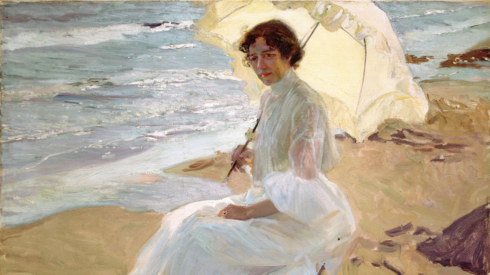
But he never lost his enthusiasm for sea and sunlight, and his painting of his wife, Clotilde, in white cotton and holding a parasol, is regarded as one of his very best works.
Like just about every man of his age and social class, Sorolla drank and smoked heavily.
He was painting quietly in his garden in the summer of 1920 when he suffered a severe stroke.
Badly paralysed and unable to paint, he lived on for three years until finally, at the age of 61, he died in 1923.
Today, visitors to Valencia’s Museum of Fine Arts can see many of his greatest works in the magnificent ‘Sorolla Room’.
Click here to read more La Cultura News from The Olive Press.