
ON the face of it, there is nothing particularly special about Teruel airport.
Located in the dusty, depopulated plains of eastern Spain, this repurposed military airbase is home to a 2,825-metre-long runway, a control tower and modest terminal – but not a single commercial flight.
With no passenger traffic to worry about, the state-owned site has instead quietly carved out a niche as one of Europe’s go-to aircraft maintenance and storage hubs.
The latter has made this remote outpost a lifesaver for crisis-hit airlines whose timetables have been turned upside down by the war in Iran.
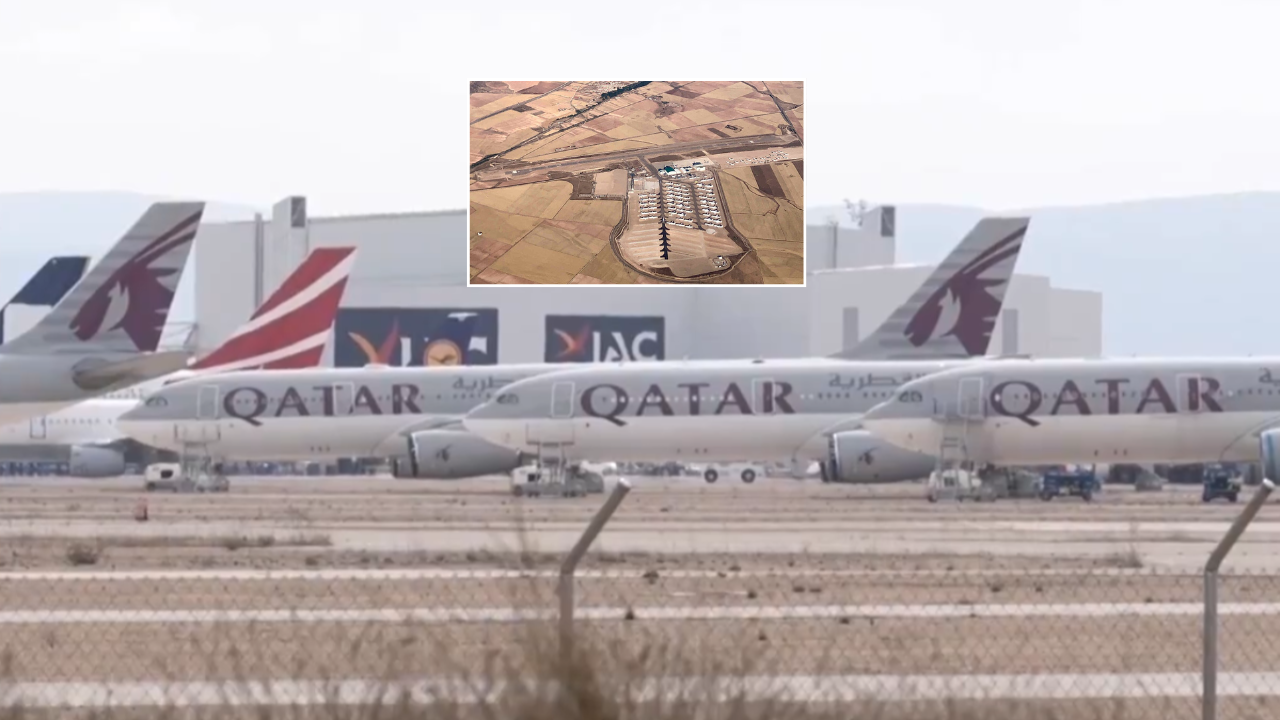
On Saturday, Qatar Airways sent five aircraft to Teruel from a range of destinations including Sao Paulo, Lagos and Miami.
That added to ten other planes already parked on the tarmac in Aragon.
On Sunday, five more wide-body Qatar Airways aircraft made their way to Teruel – including four Airbus A333 jets from the airline’s Doha base.
The scenes are eerily reminiscent of the Covid pandemic when the airport became a temporary graveyard for hundreds of passenger planes as operators slashed routes and demand collapsed.
A handful of key factors are at play to understand why Teruel has become such a popular choice for some of the world’s biggest airlines.
First – and most obviously – is safety.
Cash-rich carriers such as Qatar Airways know that their multi-million-euro jets are safe in Spain, thousands of miles away from a conflict zone where vast swathes of airspace have been closed and airports have been targeted by drone and missile strikes.
The conditions are ideal for long-term storage, too.

The dry, low-humidity, salt-free air dramatically slows down the process of corrosion – alternatively known as rusting – which serves as one of the biggest long-term threats to aircraft sitting idle.
Then there is capacity, with the airport boasting enough space on its tarmac and in its hangars for up to 250 wide-body or 400 narrow-body aircraft, making it one of Europe’s largest plane parking facilities.
That, all in all, makes Teruel particularly attractive for a beleaguered sector face-to-face with a sea of despair including skyrocketing jet fuel costs, airspace restrictions, costly re-routes or an anxious customer base worried about the pennies drying up.
But it does mean that this quiet corner of Spain is once again, for now, playing an unlikely but crucial role at the sharp end of a global crisis.
Click here to read more Spain News from The Olive Press.