
IN times like these, it is natural to ask how global events will affect property markets.
With the ongoing wars in Ukraine and Iran and the resulting rise in energy prices, alongside a broader backdrop of economic uncertainty, inflation and shifting interest rates, there is no shortage of reasons for buyers and investors to pause and reflect.
But when we look at Marbella, the response is not as straightforward as some might expect it to be. Global instability does not automatically translate into opportunity for one location over another.
Much depends on how events unfold, how long uncertainty persists, and whether international buyers respond by delaying decisions, reallocating capital, or seeking greater geographic balance in where they choose to live and invest.
The nature of buyers in Marbella’s prime market
Over the 55+ years I’ve been living and working in Marbella – and through several economic cycles – we have seen that the market tends to behave differently from more domestically-driven property markets. This is largely due to the nature of its buyers.
The resident population of Marbella is almost 170,000, of which over a third are foreigners from 152 different countries.
It is a true ‘multi-source market’ at the southern tip of Europe, well away from the problems of the big cities, and for many, a safe haven, almost a world of its own, whose appeal has been continuous since the 1960s.
A significant proportion of buyers in Marbella’s prime market are not dependent on financing. Luxury property buyers are also typically international, often acquiring property for a combination of lifestyle, long-term use and wealth preservation, rather than short-term investment. As a result, decision-making is generally less reactive to immediate economic shifts.
We saw this, for example, during the 2008 financial crisis, and again in the period following the pandemic. Activity may slow for a time, but prices in prime areas such as Sierra Blanca, La Zagaleta, Nueva Andalucía and the Golden Mile have historically shown a notable degree of stability.
In some cases, uncertainty elsewhere can even reinforce Marbella’s appeal.
International diversification
For many buyers, particularly those coming from regions experiencing political or economic instability, Marbella represents something quite simple: a safer place where they can spend time with a degree of continuity, and where their assets are held within a stable European framework.
The lifestyle offering is of course one of the main attractions, but it is not the only consideration.
At the same time, Marbella’s buyer base has become increasingly diverse over the years. Demand is not tied to any single country or region, which adds a further layer of resilience. This breadth of demand helps to cushion the market against shocks in any one region or country. This is to say, global events do not redirect demand in a single direction.
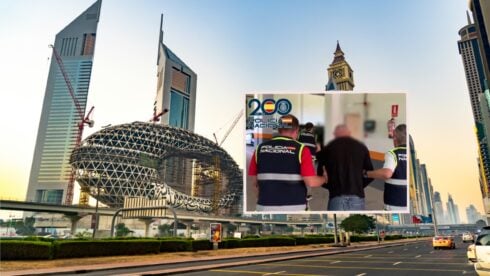
In Dubai, while recent tensions may create short-term disruption, the underlying economic fundamentals remain strong and activity at the upper end of the market has continued.
The market has also shown a notable ability to adapt quickly, supported by strong financial reserves, active governments and sustained demand. As a result, any shift in buyer behaviour is more likely to reflect diversification rather than relocation, with buyers adding a second or third base in locations such as Spain or Switzerland, rather than leaving Dubai altogether.
Provided stability in the region returns relatively quickly, Dubai is likely to remain highly competitive.
If the war is prolonged, however, it may take longer for the Dubai market to recover and could begin to influence buyer behaviour. Marbella is therefore best understood as part of a broader international landscape of prime markets, rather than a direct substitute for any one location.
Not entirely shielded, but always resilient
As one might suspect, Marbella is not entirely insulated. Interest rates, currency movements, energy prices and broader economic sentiment all have an influence, and periods of global conflict or economic strain tend to bring more cautious decision-making.
As the market matures and prices keep rising, buyers are taking more time, even though transactions are still proceeding at a steady pace, and sellers, particularly in prime locations, are rarely under pressure to adjust their prices significantly.
What we are seeing now, in the fourth week since the beginning of the conflict in Iran, is a marked increase in buyer interest on the Costa del Sol, reflecting the sense of safety and security, together with the natural beauty and exceptional climate that have long drawn people to this part of the world.
For this reason, it is perhaps more accurate to say that Marbella is not so much shielded from global turbulence, but that it absorbs it differently, and certainly more positively than in other parts of the world.
The underlying structure of the market remains extremely strong, and Marbella, as well as the entire Costa del Sol, remains an exceptional place both to invest and live.
Christopher Clover is Managing Director of Panorama Properties (www.panoramamarbella.com)
Click here to read more Property News from The Olive Press.