
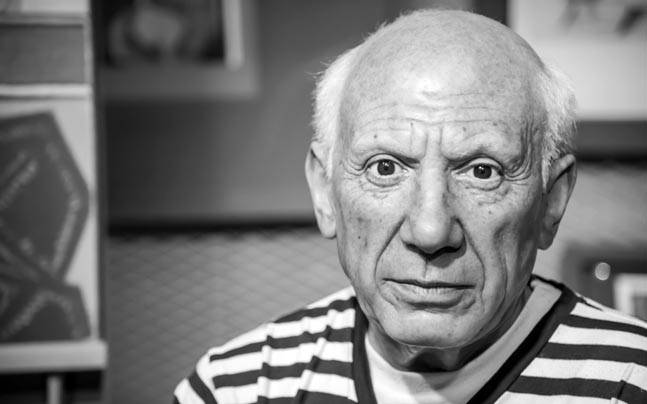
PABLO Picasso died on 8 April, 1973. He was 91 years of age.
He is generally acknowledged to be the most important artist of the 20th century (some would say, ever).
It cannot be denied that he had an astonishing ability to re-invent himself, to adapt to new ideas.
Pablo Picasso was born in Malaga in 1881.
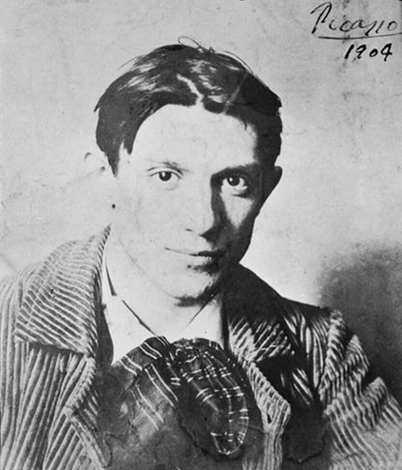
Though Malaga tries to claim him, the truth is, he left as soon as he could.
When his father (also a painter) found work in A Coruña, Pablo was happy to accompany him.
By 1895, when he was 14, Picasso was living in Barcelona. He would always, throughout his long life, think of Barcelona as his true home.
Living in Paris in 1900, Picasso was desperately poor, and like the students in the opera “La Boheme”, he often had to burn his art works to keep warm.
His Blue Period lasted from 1901 to 1904.
These paintings lack any sense of joy, and usually depict prostitutes and homeless people.
Scholars say he was heavily affected by the suicide of his friend, Carles Casagemas.
Next came his lighter Rose Period, during which he painted a lot of clowns.
At this time he got to know the American writer, Gertrude Stein, who lived in Paris. She started collecting his work and can be said to have launched him commercially.
Picasso’s next fascination was with primitive art.
He started imitating African images on display in Paris’s Palais du Trocadero. It was a seminal influence. Picasso began to realise that realism was not the only way to depict the world.

Furthermore, the photographic camera had freed artists, thought Picasso, from having to capture people and places as they really are: he began to explore the “inner” elements of existence.
In 1911, the French police arrested Picasso.
He and his friend, the poet Apollinaire, were suspected of having stolen the Mona Lisa.
In fact, an Italian patriot had taken it, wanting to return it to Florence. It was quickly recovered.
Picasso doesn’t come out of the incident smelling of roses. He denied even knowing Apollinaire, an obvious lie.
Apparently he betrayed the poet because a criminal conviction might have led to his deportation back to Spain.
In the First World War period, he experimented with Cubism.
The idea was to get away completely from the human form. It also included the “objet trouve”, the fixing of pieces of scrap to his canvases. Paper, glass, metal – whatever came to hand – could be put to use to make art.
Whereas French artists joined up to fight against Germany, Picasso continued to paint undisturbed.
He was criticised for this: by now he was making big money while others like Apollinaire (wounded) and Peguy (killed) were facing real risks.
After the War, the Surrealists came to dominate European artistic thought. Influenced by Freud’s ideas on the subconscious, they wanted to explore myths and dreams.
Picasso was welcomed into their social circles, whereas the other Spanish genius of the period, Dali, was never fully trusted.
The rise of Franco in the 1930s angered the artist.
Picasso considered the Fascists as the antithesis of culture, and vowed never to set foot in Spain while Franco was in power. The carnage of the Spanish Civil War (1936-9) distressed him.
Franco was largely dependent on Hitler’s air force to terrorise Spanish civilians by means of bombing raids on Madrid and Barcelona.
READ MORE: Legendary artist Pablo Picasso to feature in BBC TV series marking 50 years since his death in Spain

On 26 April, 1937, the Nazi Air Force bombed Guernica. For Picasso, this was an outrage.
Guernica is the town which the Basques regard as the heart of their culture. Basque feeling was strongly anti-Franco, because he made it clear that he wanted to eradicate their ‘difference’.
Cynically waiting for market day, when thousands of Basques would come into Guernica to buy and sell their produce, the Germans tried to cause maximum casualties.
Picasso’s reaction is now considered one of the all-time great canvases. Guernica shows, in strong emotional images, the tragedy of the slaughter and the nobility of the Basques.
After Guernica, Picasso lived quietly for another 36 years in southern France, producing art and having love affairs.
Whether you love or hate his work, an artist who made such a stir in the world must be significant, mustn’t he?
Click here to read more Spain News from The Olive Press.