
IN Spain, it’s no longer unusual for a weekday evening to revolve around a padel match instead of a café table.
Across cities and towns alike, the sport has quietly reshaped how people spend their free time.
What was once a niche activity has become a routine — one that blends competition, conversation and community in equal measure.
Padel’s rise has been widely discussed in terms of participation numbers and infrastructure investment.
But its deeper impact is social. In many parts of the country, it now serves as a modern gathering space, offering something that feels both structured and spontaneous at the same time.
A Rapid Expansion That Reflects Changing Habits
The spread of clubs tells part of the story.
Over the past decade, facilities have multiplied across the country — appearing not only in major urban centres but also in smaller municipalities.
Some are large, purpose-built venues; others are modest courts integrated into existing sports complexes.
Spain is broadly recognised as having one of the highest concentrations of padel courts in the world, though precise figures are difficult to confirm given the speed at which new facilities continue to open.
What is clear is that the pace of growth has been significant across all regions.
This expansion reflects more than demand for a sport. It signals a shift in leisure habits.
Increasingly, people are looking for activities that combine physical exercise with social interaction — and padel offers both, without requiring the intensity or time commitment of many other sports.
The Social Mechanics of the Game
At its core, padel is designed for interaction.
Played in doubles, it brings four people together naturally, often mixing skill levels and social circles.
Matches are straightforward to organise, and the informal character of the game makes it accessible to beginners from the first session.
What sets padel apart, however, is what happens around the match.
Many clubs are designed with social spaces in mind — terraces, lounges, and cafés where players gather before and after games.
Conversations extend well beyond the final point, turning a one-hour match into a longer social occasion.
This dynamic has helped padel evolve into something resembling an offline social network: a place where relationships form and are maintained through regular, low-pressure interaction.
Why It Works So Well in Spain
Padel’s success is closely tied to the cultural context in which it has grown.
Spanish social life has long valued shared experiences — through food, sport, and public space.
Padel fits neatly into this tradition, offering a structured yet relaxed way to connect.
Practical factors reinforce its appeal. The cost of playing is typically shared between four people, making it relatively affordable.
Equipment requirements are simple, and the learning curve is gentle compared to sports such as tennis.
Urban planning has further supported its rise. Courts require less space than many traditional sports facilities, which means they can be located close to residential areas — making it easier to fit a match into an ordinary weekday evening.
An Expanding Industry Around the Game
As participation has grown, so has the broader padel ecosystem. Coaches, club managers and equipment suppliers are now part of a maturing industry that extends well beyond the court itself.
The shift is visible at grassroots level.
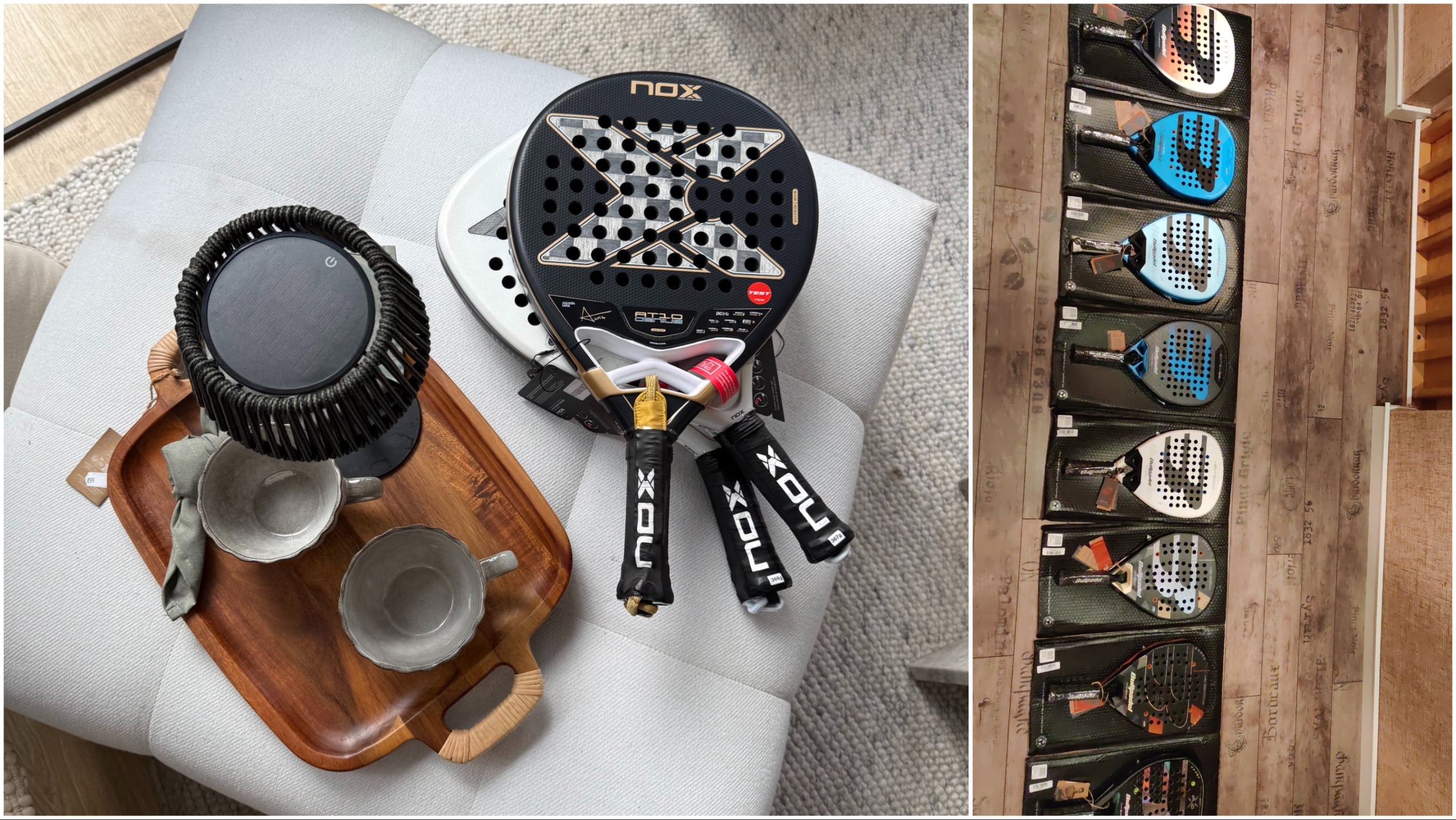
Padeldirecto.com, a Spain-based padel retailer with close ties to the domestic club scene, has noted a marked increase in first-time equipment buyers over recent years — a sign that the sport is drawing in players who are committing to it beyond an initial trial.
Rackets, shoes and accessories are being purchased with more consideration, suggesting that padel is increasingly treated as a long-term pursuit rather than a casual activity.
Coaching has followed a similar trajectory. Training is no longer the preserve of competitive players; many amateurs now seek structured guidance, contributing to growing demand for qualified instructors across all levels.
Clubs as Modern Community Hubs
Today’s padel clubs often function as more than sports venues.
They operate as community spaces where people gather to play, socialise and in some cases network professionally.
Many clubs organise informal tournaments, social evenings and member events that attract a varied mix of participants.
In this sense, they echo the role of traditional community centres — but with a stronger emphasis on activity and physical presence.
These spaces tend to be broadly inclusive.
Unlike more exclusive sports clubs, padel venues typically attract a wide demographic: young professionals, older players, families and newcomers to the sport alike. That diversity reinforces their value as social connectors.
Spain’s Influence on Global Padel
Spain’s relationship with padel extends well beyond its own courts.
As the sport gains popularity internationally, the Spanish model is frequently cited as a point of reference.
The International Padel Federation has highlighted Spain’s infrastructure and participation levels as key factors in the sport’s global growth.
Even so, replicating that success elsewhere is not simply a matter of building courts.
It requires cultivating the same social environment — the habits, the informality, the community feeling — that underpins the sport in Spain.
That cultural dimension is far more difficult to export than a blueprint for a facility.
Looking Ahead
As padel continues to expand, new questions are emerging.
In some areas, the rapid increase in facilities has prompted concern about market saturation.
The sport’s growing professionalism also brings rising expectations around coaching standards, club management, and overall quality.
There is a broader question, too, about identity.
As padel becomes more global and commercially structured, will it retain the informal, social character that has defined it in Spain?
For now, its appeal remains strong.
The balance it strikes between physical activity and genuine connection continues to resonate with a wide and growing audience.
Closing Thoughts
Padel’s success in Spain cannot be explained by sport alone.
Its real significance lies in how it has reshaped everyday social life — providing a space where people meet, interact, and build relationships in an unforced way.
The steady growth of clubs and courts is only part of the picture.
What matters more is how those spaces are used: not just for playing, but for connecting.
In that sense, padel has become something increasingly rare — a modern social ritual grounded in physical presence.
And as long as that need for connection endures, the courts are likely to remain full.
Click here to read more Sponsored News from The Olive Press.