


YES, that chaotic sprint you make when the driver looks like they might close the doors could actually be doing your brain a favour.
A new European Society of Cardiology study tracked 96,408 people who wore wrist devices for a week to record everything from gentle walks to full-on sprints.
Researchers then checked who went on to develop serious illnesses, like dementia, heart disease, diabetes, arthritis, and liver problems, or who died in the seven years after the tracking.
The results show that a bit of daily drama can pay off.
People who got out of breath the most had a 63% lower risk of dementia.
They also had a 60% lower risk of type 2 diabetes and a 46% lower risk of dying.
READ MORE:Cooking dinner at home once a week could help stave off dementia risk, new study reveals
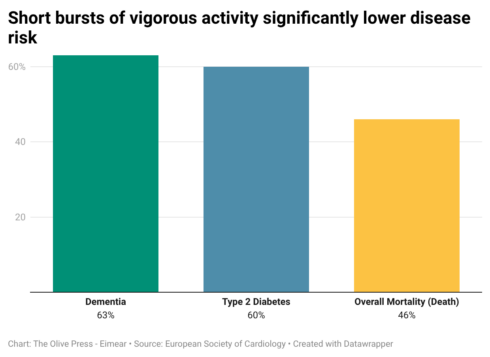
And the best part? You don’t need to spend hours at the gym, even short bursts of activity, like stair sprints, fast walks between errands, or quick chases after the kids, adding up to just 15–20 minutes a week, made a real difference.
Professor Minxue Shen, one of the study authors, says that vigorous activity helps the heart, makes blood vessels stronger, lowers inflammation and releases chemicals that keep the brain healthy.
In simple terms, a little huffing and puffing now and then is good for you.
Practical tip: add small sprints to your day, race for the bus, take the stairs two at a time or speed-walk the last bit to the shop.
A warning: if you’re older or have health problems, check with a doctor first – a gentle walk is better than nothing.
So next time you’re tempted to walk slowly, channel your inner sprinter.
You might be saving more than just a missed bus.
Click here to read more Health News from The Olive Press.