

BULLFIGHTING remains one of the most divisive traditions worldwide.
Whether it’s an art form steeped in history or an outdated spectacle of cruelty, it’s not just limited to Spain, the Olive Press has discovered.
While it became popular in Spain from the 18th century, it had already spread around the world thanks to its conquistadores.
Today you’ll find ‘los toros’ in nearly a dozen countries including India, Peru and the Philippines.
SPAIN: HEART OF TRADITION
The Spanish term for traditional bullfighting is ‘corrida de toros’, a stylised spectacle where a matador faces a bull in a ring.
Deeply embedded in cultural identity, it is a choreographed cultural ritual, often regarded as art and involving three main stages (tercios) ending in the bull’s death
The season runs from March to October and the bulls called ‘toros bravos’ are specifically bred for the fights.
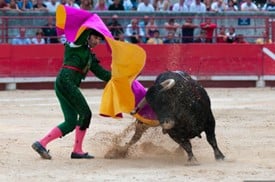
Spanish bullfighting has three main stages: the bull is first tested and weakened by mounted lancers, then struck with decorated darts, before the matador enters for the final act – ending in the animal’s death.
Contrary to popular belief, the iconic red cape is not used to provoke the bull – they are colour blind – but rather to conceal bloodstains and uphold tradition.
It is very popular in Madrid, Andalucia and the Basque Country, while it has been banned in Catalunya since 2010, and debates rage over its future.
PORTUGAL: NOT KILLING BULLS
Across the border in Portugal, the tradition takes on in a different form – one where the bull survives in the end.
The performance features three important groups. Firstly, the cavaleiros who ride horses and place decorative darts on the bulls. Afterwards, a group of forcados enter the arena to subdue the bull with their bare hands.
The third group are the cavaleiras, female riders who highlight the growing role of women in the arena.
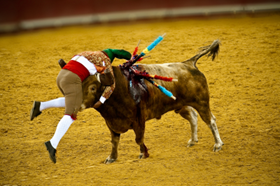
Unlike in Spain, the bull is not killed in public, and its horns are often capped to reduce danger.
Portuguese law regulates the practice, placing emphasis on safety, although critics argue the spectacle remains inherently harmful.
The tradition remains popular in regions like Alentejo, Lisbon and Porto.
FRANCE
In southern France, bullfighting exists as a mixture of Spanish and Portuguese styles, with its own regional unique twists.
While technically prohibited under animal cruelty laws, it is permitted in regions where there is a ‘local uninterrupted tradition,’ such as in Nîmes and Arles.
This exception allows both Spanish-style corridas – where the bull is killed – and a distinctly French alternative: the Course Camarguaise.
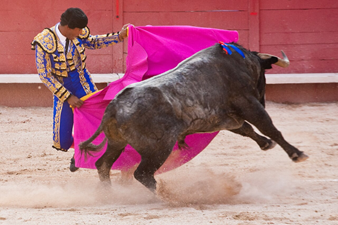
In this version, participants known as ‘raseteurs’ attempt to snatch a ribbon tied between the bull’s horns.
No weapons are used, and the bull survives. Women can also take part and the animals are bred for speed rather than aggression.
MEXICO
Bullfighting was brought to Mexico by the conquistadores in the 16th century. Over time, it became deeply embedded in Mexican culture.
It tends to be more theatrical and expressive, focussing on the matador’s personal style and follows the same three-stage format as Spain.
Mexico City has the largest bullring in the world: the ‘plaza mexico’.
Bullfighting events can attract huge crowds and are often tied to major festivals and holidays.
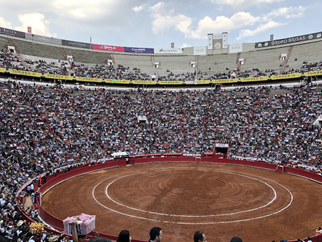
Music, often by livebands, is played in the arena to add even more emotion.
Some famous Mexican matadors, like Carlos Arruza, helped shape the national style and gained international recognition.
Bullfighting is legal in Mexico, but rules are different in all regions. Some regions have banned it.
There are ongoing legal battles and political debates about animal rights.
COLOMBIA
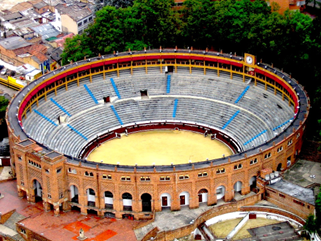
Colombia was one of the biggest bullfighting centres away from Spain for centuries.
But now the law has changed and all forms of bullfighting will be banned from 2027.
Bullfighting was introduced to Colombia by the Spanish in the 16th century and over time, it became part of regional festivals and urban culture, particularly in Bogota, Cali, and Medellin.
Colombian bullfighting follows the Spanish-style corrida, meaning the bull is killed in the arena.
READ MORE: IN PICS: The full revelries from the Costa del Sol’s biggest St Patrick’s Day parade and party
PERU
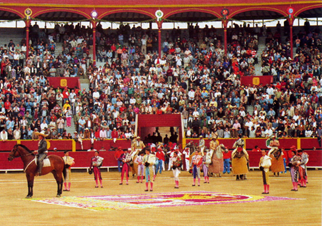
The ritual, costumes, and sequence of bullfighting is very similar to Spanish bullfighting, including the ceremonial opening.
The most famous event is the Feria del Señor de los Milagros in Lima, now one of the largest and most prestigious bullfighting festivals in the world.
It attracts top matadors from Spain and Latin America.
READ MORE: WATCH: Veteran Catalan matador is gored in leg by raging bull during performance in Madrid
In some regions, bullfighting is mixed with indigenous traditions and festivals.
A famous example is the Yawar Fiesta: a condor (symbolizing indigenous people) is tied to a bull (symbolising Spanish colonizers). The event is symbolic rather than a formal corrida.
AMERICA
American freestyle bullfighting is a sport focussed on speed and control, developed alongside rodeo culture in the US.
The bull does not get killed and no weapons are allowed in the arena.
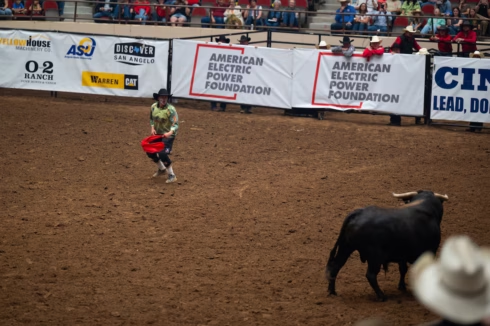
Bullfighters use their own speed and body to avoid the bull and get a score based on skill, creativity, style and how risky they perform.
Instead of a tradition, it’s a competition with a lot of risks.
PHILIPPINES
In the Philippines, bullfighting takes a very different form.
Known locally as pasungay, the practice involves two bulls facing off against each other rather than a human confronting the animal.
These contests, often held during rural festivals in regions such as Negros Occidental and Mindanao, are rooted in community pride.
Owners showcase the strength of their livestock, while supporters view it as a longstanding tradition. Some critics have raised concerns about animal welfare.
INDIA
In India, bullfighting (Jallikattu) is traditionally practiced as part of the harvest festival of Pongal across Tamil Nadu.
It involves men chasing a bull, attempting to grab the hump on the bull’s back and hang on while it attempts to escape.
They ride it for as long as possible and, best of all, try and bring the bull to a stop to remove a piece of cloth on its horns.
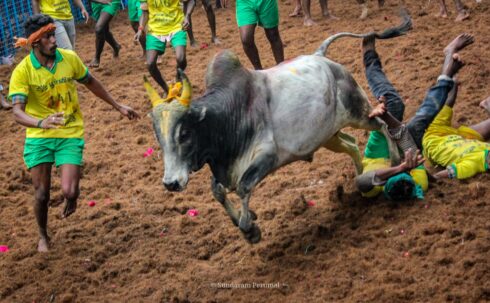
Prizes including cars, motorbikes and golden coins are up for grabs for the winner who grabs the cloth.
In 2014 the event was banned by the Supreme Court of India, but after years of protests, the local government in Tamil Nadu passed a law to revive the controversial event.
In 2023 the Supreme Court upheld this law, allowing bullfights in the Tamil Nadu area, accepting it as a protected cultural tradition.
ECUADOR
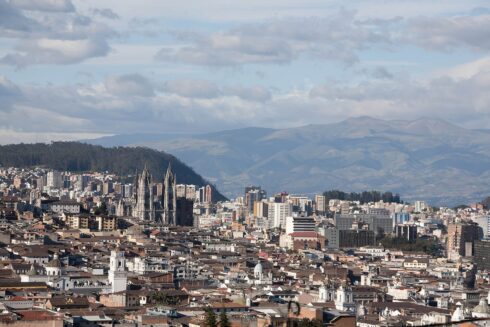
Since 2011 there has been no killing of bulls in Ecuador.
It comes despite the Jesus del Gran Poder festival in Quito being one of the most important bullfighting events in Latin America.
The festival still continues although bullfights remain bloodless with a focus on technique and performance rather than death.
READ MORE: WATCH: Young bullfighter dies in horror goring during his debut at Lisbon arena as thousands watch
VENEZUELA
Bullfighting in Venezuela is slowly fading away, but it hasn’t disappeared just yet.
Once popular across the country, it is now mostly limited to Merida, in the Andes, where the annual Feria del Sol festival is globally known.
While there are fights in other parts of the country crowds are waning and it is struggling to survive.

Click here to read more La Cultura News from The Olive Press.