

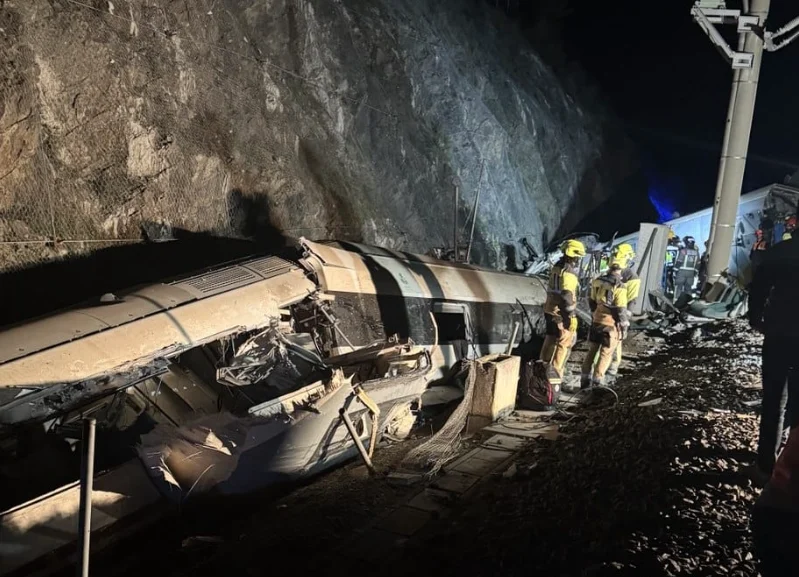
THE number of passengers using Spain’s once-renowned high-speed rail network collapsed by almost a third in the wake of the Adamuz train disaster, newly published statistics have revealed.
According to figures released by the National Statistics Institute (INE) on Friday, high-speed rail usage dropped by 32.1 per cent in February to just 2.16 million passengers.
That represents the worst figure since February 2021 at the height of the Covid-19 pandemic.
The sharp decline contributed to an overall 15.8% drop in the number of passengers on Spain’s rail network, down to under 49 million passengers.
The dip coincided with the period after January 18, when two high-speed trains derailed in Adamuz, Cordoba, in Spain’s deadliest rail accident since 80 people were killed in Santiago de Compostela in 2013.
Some 46 people were killed and hundreds injured after the rear carriages on a Madrid-bound Iryo service carrying over 300 passengers flipped onto an adjacent line and collided with an oncoming train destined for Huelva.
Some lines were temporarily suspended, while others remained closed for a significant period of time, such as the line connecting Malaga and Madrid.
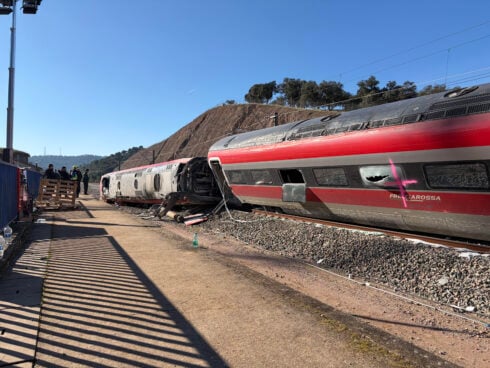
Public confidence in the network also dipped thanks to a handful of other high-profile accidents in the wake of Adamuz, including a fatal crash in Catalunya.
A trainee driver was killed and nearly 40 passengers were injured after a R4 Rodalies commuter service came off the tracks between Gelida and Sant Sadumi, near Barcelona.
The train collided with a retaining wall that collapsed onto the line following a spell of heavy rain during Storm Harry.
Following the derailment, train service was suspended on the entire Rodalies network in order to conduct track inspections.
Some service was restored on January 24, but the network has remained in a state of disarray since amid lingering concerns over safety.
The impacted section of the track was only re-opened earlier this week following more than two months of disruption.
Click here to read more Spain News from The Olive Press.