
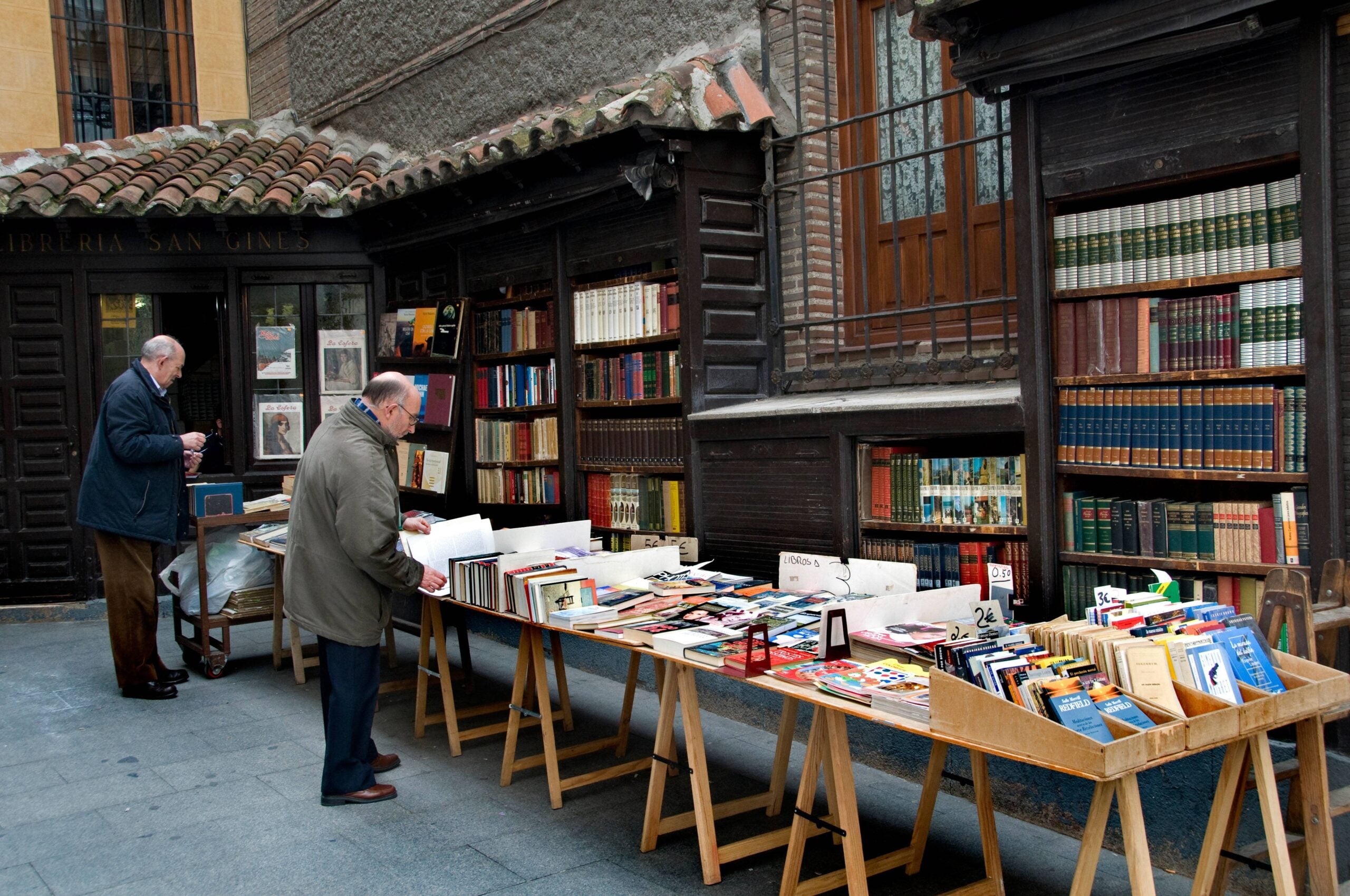
ALARMING figures have revealed that 49.4 per cent of books available in Spanish bookshops do not sell a single copy.
Meanwhile, only 4.5 per cent of titles sell more than 100 copies each year.
The statistics published by the Confederation of Bookshops, Cegal, include novels, comics, essay collections and non-fiction sold in independent bookshops and chains across the country.
READ MORE: From Greek outsider to Spanish master: The remarkable rise of El Greco
Cegal’s data does not include Amazon titles or textbooks.
These troubling figures demonstrate that Spaniards are reading less and less.
According to Cegal, 64.9 per cent of the population read at least once a year – a drop from 65.8 per cent in 2019.
Only a third of Spaniards read on a weekly basis while one in ten say they never read.
Meanwhile, 48.8 per cent of Spanish households own fewer than 50 books, while 10 per cent have fewer than 10 books at home.
Digital distractions are largely behind the decline, with people spending more time on phones and tablets rather than picking up a novel.
READ MORE: Outrage erupts in Mexican art world over plan to put Frida Kahlo masterpieces on display in Spain
This is particularly pronounced among children, with worrying statistics from the UK showing that one third attempt to zoom in on print books or even look for an ‘on’ button.
Social media, however, is encouraging some people to read more, with platforms like BookTok and bookgrammers (digital creators who share their reading habits) showcasing both classic literature and new releases.
It is not just the decline in readers that explains why many books are never picked up; publishing houses are also releasing more books each year, saturating the market.
Spaniards purchased 76 million books last year, a rise of 4 per cent compared with the previous year.
However, more new titles are released than are sold, leaving readers and booksellers unable to keep pace with the growing volume of publications.
Publishing firms release 90,000 new titles each year, averaging 27 per day.
In addition, many authors, after facing rejection from major publishing houses, go down the self-publishing route, which accounts for approximately 5 per cent of books published in Spain
As a result, bookshops and readers are inundated with thousands of new titles each year, meaning many unfortunately remain on the shelves.
Furthermore, Cegal’s data reveals that chain bookshops have overtaken the indie shops for the first time.
In 2025, 52 per cent of books sold were purchased in chain shops marking a rise from 45 per cent in 2022.
The shelves of independent bookshops offer twice the range of their chain counterparts: indie shops carry 525,000 titles compared with 229,600 in chains.
This shift towards chain bookshops means readers browse fewer titles, leaving more unread each year.
As the number of readers declines while new releases multiply year-on-year, more authors’ works are overlooked each year.
Click here to read more La Cultura News from The Olive Press.