Welcome to a new Olive Press series, ‘This Week in Spain’. Each week, Michael Coy will guide readers through the key moments in Spanish history that fall in the days ahead — from politics and culture to sport and society. Whatever the week holds, there is always a story worth telling.
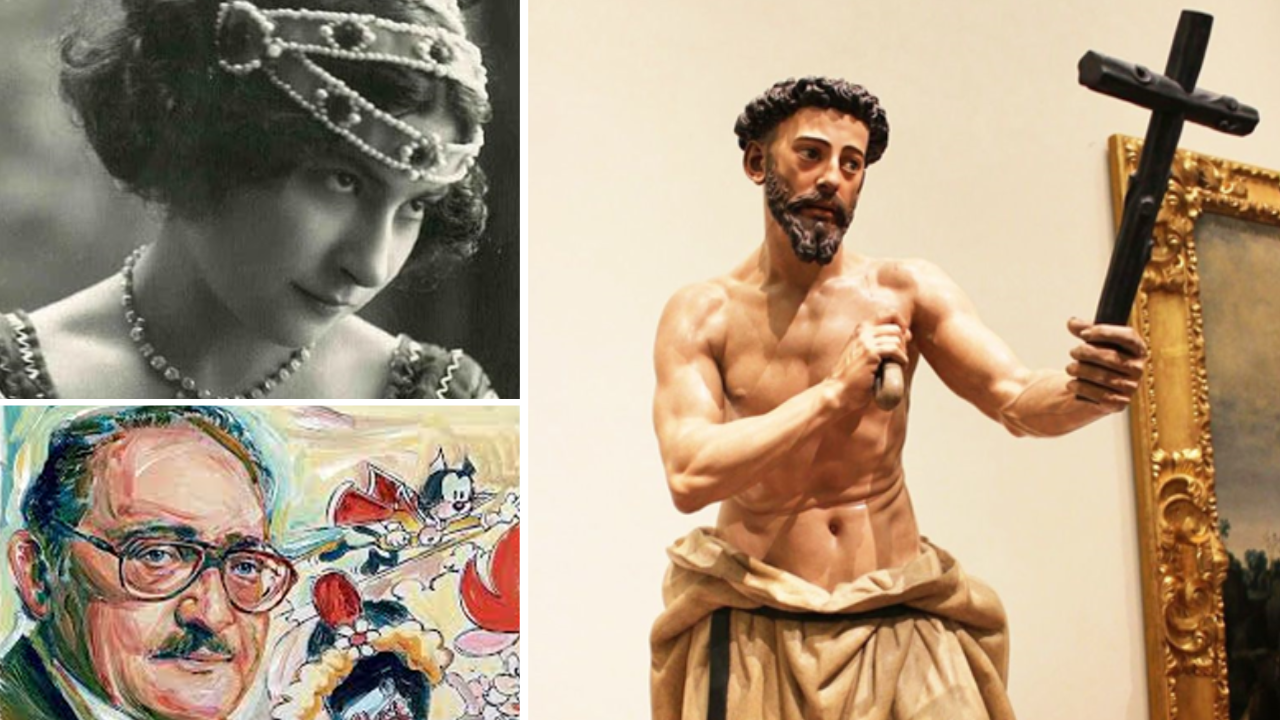
JUAN MARTINEZ MONTAÑES DIES: 18 JUNE 1649
Have you ever wondered why the slightest hint of rain causes the cancellation of those Easter processions in Sevilla?
Juan Martinez Montañes is why.
Born in Jaen in 1568, he lived and worked in Sevilla, and died there.
A sculptor of genius, he carved the figures of those saints and virgins out of olive wood.
They are 500-year-old masterpieces, they are the ‘stars’ of the procession, and rain water would ruin them.
Better safe than sorry!
READ MORE: Getting to know Antoni Gaudi: The Catalan architect’s masterpieces you’ve probably NEVER heard of
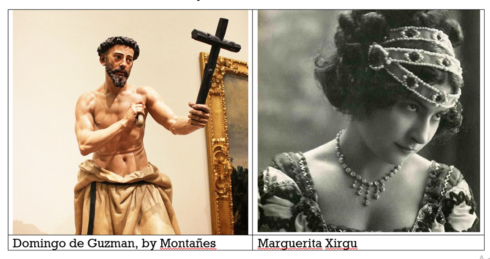
MARGARITA XIRGU IS BORN: 18 JUNE 1888
We don’t often hear of a successful partnership between a Catalan and an Andaluz, but that’s what happened when actress Margarita Xirgu chose to work with writer Federico Garcia Lorca.
Margarita was born just inland from Barcelona, and by the year 1906 (when she was 18) she was established as Catalunya’s outstanding professional actress.
She didn’t merely show up and speak the words: she recognized the genius of Lorca before anyone else, and insisted on playing his greatest heroines.
CASABERMEJA FOUNDED: 19 JUNE 1509
Halfway between the city of Malaga and the major Andalucian crossroads of Antequera, Casabermeja (four thousand inhabitants) is a large village or, if you prefer, a small town.
Like all the municipalities of the South, it was a Muslim community for nearly 800 years, but was captured by the Christians at the close of the Middle Ages.
That’s when ‘modern’ Casabermeja was born.
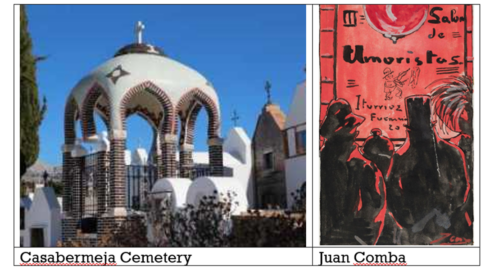
Today it is noted for the church of Socorro (built when the Arabs were expelled) and its unique cemetery, which is laid out like a town in its own right.
READ MORE: The embodiment of flamenco: Celebrating the 80th birthday of a Spanish national treasure
CARTOONIST JUAN COMBA DIES: 19 JUNE 1924
Born in Jerez, Juan Comba is classified as a cartoonist, but was an artist, albeit a commercial one.
His work (such as the poster he designed for the Umoristas café) shows the strong influence of Toulouse-Lautrec.
However, Comba was certainly not an absinthe-drinking bohemian.
He held a post at the court of King Alfonso XII, whom he accompanied on all his excursions, and for whom he was a sort of ‘royal sketch-maker’.
CARTOONIST JOSE SANCHIS GRAU IS BORN: 19 JUNE 1932
Eight years after Comba’s death, another illustrator of exceptional talent was born, this time in Valencia.
Jose Sanchis Grau lived until 2011.
Known specifically as a children’s cartoonist, he developed many of the characters beloved of Spanish children – El Soldadito Pepe, Pumby the Cat, and lots of others.
‘Benjamin and his Gang’ led to two court cases, which Sanchis won – establishing in Spanish law that cartoon characters are the intellectual property of their creator, and do not belong to the comic or magazine which publishes them.
READ MORE: Legendary British author Julian Barnes wins Spain’s prestigious Princess of Asturias award
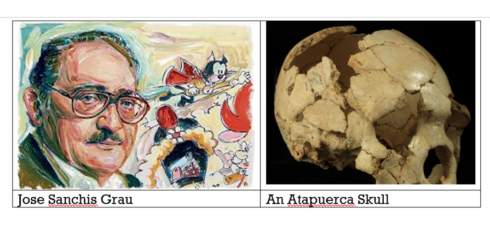
ATAPUERCA SKULLS FOUND: 20 JUNE 2014
Atapuerca is a lonely, mountainous area near Burgos, in northern Spain.
When excavations were made in the 1960s, preparatory to building a narrow-gauge railway, prehistoric traces were found.
The rail project was abandoned, and a serious archaeological dig began.
In June 2014, the experts struck paydirt – at least from a historian’s point of view.
Fossilised skulls from eight hundred thousand years ago were found – along with evidence of human cannibalism!
SANTA FE FOUNDED: 20 JUNE 1483
When you see the words, ‘Santa Fe’, do you think of John Wayne?
That’s the power of cinema. The town in New Mexico, USA, is only one of 51 towns in the world called ‘Santa Fe’ (‘Holy Faith’).
The original, the town just outside Granada, was the first.
As the Christians got ready for the assault on Europe’s last Muslim enclave, they laid out a city of army tents on the open plain, and called it ‘Santa Fe’.
Columbus showed up there, to explain his project to the king and queen. With time, it grew and became permanent – and is still there today!
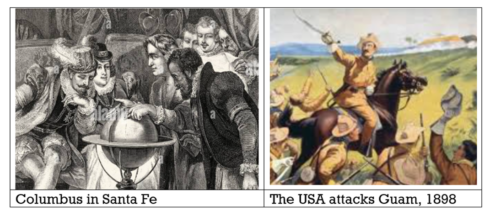
GUAM ATTACKED: 21 JUNE 1898
Some people think that today, in 2026, the USA is bullying countries like Iran, Venezuela and Cuba.
There is nothing new under the sun.
The island of Guam in the middle of the Pacific Ocean (population about the same as Malaga), was a Spanish colony.
At the end of the Victorian period, the USA decided to ‘rob’ Spain’s imperial possessions, because Spain was weak.
The people of Guam were bewildered when the attack was launched – news hadn’t reached them of any hostilities of any kind.
Click here to read more Spain News from The Olive Press.