
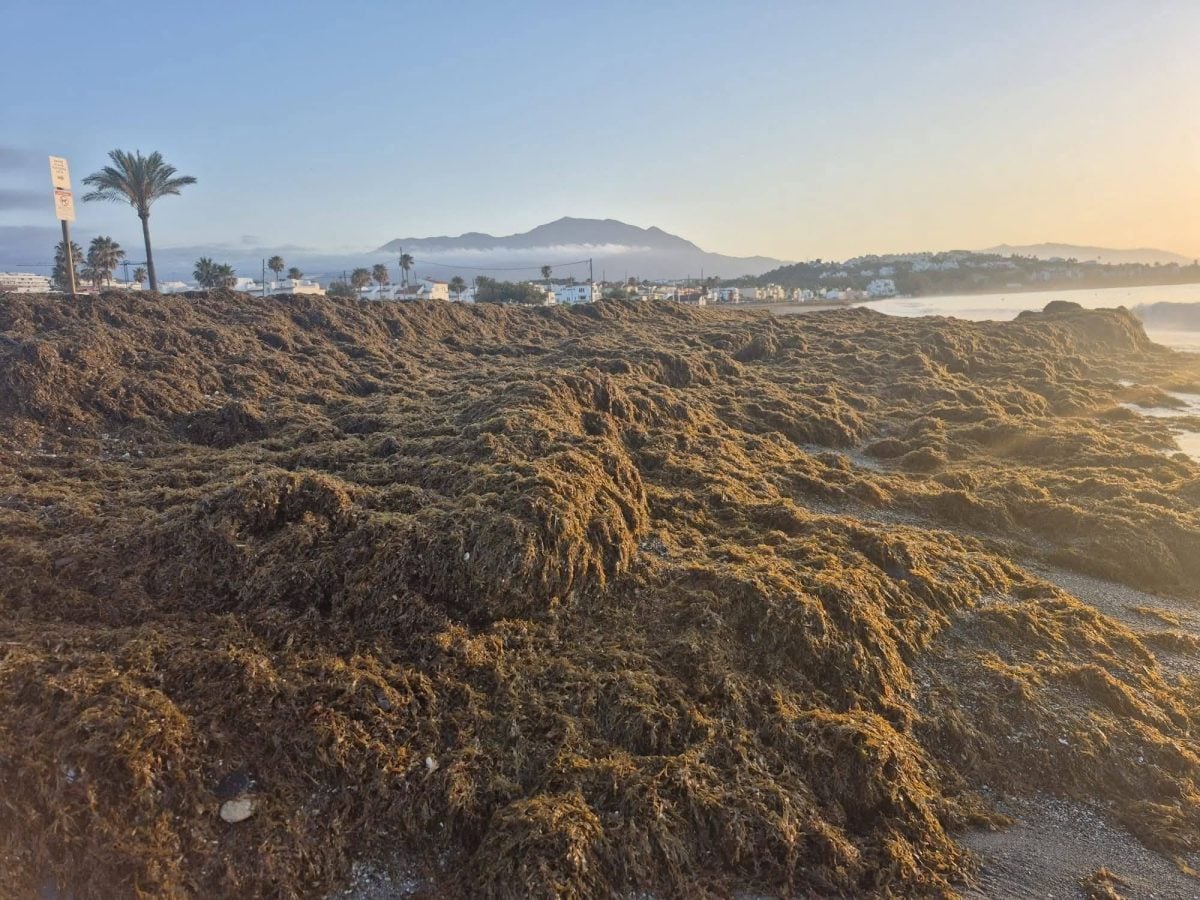
ANDALUCIA is scrambling to remove tonnes of invasive seaweed from its beaches amid mounting environmental and economic concerns.
Striking footage published by Estepona council on Monday shows tractors scooping up piles of sludgy Asian seaweed from a local beach.
Similar clean-up operations are also underway in Manilva, according to reports.
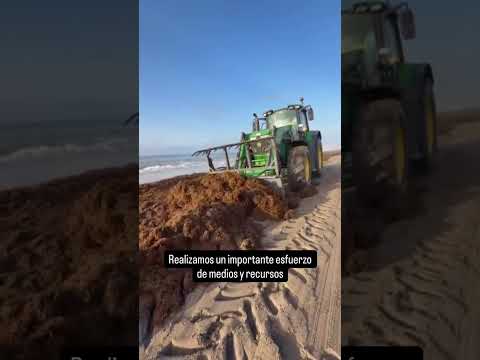
The operation comes amid concerns that the invasive Rugulopteryx okamurae could pose a serious environmental threat and damage Andalucia’s economy, just as millions of tourists are set to visit the region this summer.
The crisis has prompted Estepona mayor Jose Maria Garcia Urbano, of the right-wing Partido Popular (PP), to call on Spain’s central government to step up measures and ‘coordinate a response’.
“We reiterate the need for the central government to adopt measures and organise a coordinated response to tackle this invasive species,” Garcia said.
“Estepona Town Council is stepping up efforts to clean up and remove the invasive Asian seaweed from our beaches,” he added.
“This is a necessary task to preserve the environment and ensure the public can continue to enjoy the beaches in the face of the massive influx of this species.”
Rugulopteryx okamurae is an invasive species of brown algae native to the north-west Pacific Ocean, particularly the coasts of Japan, China and South Korea.
Scientists believe it most likely reached southern Spain through international shipping routes, either via ballast water discharged by cargo ships or by attaching itself to vessel hulls.
It was first detected in waters around Ceuta and the Strait of Gibraltar in 2015 before rapidly spreading along Andalucia’s coastline.
Marine experts warn the seaweed is especially problematic because it grows extremely quickly and can smother vast areas of the seabed.
It blankets rocks, corals and native algae, blocking sunlight and displacing local species that form the foundation of marine ecosystems.
The economic impact has also become increasingly severe. Fishermen across Andalucia have reported the algae clogging nets, damaging equipment and reducing catches, while local authorities are spending significant sums clearing tonnes of seaweed from beaches each year.
Researchers studying the problem in Tarifa estimated annual losses of more than €3 million when fishing disruption and public clean-up costs are combined.
Officials also fear the infestation could eventually deter tourists if beaches become covered in rotting algae during the peak summer season.
Click here to read more Environment News from The Olive Press.