
WELCOME to the latest edition of ‘This Week in Spanish History’, written by Michael Coy.
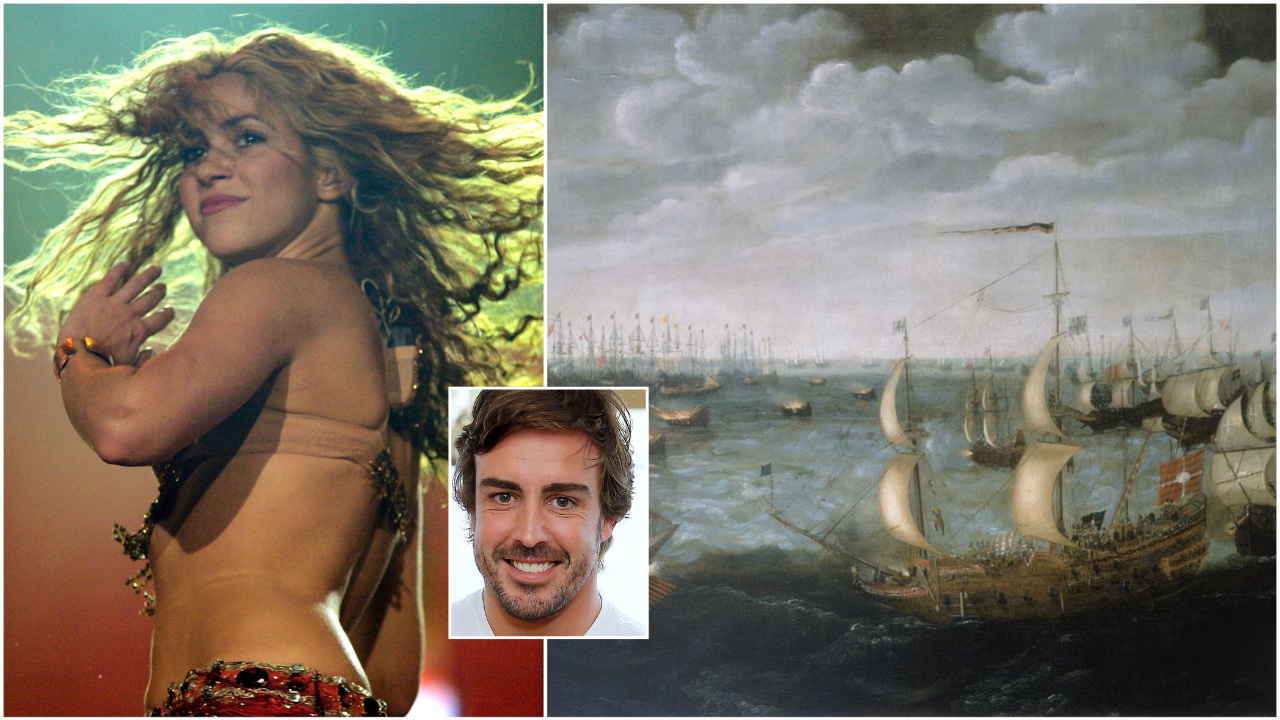
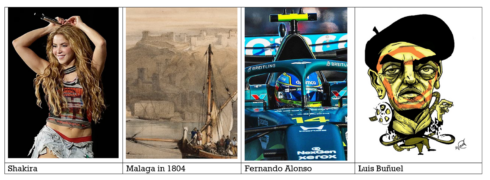
27 JULY, 2022 – SHAKIRA TRIAL BEGINS
The Colombian megastar, Shakira, found herself arraigned before a Spanish court four years ago. The Hacienda was accusing her of fraud.
If you spend six months on Spanish soil in a given year, you are liable to pay income tax: the Hacienda claimed that Shakira passed more than 183 days in Spain in the year 2011, and owed the government €60 million.
The case collapsed dramatically on 18 May this year, when the prosecution failed to prove her presence in the jurisdiction during the relevant period.
Not Guilty!
29 JULY, 1804 – YELLOW FEVER IN MALAGA
In July 1804, the port of Malaga was closed to shipping.
All the roads in and out of the city were sealed off, and army units were posted to make sure no-one entered or left.
Yellow Fever had been detected.
At the time of the outbreak, Malaga had a population of 36,000 (today it has 600,000). When the infection was over, this had fallen to less than 25,000.
During those five months, 5,029 women and 6,435 men lost their lives.
But don’t worry – modern Malaga doesn’t have the type of mosquito which spreads the disease.
READ MORE: THIS WEEK IN SPANISH HISTORY: A deadly train crash, a royal marriage and the mystery of baby Lucia
29 JULY, 1981 – FERNANDO ALONSO BORN
Spanish Formula One driver Fernando Alonso celebrates his 45th birthday this week – and he’s still racing!
He has won 32 Grands Prix over 23 seasons as a top driver and has twice been crowned world champion.
He is also one of the world’s greatest endurance drivers, having won Le Mans twice and Daytona once.
A native of Oviedo in Asturias, Alonso made his Formula One debut as long ago as 2001.
29 JULY, 1883 – LUIS BUÑUEL DIES
Often hailed as Spain’s greatest-ever film maker, Luis Buñuel, who died in 1983, was born at the start of the twentieth century.
He saw ‘his’ era, with all its ambiguities, as the perfect setting for his art.
The director of The Andalucian Dog and The Discreet Charm of the Bourgeoisie was from Aragon, and epitomised the region’s ironic outlook.
He used to say: “We’re not Basques (serious), and we’re not Catalans (bitter), so we have to be sarcastic.”
31 JULY, 1498 – COLUMBUS DISCOVERS TRINIDAD
On his third voyage of discovery (in all, he undertook four), Christopher Columbus had a specific goal in mind.
He’d formed the impression that there was a land mass to the south of the islands he’d already found, and he wanted to locate it.
It was South America, and finally, on this trip, he discovered it and began to understand what he’d done: he’d opened up a new continent.
In the process, he stumbled on Trinidad, the southernmost of the Caribbean islands.
31 JULY, 1556 – IGNATIUS LOYOLA BORN
After the initial shock of the Protestant Reformation, the Roman Church recovered and started trying to win back lost ground, using a new concept – ‘propaganda’.
This movement became known as the ‘Counter Reformation’.
It was the perfect moment for a Basque Mystic (Ignatius Loyola) to offer his services to the pope.
Loyola had a community of followers –all Spanish in the early years – and they swore loyalty to the Vatican.
The ‘Jesuits’ are still the Pope’s shock troops today.
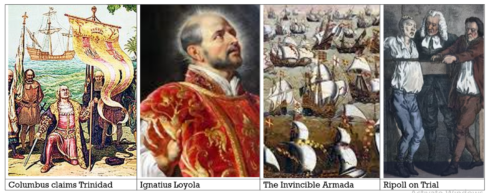
31 JULY, 1588 – SPANISH ARMADA SIGHTED
The sailors who manned the 137 ships which attacked England in the summer of 1588 must have felt that the project was jinxed.
The fleet set out on 21 July from Lisbon, but immediately ran into storms and delays.
When it finally reached the English Channel, it lost the element of surprise.
A series of bonfires quickly spread alarm along the English coast.
Bad weather, English fireships and poor seamanship led to the dispersal and failure of the Spanish offensive.
31 JULY, 1826 – CAYETANO RIPOLL IS EXECUTED
Deism was a very fashionable belief system two hundred years ago.
Deists accepted that, logically, there must be a Supreme Being, but rejected superstition.
Cayetano Ripoll was a Catalan who worked as a schoolteacher in Valencia.
He was a Deist, and he told his pupils about it.
This led to his execution in 1826. The Spanish Inquisition found him Guilty of contradicting the Catholic Church.
He was the last Spaniard to die in this way. Modern thinkers see Ripoll as a Catalan patriot, murdered by Madrid.
Click here to read more Spain News from The Olive Press.