
WELCOME to the latest edition of This Week in Spanish History, written by Michael Coy.
September 29 – The Feast of the Archangels
Spanish people have two birthdays: the day of their birth (obviously), and the Feast Day of the saint after whom they are named.
September 29 is the Feast of the Archangels, so if you know someone called Miguel, Rafael, Gabriel or Uriel, you can say to him: “¡Feliz Santos!” (‘Happy Saint’s Day!’)
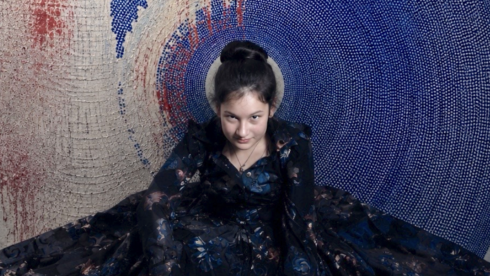
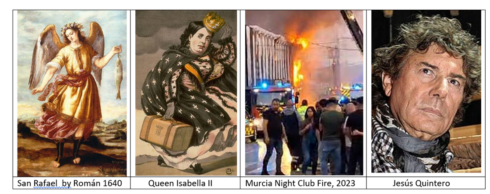
San Rafael is especially popular in Spain, and he is always depicted – as in this Baroque painting by Bartolome Roman – carrying fish.
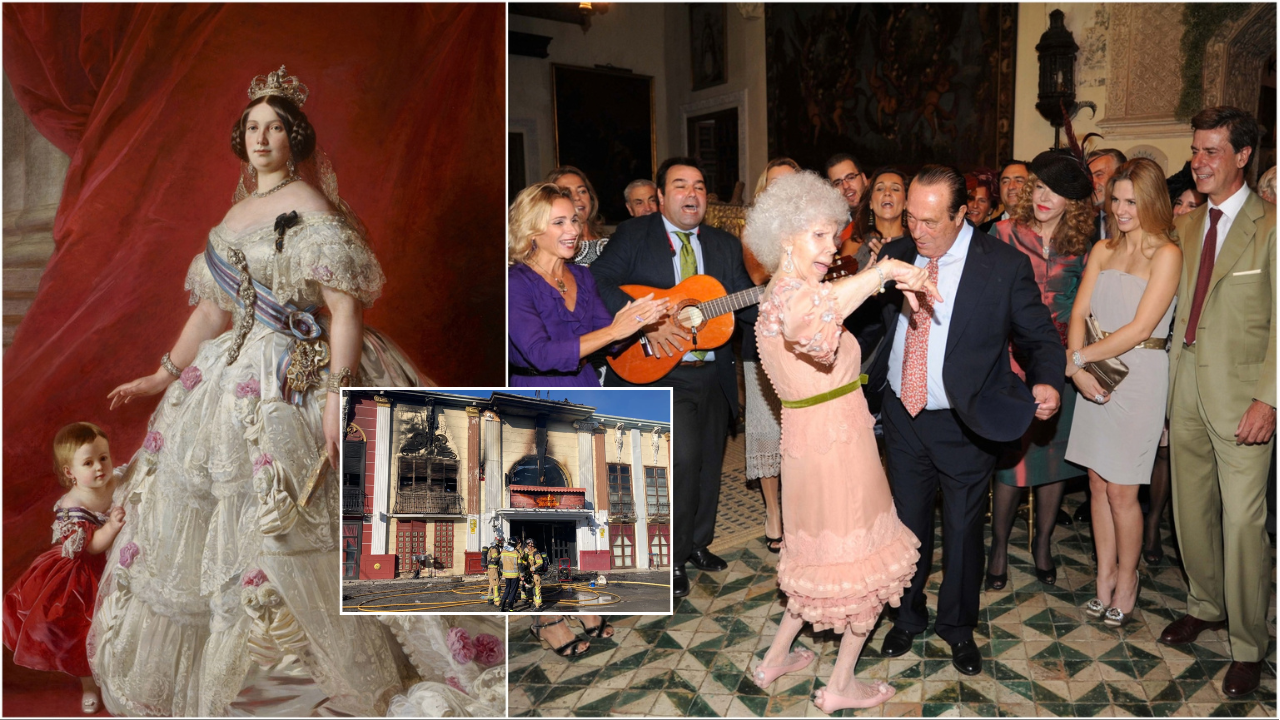
September 30, 1868 – Abdication of Queen Isabella II
British, Dutch and Scandinavian people tend to think of their national royal families as permanent – not so in Spain.
Every couple of generations, the Spanish monarch tends to get kicked out.
Queen Isabella was deeply unpopular by the 1860s, and was ‘invited to leave’.
The press had a lot of fun lampooning her, showing her leaving with her suitcase. She subsequently lived in Paris for decades.
The reasons for the public’s dislike would be frowned upon today: she was a woman, overweight, who insisted on living in Sevilla rather than Madrid – and she was far too fond of her Scottish bodyguards!
October 1, 2023 – Fatal blaze in Murcia disco complex
Fire broke out in a building which housed three nightclubs in the Atalayas neighbourhood of Murcia in October 2023. 13 people died and 24 were injured.
The premises had been shut down some months earlier, because local authorities were not happy about three discotheques occupying a single edifice, and objected to the lack of clarity regarding the maximum number of clients the clubs could contain.
October 3, 2022 – Death of Jesus Quintero
Jesus Quintero was born in Huelva in 1940.
As a young man he made his name in radio, and over the years became an ever-present in the Spanish media.
He could be likened to the UK’s Michael Parkinson.
Much admired for his interview technique, he ‘starred’ in a string of TV and radio programmes, culminating in the universally popular Ratones Coloraos, from 2002 to 2010.
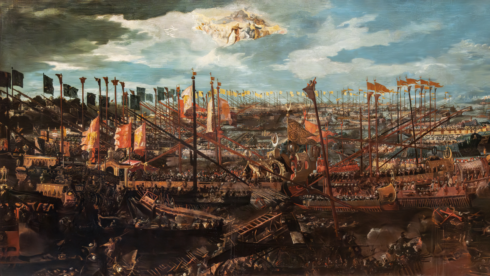
October 4, 1582 – Spain adopts the Gregorian Calendar
For the best part of 2,000 years, the world got by on the calendar sponsored by Julius Caesar in ancient times, but by the end of the Middle Ages its defects were apparent.
It takes Planet Earth 365 and a quarter days to go around the sun. The Julian calendar didn’t allow for those extra six hours.
Over the centuries, this was throwing the seasons “out”.
The improved Gregorian calendar corrected the problem by adding a ‘leap’ day every four years.
Spain accepted the new calendar immediately.
Britain had a far more fraught time with it. Almost two centuries went by before Britain made the change – and the public, unhappy about skipping from late September to mid-October overnight, rioted in the streets.
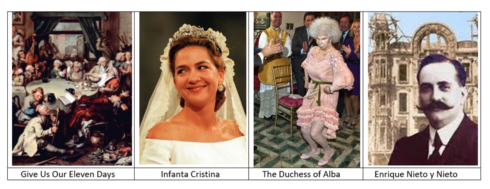
Their slogan was: “Give us our eleven days!”
Hogarth made fun of these events in one of his canvases.
October 4, 1997 – The Infanta Cristina marries
Cristina de Borbon is the second daughter of ex-King Juan Carlos.
She was 32 years old when she married Iñaki Urdangarín in 1997.
As a general rule, Borbon marriages are not exactly triumphs, but this one turned out to be especially toxic.
Urdangarín, a national hero as an Olympic handball star, proved himself to be a complete fraudster as a businessman. Worse still, he inveigled his princess wife into signing some of his dodgy contracts.
When it all went badly wrong, Cristina said she hadn’t known what she was signing: not the best defence, considering she was a lawyer.
Needless to say, the couple divorced.
October 5, 2011 – The Duquesa de Alba marries (at 85)
When Cayetana, the Duchess of Alba, passed away in 2014, Andalucia lost one of its most entertaining daughters.
She was wildly eccentric and much-loved. Always up for a party, she was photographed dancing on her 2011 wedding day.
It was her third wedding, and she was 85 years old.
She no longer gave interviews, because she’d had so much plastic surgery that she could no longer speak.
She is greatly missed.
October 6, 1883 – Enrique Nieto y Nieto is born
A student of the great Antonio Gaudi, Enrique Nieto y Nieto will always be remembered as the ‘architect of Melilla’.
The North African enclave appointed him as its in-house designer in 1939, and still today the ‘look’ of Melilla is very much the brainchild of Nieto y Nieto.
Click here to read more Spain News from The Olive Press.