
WELCOME to the latest edition of This Week in Spanish History, written by Michael Coy.
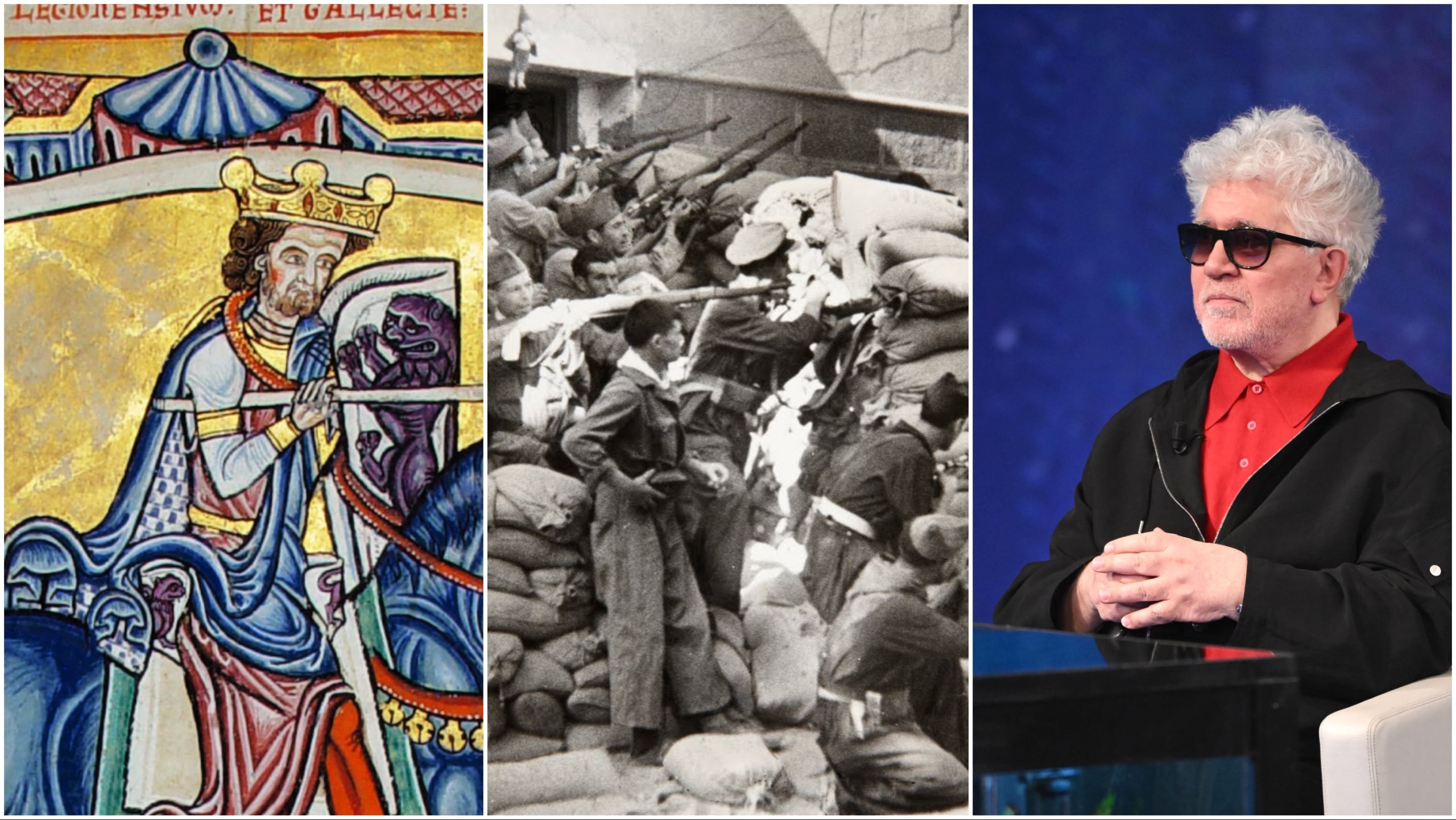
September 24, 1230 – Death of Alfonso IX
In his long 50-year reign, Alfonso the Ninth of Leon chalked up some impressive achievements.
He founded the University of Salamanca, recognized as one of the best seats of learning in the world.
At the time of England’s magna carta, limiting the king’s absolute power, Alfonso was voluntarily experimenting with parliamentary democracy.
And he reconquered Extremadura from the Muslims, opening the way for Sevilla to return to the Christian fold.
September 24, 1957 – Barcelona’s Camp Nou inaugurated
The Camp Nou (in Catalan, the ‘new field’) football stadium is currently undergoing expansion.
One of the world’s legendary sporting venues, it will start the 2026-27 season with a seating capacity of 105,000.
It has come a long way since the first La Liga match was played there 69 years ago.
The game was preceded by a religious ceremony, and a parade of supporters’ clubs. And Barcelona won, beating Real Jaen 6-1.
READ MORE: Spain has a new ‘arty city break’ of choice that Brits are flocking to, according to The Times
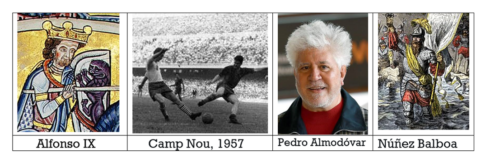
September 25, 1949 – Birth of Pedro Almodovar
To say that Pedro Almodovar is a film director is to give no idea of his impact on Spanish culture over the last 50 years.
Irreverent, sarcastic and very funny, he and his films were the perfect antidote for the dying dictatorship.
In Carne Tremula and Women on the Verge, he made merciless fun of Francoist pomposity.
He also built the careers of Antonio Banderas, Penelope Cruz and Javier Bardem.
Openly gay, he has transformed Spanish attitudes towards LGBTQ+ issues.
September 25, 1513 – Balboa discovers the Pacific
It seems hard to believe, but the first generation of Spanish Conquistadores had no idea that the world’s mightiest ocean even existed.
A routine land-based expedition stumbled on the truth seven years after the death of Columbus.
Curiously, it was an English poem which immortalised the moment. In 1816, John Keats tried to imagine what it must have been like to reach the top of a Mexican ridge and look down on that immense (and unexpected) sea.
Vasco Nuñez de Balboa was the commander (Keats thought it was Cortes) and the poet envisions the Spaniards regarding one another with a ‘wild surmise’.
September 25, 2009 – Images of Zapatero’s daughters published
The PSOE prime minister of Spain between 2004 and 2011, Jose Luis Rodrigo Zapatero is in the news again.
On May 19 of this year, he was charged with money-laundering.
The kerfuffle in the press back in 2009 surrounded his daughters Laura and Alba, who were teenagers at the time.
As far as the Spanish public knew, Zapatero had no children, so well had he protected them from the media.
Unfortunately, the fact that they were girls led to some unsavoury comments when photos appeared in the press. More recently, Zapatero’s wife has been drawing media flak.
September 27, 1936 – Toledo is relieved
Whatever part of the political spectrum we inhabit, we can all applaud the superhuman heroism of the defenders of Toledo in the summer of 1936.
About a thousand Franco supporters took refuge in the Alcazar – the city’s fortress – and tried to hold it until Franco’s army could get there.
The problem was left-wing Madrid was close, and Franco was still far off in Sevilla.
The defenders endured artillery bombardment and near-starvation for ten weeks. On 27 September they were saved.
As Franco said: “Before the Relief of Toledo, we had a sense of our own righteousness: once we rescued those people, we had more – we had a cause.”
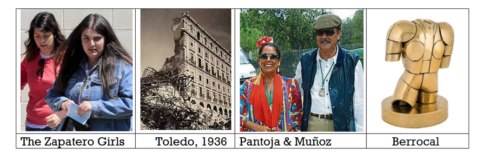
September 27, 2010 – Marbella councillors charged with theft
Anyone who was living in Andalucia at the time remembers the names – Julian Muñoz, Antonio Roca, singer Isabel Pantoja.
Corrupt councillors were approving gullies and steep cliffs as ‘land suitable for building’.
In return, they were getting backhanders from equally corrupt developers.
When the police turned up at Roca’s home with a warrant, they found a Velazquez painting hanging in the toilet, and two racehorses browsing on the back lawn.
Needless to say, a lot of porridge was doled out at the subsequent trial.
September 28, 1933 – Miguel Berrocal is born in Malaga
One of Spain’s all-time outstanding sculptors, Miguel Ortiz Berrocal worked in both Italy and Andalucia, and enjoyed huge success in the art markets of Europe and South America.
He died suddenly in 2006, aged 73.
Click here to read more Spain News from The Olive Press.