
A FRENCH nobleman, sailing along the Ohio River back in the 1840s, wrote down his impressions of the young United States.
On the north bank of the stream, he observed, all is industry. Mills, factories, bustle. On the other side (the so-called Deep South), any hint of urgency disappears. There is no drive, no energy.
Of course, what he failed to point out was climate.
Physical exertion is not only easier in chilly, drab Massachusetts than in hot, humid Mississippi – it’s necessary. Even more important is the natural distribution of resources.
Pennsylvania has coal and iron ore in the ground, and fast-flowing rivers which powered the first factories. Hot, flat Texas had none of those advantages (this was in an age before oil became important).
So what?
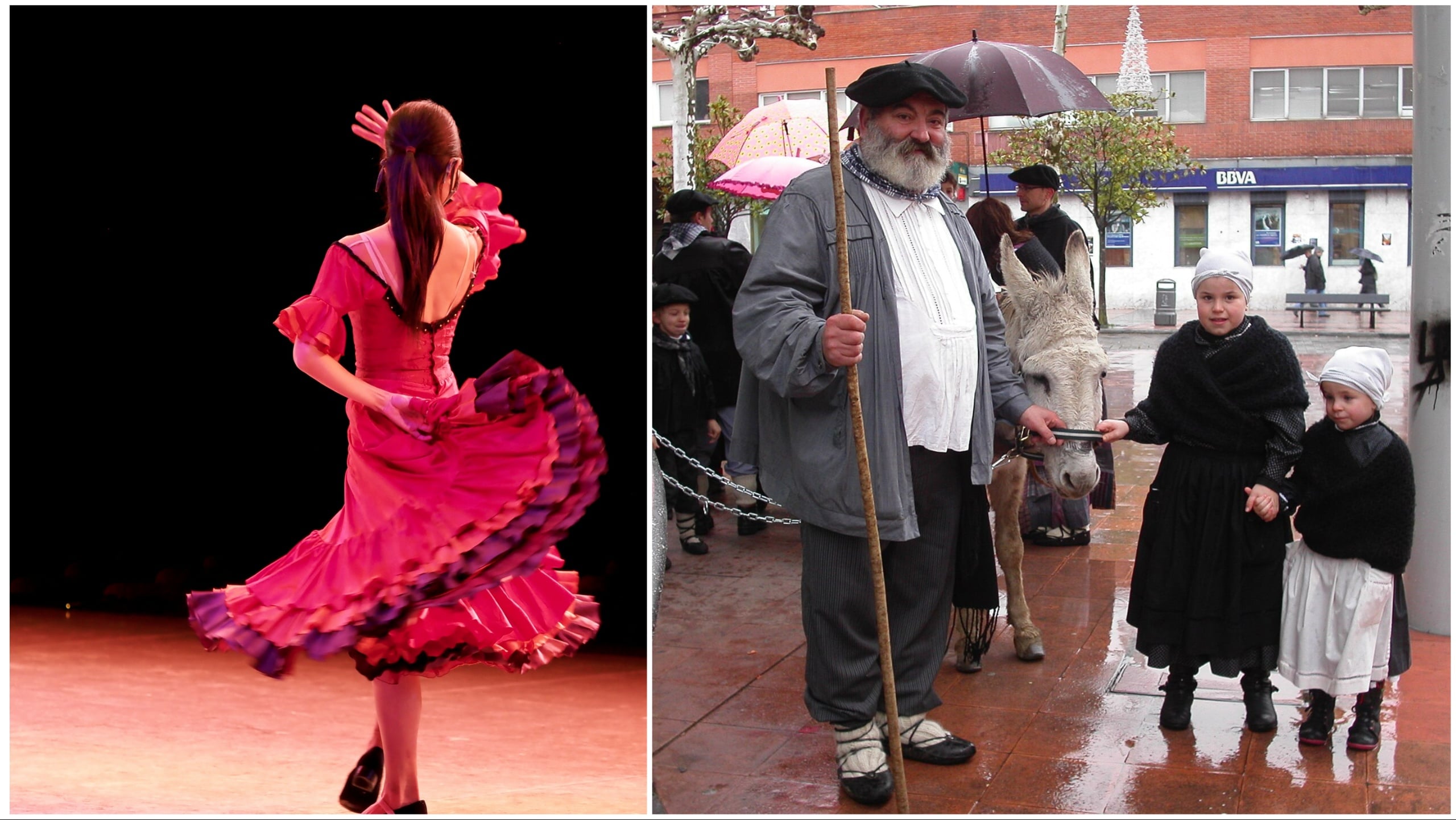
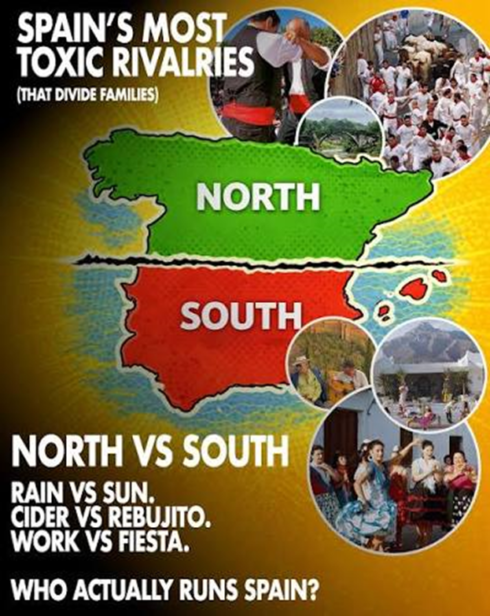
Here in Europe, we have formed similar – and similarly false – ideas about people’s willingness to roll up their sleeves. Spaniards will readily tell you that in Bilbao and Barcelona, the work ethic is all-powerful.
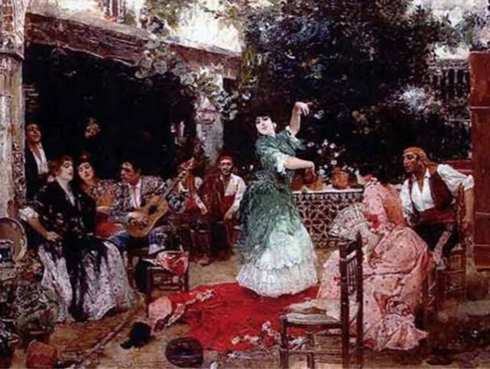
It’s not hard to find people who will say the opposite about the sunny south. The inhabitants of Andalucía, they will point out, are funny, entertaining and excellent companions at a party – but they are bone idle.
This ignores a universal truth.
In the words of Paul McCartney, ‘people are the same wherever you go’. In the north of Spain (and the USA, for that matter) there are cowards, cheats and slackers, just as there are people with these defects in the south.
Two things need pointing out.
First, Spanish governments since the Industrial Revolution – Franco more than anyone – have bribed the Basques and the Catalans to stay Spanish by building factories and workshops in Leon and Llerida. It also happens to be the case that all of Spain’s exploitable deposits of coal and iron happen to lie under northern soil.
Second, the rain in Spain may fall mainly on the plain, but it certainly falls on Santiago de Compostela more frequently than on Salobreña. The South is extremely hot and dry – indeed, the only desert in Europe is to be found in Almería.
The climate of Europe just happens to be that way.
READ MORE: MAPPED: Spain’s shocking north-south divide revealed in latest poverty statistics
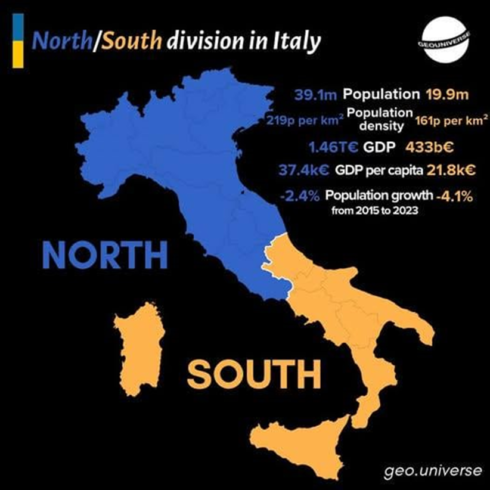
If you go to Italy, it’s the same story. The north – Turin, Milan, Venice – prides itself on being the economic engine of the nation. That’s where the work gets done, and the profits are made.
They have a term for the hot, dry south which has become a thinly-veiled insult – they call it the mezzogiorno. Lazy, feckless people, producing nothing, and waiting for handouts from the north.
Of course, it’s not true.
Britain seems to be the outlier, in that the national stereotype sees the South as the earner, and the desolate, post-industrial North as a drain on national wealth.
The Surrey stockbroker is an image we all have of someone who is doing very well, and (more importantly) expects to do well. Empty warehouses and desolate disused coalmines are the image we have of Yorkshire and Lancashire communities.
Yet British northerners have a fierce attachment to their home towns, and to their place in history.
It is through their time-honoured habits that people express their deepest wisdom.
From time to time, you’ll hear a northerner from (say) Pontevedra ridicule the siesta, saying that southerners lose a lot of business because in July, there’s no-one in the office at 4pm, when a potential German client phones up, looking to place an order.
This cheap jibe misses the essence of the thing. Over many centuries, southerners have learned that, in Puente Genil in July, it is far too hot for productive work to be done. It’s unproductive and downright unhealthy to be in the office.
Visitors think there’s something wrong when they see, in August, children playing in the street at midnight. What they fail to understand is that during a southern August, midnight is the ideal time for youngsters to be running around.
Money is useful, and needs to be made.
BUT …
The English poet Hilaire Belloc once said: “Wherever southern sun doth shine, there’s fun and laughter, and good red wine.”
Which do you prefer?
Click here to read more Spain News from The Olive Press.