
ARMED with a trusty pair of binoculars and keeping a keen eye on their watch, thousands of stargazers across Spain looked upwards on Sunday in anticipation of catching a glimpse of a rare lunar phenomenon.
But for many, hopes of experiencing a total lunar eclipse – known popularly as a Blood Moon – proved to be a damp squib as cloud cover spoiled the spectacle.
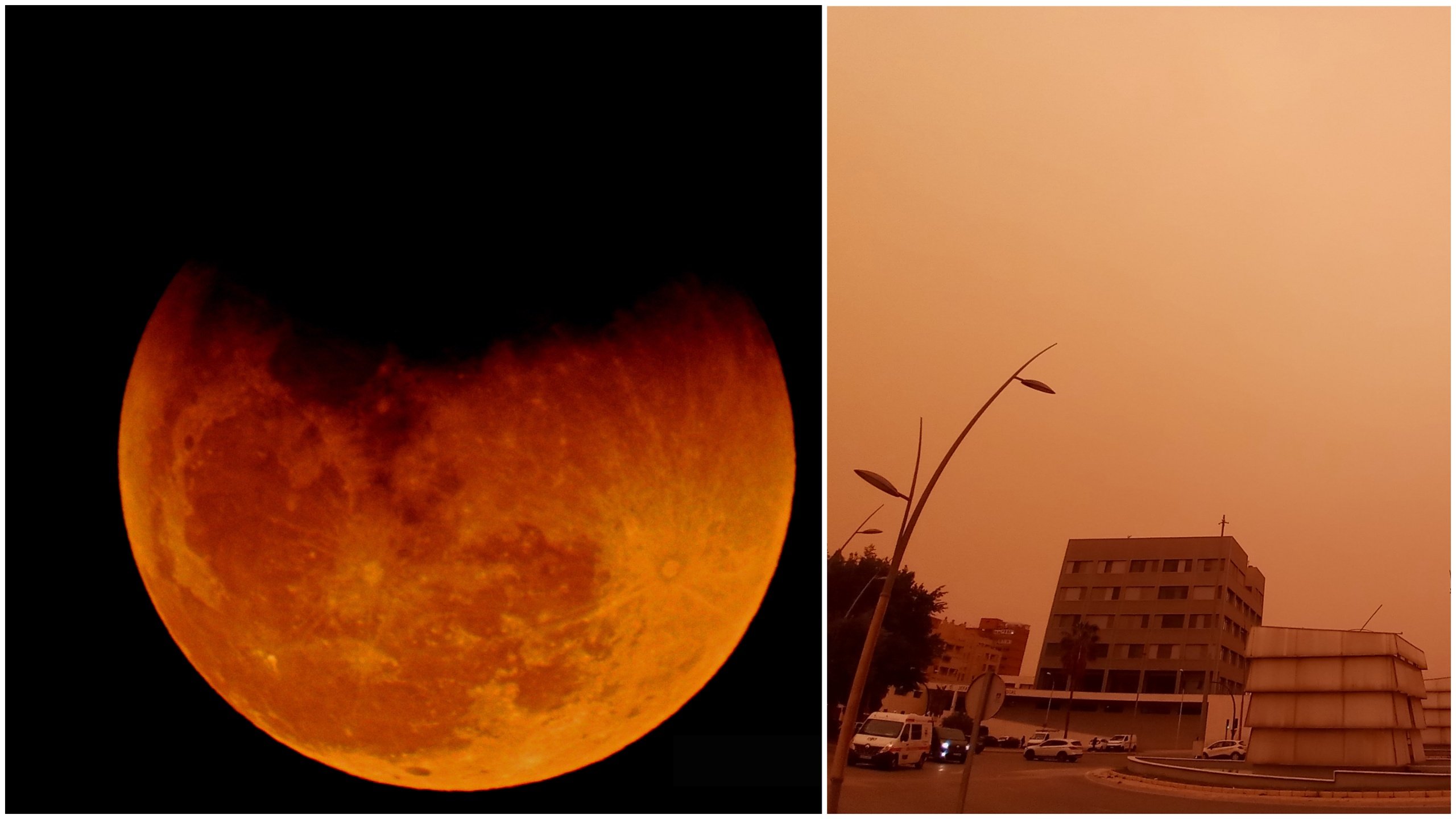
In Malaga, the situation was exacerbated by the arrival of a ‘calima’, the weather event where warm, dry air laden with fine dust and sand particles from the Sahara Desert drift north, aided by prevailing winds.
The fabled ‘calima’ – sometimes inadequately translated as ‘haze’ – reduces visibility, casting a reddish hue over Spanish skies that acts as a curtain, blocking any hopes of laying eyes on the Blood Moon.
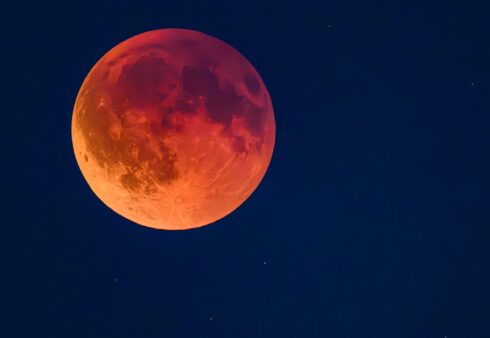
A Blood Moon happens when the Sun, Earth and Moon are all perfectly lined up, blocking sunlight from our planet’s only natural satellite.
As the light of the Sun passes through the Earth’s atmosphere, the sunlight scatters.
Blue light is removed leaving only longer red wavelengths to reach the Moon, giving it a distinctive reddish colour.
And unlike a solar eclipse, observing the phenomenon is safe – so observers do not need to fork out for a pair of specialist protective glasses.
On Sunday, the total lunar eclipse was visible across the world, although it was particularly impressive in Asia, the Middle East and some African countries.
Click here to read more Spain News from The Olive Press.