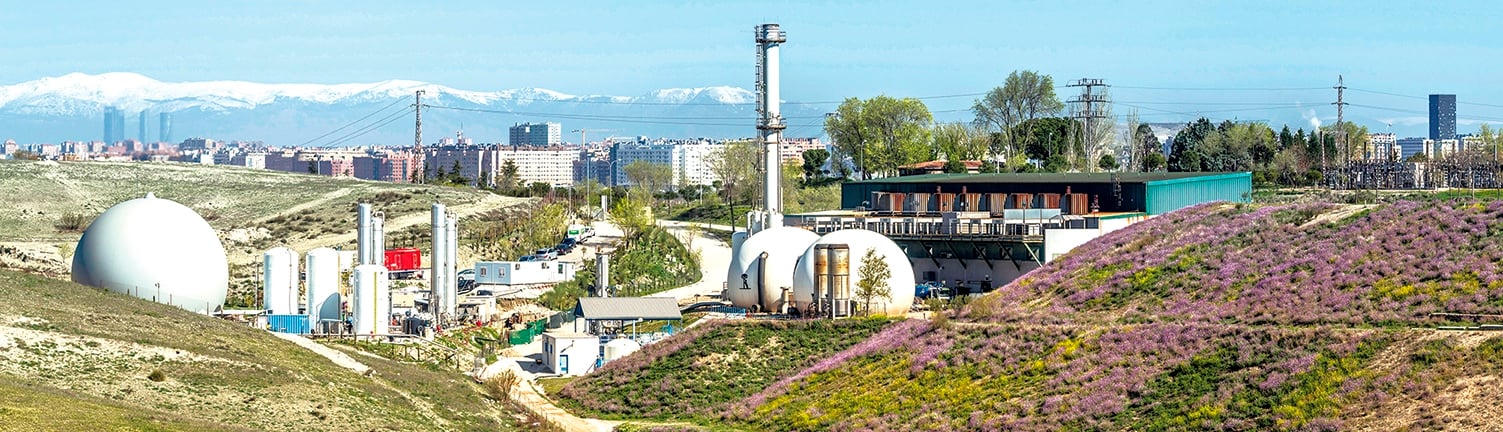
A UN agency is probing a Madrid landfill after satellites detected massive emissions of climate-altering methane gas billowing from the site.
The International Methane Emissions Observatory (IMEO) launched its probe into the Valdemingomez landfill earlier this year as part of a broader effort to tackle climate change by cutting greenhouse gas emissions worldwide.
Concerns about the site – officially known as the Las Dehesas biogas plant – first emerged in 2021, when European Space Agency satellites, aeroplanes, and ground trackers detected vast methane leaks rising from the landfill in south Madrid.
Methane emissions trap up to 25 times more heat in the atmosphere than carbon dioxide, and are capable of raising global temperatures at an alarming rate.
As organic waste decomposes at biogas plants and landfill sites, it is normal for small amounts of methane to be released into the atmosphere.
But emissions at Valdemingomez – though invisible to the naked eye – were found to be exceptionally large, an IMEO report confirmed.
The observatory greenlit its probe after finding Valdemingomez’ emission reports did not match IMEO’s independent measurements, a source from the agency told El Pais.
According to the observatory’s data, eight leaks have been detected at the landfill since 2023 – five of which over the past six months alone – plus another six at the nearby Pinto biogas plant.
El Pais’ IMEO source said two sets of measurements were taken at Valdemingomez in 2025, with definitive results on the site’s actual emissions expected in 2026.
The aim of the probe, the source added, was to identify the precise origin of the leaks in order to curb the landfill’s methane output.
Established during the 2021 COP26 climate summit in Glasgow, IMEO has since issued more than 3,500 alerts to companies in 33 countries as part of its mission to combat the escalating climate crisis.
“Methane is responsible for approximately one-third of the planet’s current warming,” IMEO said in its latest annual report. “Reducing methane emissions is the fastest and most cost-effective way to curb short-term warming as broader decarbonisation efforts progress.”
Click here to read more Environment News from The Olive Press.