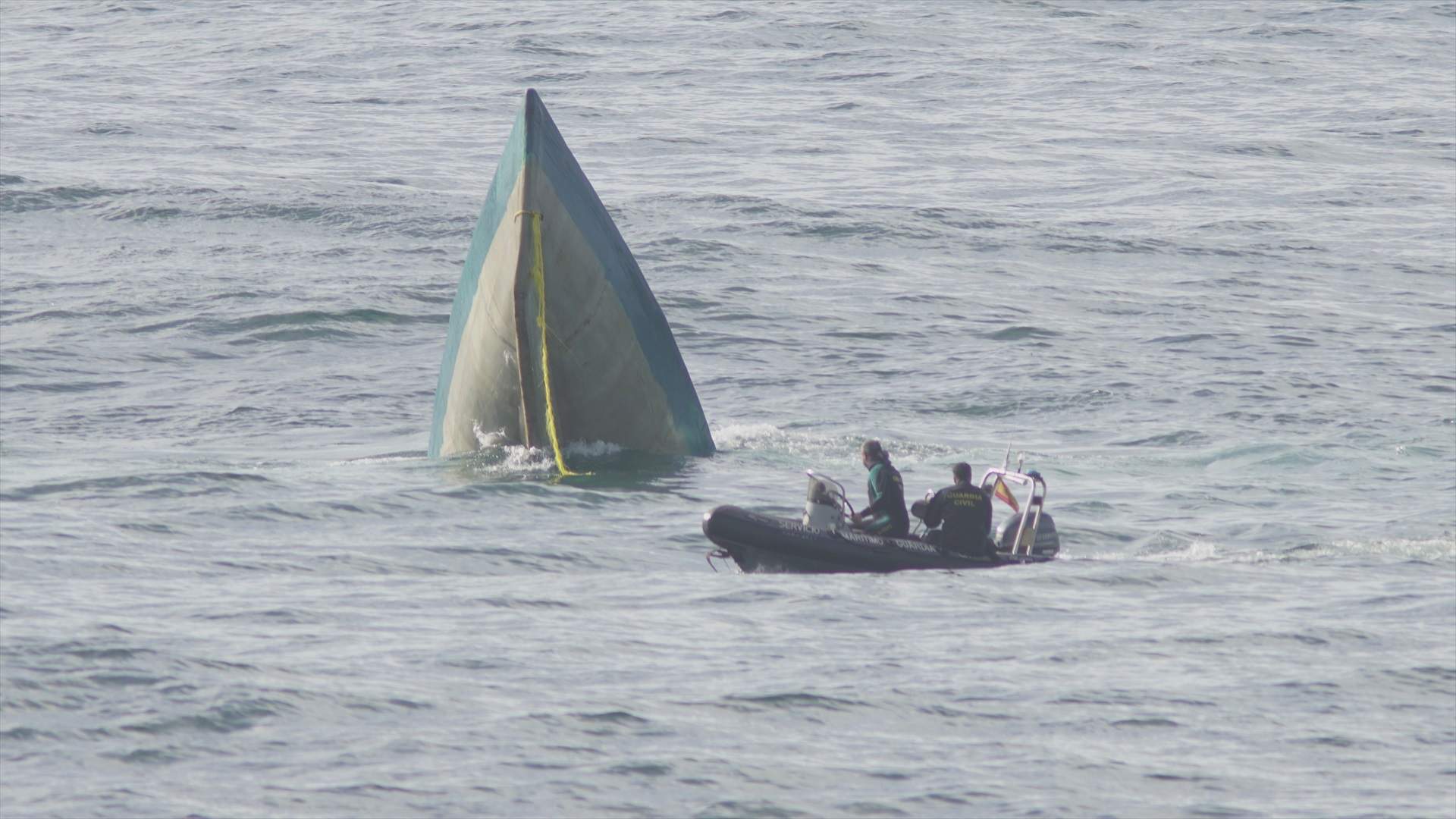
THE falling price of cocaine is driving drug traffickers in Spain to reuse ‘narco-submarines’ they would otherwise destroy, in what authorities described as a major operational change.
The semi-submersible vessels, used to smuggle cocaine into Europe and each costing around €600,000 to build, would normally be scuttled in the waters between the Azores and Canary Islands following each journey from South America.
But market saturation has driven the wholesale price of cocaine down to about €15,000 per kilo – about half its value a few years ago – and drug networks can no longer afford to sink their own boats as soon as they offload their cargo, Spanish authorities told The Guardian.
Alberto Morales, head of the central narcotics brigade of Spanish police, said: “Back then, the cost of the merchandise in comparison with the cost of the vessel still made doing that very worthwhile – they’d be carrying three or four tonnes minimum, so operating that way was very profitable.”
“But what’s happened lately is that the price of the merchandise is really, really low, so the organisations have, logically, had a rethink,” he added.
Morales explained that drug networks have instead established floating refuelling stations at sea, allowing narco-vessels to return to South America after each journey, reload their cargo and eventually head back to Europe — a shift authorities described as a major operational change.
The first abandoned sub was discovered off Galicia in 2006. Since then, 10 other semi-submersible vessels have either been spotted or seized by Spanish police – but Morales warned the real number of narco-boats plying the seas off Spain is likely far higher.
Last year alone, police and customs officers seized 123 tonnes of cocaine – a 112% increase compared with 2022.
Authorities believe the stretch of Atlantic between the Azores and Canary Islands is being used as a “narco-sub graveyard,” Morales added – although the precise location remains unknown.
“We don’t have a location; we don’t even have any numbers,” he told The Guardian.
“And even if we did, it would be almost impossible to recover the [subs] because of the depth of the waters. It’s something for the fish to enjoy.”
The developments come as authorities warn of a surge in drug-trafficking activity off Spain’s coastline.
Earlier this month, nine narco-speedboats were spotted near a popular tourist beauty spot in Almeria as they sought shelter from Storm Emilia.
Last year, in the port of Barbate near Cadiz, a narco-boat deliberately rammed a Guardia Civil patrol vessel during an attempted identification, killing two officers and injuring several others.
Several local councils in southern Spain have since called for government assistance, warning that limited resources and reduced manpower have left them ill-equipped to deal with the escalating threat.
Jose Francisco Garrido, mayor of Nijar near Almeria, said: “I have been mayor of Nijar for just over two years, and from day one I have been calling on the Spanish government – which is responsible for dealing with this issue – to put an end to the problem.”
“But unfortunately, Pedro Sanchez’s government cannot, or will not, put a stop to the criminal gangs that roam our beaches on a daily basis – gangs that traffic drugs and human beings and fuel large-scale illegal immigration,” he added.
Click here to read more Crime & Law News from The Olive Press.