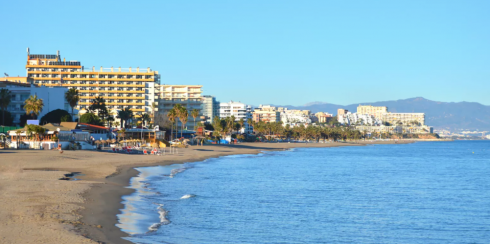


FROM the beach, it looks like a hazy blue silhouette on the horizon.
But less than an hour after leaving the Costa del Sol, that distant outline becomes a world of towering peaks, ancient forests, and vertigo-inducing viewpoints.
Sierra de las Nieves, Andalucia’s newest national park, is the rare place where you can look down on the Mediterranean from snow-dusted mountains – and, on the clearest days, glimpse Africa beyond.
READ MORE: Why New Year’s Eve is called ‘nochevieja’ in Spain – and what it says about the Spanish way of life
Just inland from Marbella, Malaga, and the western Costa del Sol, this extraordinary natural reserve has quietly become one of southern Spain’s most rewarding escapes.
Long cherished by hikers and nature lovers, Sierra de las Nieves was officially designated a national park in 2021.
Despite the newfound attention that came with this status, it has never lost the wild, unspoiled character that makes it so extraordinary.
What sets Sierra de las Nieves apart is its dramatic geography. Rising to nearly 2,000 metres, the mountain range creates a striking contrast between coast and interior.
From high points such as Puerto de los Pilones, the view stretches from the rolling peaks of the Serrania de Ronda all the way to the shimmering Mediterranean coastline.
On exceptionally clear days, the spectacle is even greater: the Rif Mountains of northern Morocco appear on the horizon, a reminder of how close Africa lies to southern Spain.
It is a perspective few places in Europe can offer – snow underfoot, sea below, and another continent in sight.
READ MORE: Big Scandinavian boost unveiled for Spain’s Valencia airport
Sierra de las Nieves is also a biological treasure. The park is home to the pinsapo, a rare Spanish fir that dates back to the Ice Age and grows almost nowhere else in the world.
These prehistoric forests blanket the slopes around villages such as Yunquera and Parauta – and walking through them feels like stepping into another era.
Sunlight filters through twisted branches, the air is cool even in summer, and the only sound is the crunch of boots on pine needles.
Despite its rugged reputation, Sierra de las Nieves is surprisingly accessible. Well-marked trails cater to a wide range of abilities, from gentle riverside walks to demanding summit climbs.
More experienced hikers can tackle La Torrecilla, the highest peak in the range at 1,918 metres.
The ascent is challenging but rewarding, delivering sweeping views that encompass mountains, coast, and countryside in a single panorama.
For something gentler, routes through the Guadainza Valley or along the Rio Turon near El Burgo offer shaded paths, dramatic limestone formations and refreshing pools.
Scenic viewpoints such as the Mirador del Guarda provide jaw-dropping vistas without requiring hours of climbing.
READ MORE: The ancient capitals of Spain – Ten cities that were once seats of Spanish power
Beyond the landscapes, the park is framed by some of Malaga province’s most charming white villages. Tolox, Parauta, Yunquera and El Burgo make ideal bases, combining traditional Andalusian architecture with hearty local cuisine and a warm welcome.
As Sierra de las Nieves develops carefully managed tourism infrastructure – including new visitor centres and improved trail access – these communities hope to benefit from a new wave of visitors seeking authenticity over all-inclusive resorts
Each season offers a different face of the park. Spring brings wildflowers, flowing rivers and ideal walking temperatures, while the autumn offers golden forests and crisp mountain air.
In winter, peaks occasionally transform into a snow-covered playground – a rare sight so close to the coast.
Summer, thanks to altitude and forest shade, provides a cool refuge from coastal heatwaves.
A car is essential to explore the park properly, as public transport is limited. Sturdy footwear, layers and plenty of water are recommended year-round, as weather conditions can change quickly at altitude.
Guided walks are available for those wanting deeper insight into the park’s ecology and history.
Still largely untouched by mass tourism, Sierra de las Nieves remains one of Andalucia’s great natural secrets – a place where beach-goers can swap flip-flops for walking boots and discover a mountain world that feels both ancient and astonishingly close.
Click here to read more Olive Press Travel News from The Olive Press.