
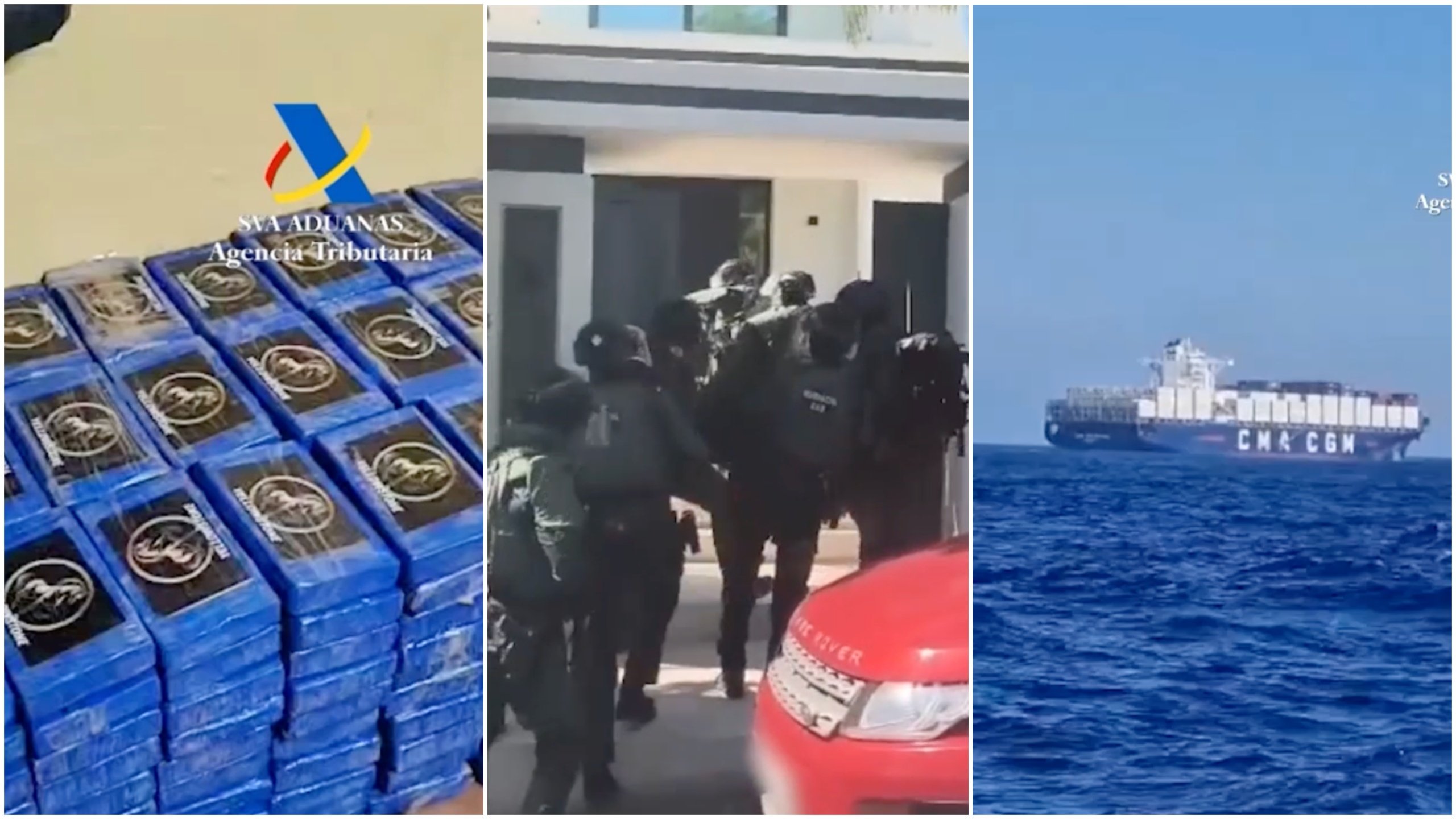
DRUG busts in Spain have become so commonplace that it seems like there is one a day – and this isn’t just rhetoric.
Criminal gangs from all over the world collaborate – and sometimes fight – to smuggle and distribute an unknowable number of tonnes of cocaine and hash into Europe via Spain’s shores and ports.
But now, Spanish police claim to have dismantled one of the most powerful and far-reaching of all – the notorious Balkan cartel.
Made up of a loose network of mafias that emerged in the wake of Yugoslavia’s civil wars, in pure tonnage they may have smuggled more cocaine into Spain from across the Atlantic than any other group.
They’ve also been on the losing side of some of the biggest drugs busts in recent months.
The Olive Press reported each event at the time – now the whole story of the operation to take them down can finally be told.

The Balkan cartel
The powerful Balkan organised crime network has long been working with suppliers in Colombia and Spanish mafias based in the Costa del Sol triangle (between Morocco, the Cadiz coast and the Costa del Sol) to traffic drugs wholesale into Europe.
They operated as the financial backbone behind the notorious ‘cocaine superhighway’ that barrels straight from the ports of South America to the Strait of Gibraltar, the Guadalquivir river, and Spain’s busiest ports.
The cartel is believed to have funded major drug shipments using ageing cargo ships, pirate-style raids at-sea and high-speed narco-boats to flood Europe with cocaine.
Some of the largest drugs busts in recent memory, involving multi-tonne seizures of cocaine, have had their fingerprints all over them.
The Balkan cartel are even reported to have financed the most recent mega haul of 10 tonnes seized from a cargo ship in the Atlantic Ocean over the weekend.
According to Narcodiario, the criminal operation involved Turkish, Andalucian and Galician groups who were preparing to collect the cargo from the Atlantic using narco-boats.
The drugs were destined for Spain’s southern coast, with investigators believing part of the shipment was due to be off-loaded in Cadiz and Huelva.
The network
Spanish police say the network worked in three layers, with Balkan groups funding the shipments, Colombian organisations supplying the cocaine at source, and Spanish mafias in the Campo de Gibraltar handling logistics, storage and coastal distribution.
The operation relied on maritime smuggling tactics that included the old-fashioned method of hiding drugs in cargo ships.
But they also mixed up their techniques, according to investigators.
They targeted young swimmers from poor backgrounds who were used to reach ships offshore and load cocaine onto them, a method known by police as the micos technique.
Other times, they would sneak stowaways aboard vessels who would throw the bales of drugs overboard for collection by fast boats near Spain.
Members of the network then intercepted the vessels before they reached the Strait of Gibraltar.
The cocaine was then taken into seaside and inland towns in the Gulf of Cadiz, hidden in stash houses and transported by road to other European countries.
READ MORE: Police seize 1.3 tonnes of cocaine on Malaga-bound ship as stowaway narcos attempted to offload it
Ten tonnes at sea
Other tricks included purchasing decaying rust bucket vessels at the end of their lifespans for one-off journeys, which would then likely be abandoned or scuttled once they’d served their purpose.
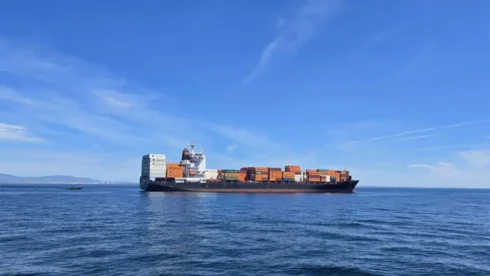
This was most vividly demonstrated in the recent 10 tonne seizure from a rusting cargo ship near the Canary Islands.
The vessel, the United S, was intercepted by Spanish police around 300 nautical miles west of El Hierro and towed into the port of Santa Cruz de Tenerife with its 13 crew members under arrest.
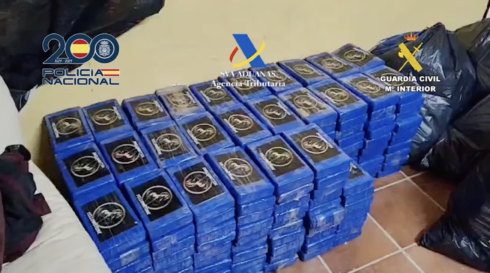
Inside its holds, officers uncovered 9,994 kilos of cocaine hidden beneath a mountain of salt.
According to El Pais, it took around six hours for roughly 20 officers to dig out the 294 bales using shovels, platforms and human chains.
The bales were passed up one by one and weighed individually, with an extra bale seized during the boarding as a precaution in case the ship sank.
A chequered past
Spanish police said the seizure was the largest amount of cocaine ever recovered at sea by the Policia Nacional.
The 51-year-old United S was flying a Cameroonian flag at the time of the raid, having previously sailed under the flags of Belize, Sierra Leone and Togo – all suspicious or black-listed jurisdictions.
Built in Denmark in 1975, the 80-metre vessel had operated under multiple names including Joud S, Moni K, Indian, Tina and Moon Light.
Its safety classification had been withdrawn by Bureau Veritas in 2013, effectively removing it from legitimate insured commerce.
When it sailed as the Moon Light in September 2013, Spanish customs officers seized 18 tonnes of hashish from its holds in Almeria and arrested its seven Syrian crew members in Operation Selene.
But that wasn’t the end of the venerable vessel. After that bust, the ship was auctioned off and returned to sea and later on resurrected as a ‘ghost ship’.
In June 2024, it was purchased by Kamer Shipping & Trading Co, a company based in Istanbul, and renamed United S, its sixth name in 11 years.
The ghost ship
According to maritime tracking records, the ship left the Turkish coast in October, stopped in Tripoli to refuel, and later appeared off the Brazilian port of Fortaleza, where investigators believe the cocaine was loaded.
Between late November and January, its communication systems were switched off or out of coverage.
One of its last recorded positions was on November 30 off Brazil’s northeastern coast.
Once heading east laden with its illicit cargo, instead of declaring a final European destination, its listed route simply read ‘For Order’.
This is a common tactic in maritime smuggling, indicating a plan to loiter in international waters while drugs are transferred to smaller vessels.
The journey back to Europe took far longer than normal, suggesting the ship spent days idling at sea.
Spanish police feared the cocaine would be distributed at sea using high-speed boats, making interception almost impossible.
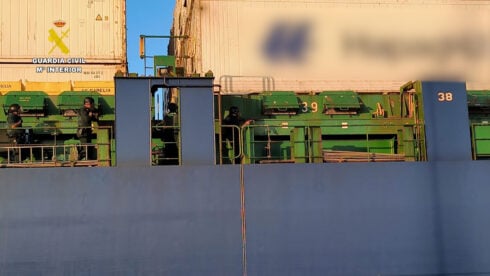
They therefore moved to board the vessel on January 6.
READ MORE: Cocaine price slump is driving traffickers to recycle narco-submarines, Spanish police warn
The Balkan connection
Two Serbian nationals on board were described as the ‘notaries’, a role used by trafficking groups to oversee valuable shipments and prevent theft.
Prosecutors said some of the crew, including Indian nationals, were threatened with weapons and forced to help load the drugs.
Six crew members, including four Turks and two Serbians, were remanded in custody. The seven Indian crew members were released on bail.
Curiously, shortly after the police secured the ship, it ran out of fuel and drifted helplessly for 12 hours before being towed into Tenerife by maritime rescue services.
READ MORE: Police bust narco-gang that used helicopters to smuggle drugs into Spain from Morocco
Foiled at sea
The United S seizure was just the latest blow against the Balkan cartel by Spanish law enforcement.
In July last year, a cargo ship heading for Malaga was intercepted around 60km off the coast of Cadiz after its crew reported stowaways on deck.
Spanish authorities seized around 1.3 tonnes of cocaine hidden in the vessel, believed to have been paid for by the Balkan cartel.
Three men tasked with recovering the drugs fled abroad after the operation was foiled.
Later, another container ship sailing through Portuguese waters was hijacked by armed stowaways carrying long guns.
They forced the crew into the engine room and removed cocaine bundles from a container.
In that case, the drugs were successfully recovered by the criminals.
The Cadiz connection
Spanish police say both incidents formed part of the same wider Balkan-linked smuggling network.
The cartel’s Spanish logistics arm was based in the Campo de Gibraltar, an area long associated with narco-boat activity and fuel smuggling.
The group provided fast boats, fuel, storage sites, GPS trackers, boarding ladders and maritime equipment.
Drugs were hidden in guarderias, or stash houses dotted up and down the coast and along the Guadalquivir river, before being moved inland by road.
Where it all began
The investigation into the sprawling criminal network financed by the Balkan cartel began in October 2024 after 88kg of cocaine was found inside a vehicle in Mijas.
That discovery led police to uncover three interconnected criminal organisations operating between Colombia, Spain and the Balkans.
Over the course of the investigation, Spanish authorities carried out 19 raids across Malaga, Sevilla, and Cadiz, arresting 30 people and seizing 2,475kg of cocaine.
They also confiscated weapons of war, eight luxury vehicles, 215 fuel containers, nautical equipment, assault ladders, GPS devices and more than €166,000 in cash.
Jewellery and watches worth €100,000 were also taken, while nearly €5 million in property assets were frozen and blocked four cryptocurrency wallets.
A deadly blow
Spanish police say the case highlights how Spain’s long coastline and busy ports make it a key gateway for cocaine entering Europe.
From ghost ships in the Atlantic to armed hijackings off Iberian waters, the Balkan cartel’s maritime pipeline has now been laid bare.
And with multiple major seizures, international cooperation and dozens of arrests, Spanish authorities believe one of Europe’s most powerful cocaine networks has finally been dealt a deadly blow.
Click here to read more Crime & Law News from The Olive Press.