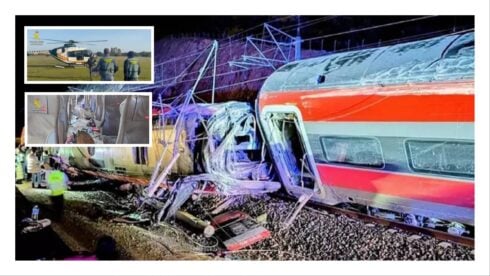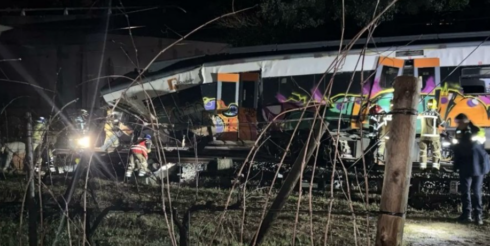
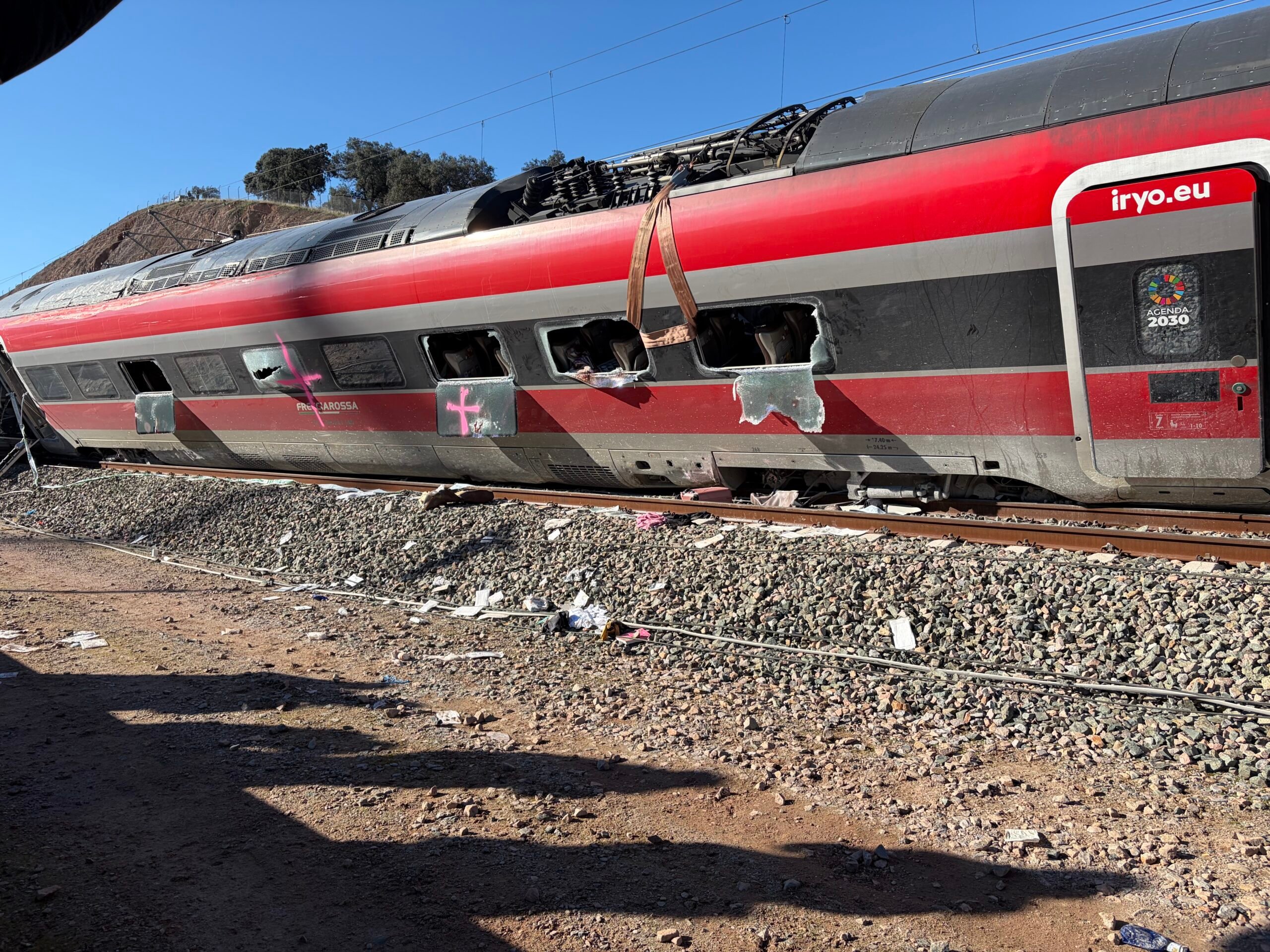
THE train carriage lay tilted over the tracks, its windows cracked and its belly split open. Beside it were strewn dozens of discarded blood bags and rolls of bandages rescuers had used to attend the injured passengers.
This was the aftermath, 36 hours since two high-speed trains collided on Sunday night, killing a confirmed 41 people and injuring more than 150.
It was a harrowing place to visit.
As reporters from around the world – journalists from Germany, America and even Greece – huddled on a slab of concrete opposite the wreck, a heavy silence hung poignantly in the air.
But it was not the heaps of mangled metal or the dangling lips of crushed glass that took the words from me. My gaze was fixed on a child’s pink colouring book half buried in gravel by the tracks.
That blotch of colour brought home the reality of families on their way back after long weekends with friends or inlaws on the costas or up in the capital of Madrid, where I live.
I could easily have been on one of those trains. I live and report from Madrid, but I often take the train down to Malaga for work or Granada where my wife’s family are based.
At the exact moment the tragedy unfolded at 19.45 on Sunday, I was driving to Andalucia with her, alongside our cat, and our five-month-old puppy.
We decided against taking the train precisely because of our pets. But had I been travelling alone, I could easily have been among the 43 still missing (most of them likely dead), the 39 hospitalised, or the 13 fighting for their lives in intensive care.
And I wonder how many people were on that train because of a similar, last-minute decision.
Looking into the coiled wreckage of the Malaga–Madrid high-speed service, I spotted a blood-stained white winter coat slumped over one of the seats.
Then a ripped blue travel bag, with an orange baseball cap peering through the torn zipper.
And a yellow tennis shoe, jutting out from the gravel beside the colouring book.
Those glimpses into the lives of those affected by the tragedy put a lump in my throat. So I turned away. But it’s still there. Lingering.
The Guardia Civil had let us through to what they called ‘punto cero’ (or Ground Zero, like the famous twin towers of New York) of the crash just minutes before King Felipe and Queen Leticia were due to arrive this afternoon.
We saw the royals roll in with their entourage and drifted to the opposite edge of the concrete slab, stopped short by rows of police.
Cameras flashed and microphones rose as reporters began broadcasting.
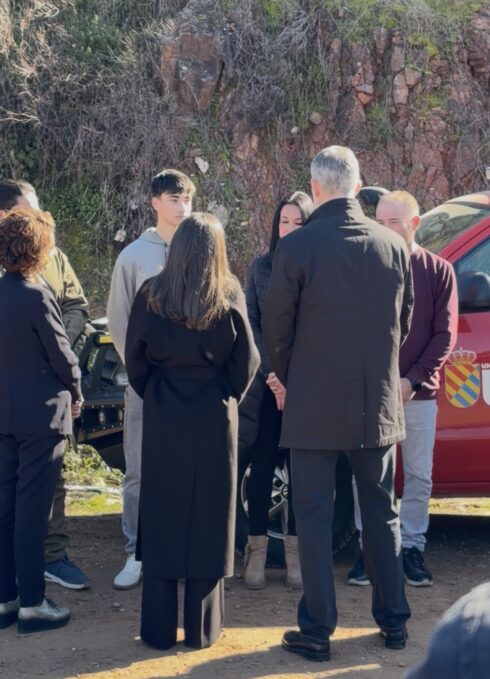
It was all for nothing, because Felipe and Letizia kept their backs to the press the entire time – though for an excellent reason.
They had, after all, come to meet the men and women who have worked tirelessly since Sunday to pull passengers from the wreckage.
READ MORE: Spain train disaster death toll rises to 41 after body is found in damaged carriage
Among the rescuers, all lined up to meet the King, were firefighters, paramedics, and emergency services personnel – but also local residents of Adamuz, who selflessly rushed to the site moments after hearing the deafening crash.
The town’s parish priest, Rafael Prado, told me he coordinated a group of volunteers to set up a first aid station in the rehearsal room of Adamuz’s church choir in the hours after the crash.
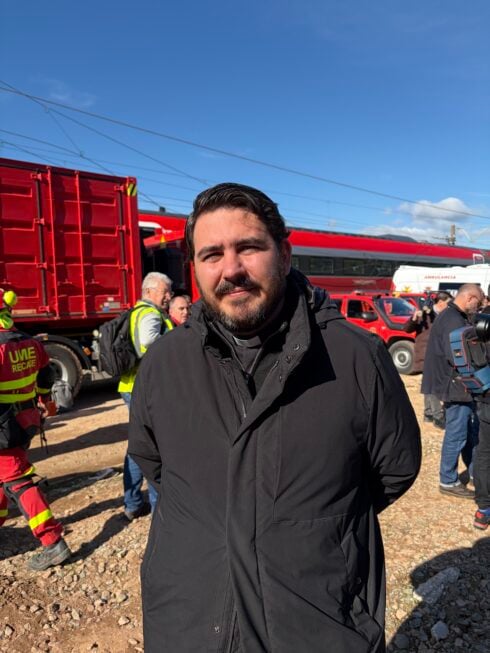
“We gathered food, drinks, and medicine for the passengers who started arriving,” he said. “We helped them get their bearings and treated all the wounds we could.
“They took most of them to hospital later,” he added. “I don’t know how many there were, but paramedics easily filled four buses with victims.”
A local 17-year-old, Julio Rodriguez, has been hailed as a hero after pulling a 10-year-old boy from the wreckage.
“All I could think was that I wanted to help,” he told reporters. “I heard the child screaming, so I went in and did my part.”
A local café owner later told me that Prado and Rodriguez were just two of dozens of residents who marched to the crash site after the impact.
“That is what we do,” he said.
And it is true. Spaniards pride themselves on coming together when it matters most – and they have good reason to be proud. They united in Valencia after the floods, and they united in Adamuz this week.
After the King and Queen left, police quickly ushered us off the site, with the group of reporters hardly whispering to each other, like me, still in a daze.
As I made my way back to my car, I could not help but think I had chosen a fine place to live.
Click here to read more Cordoba News from The Olive Press.