
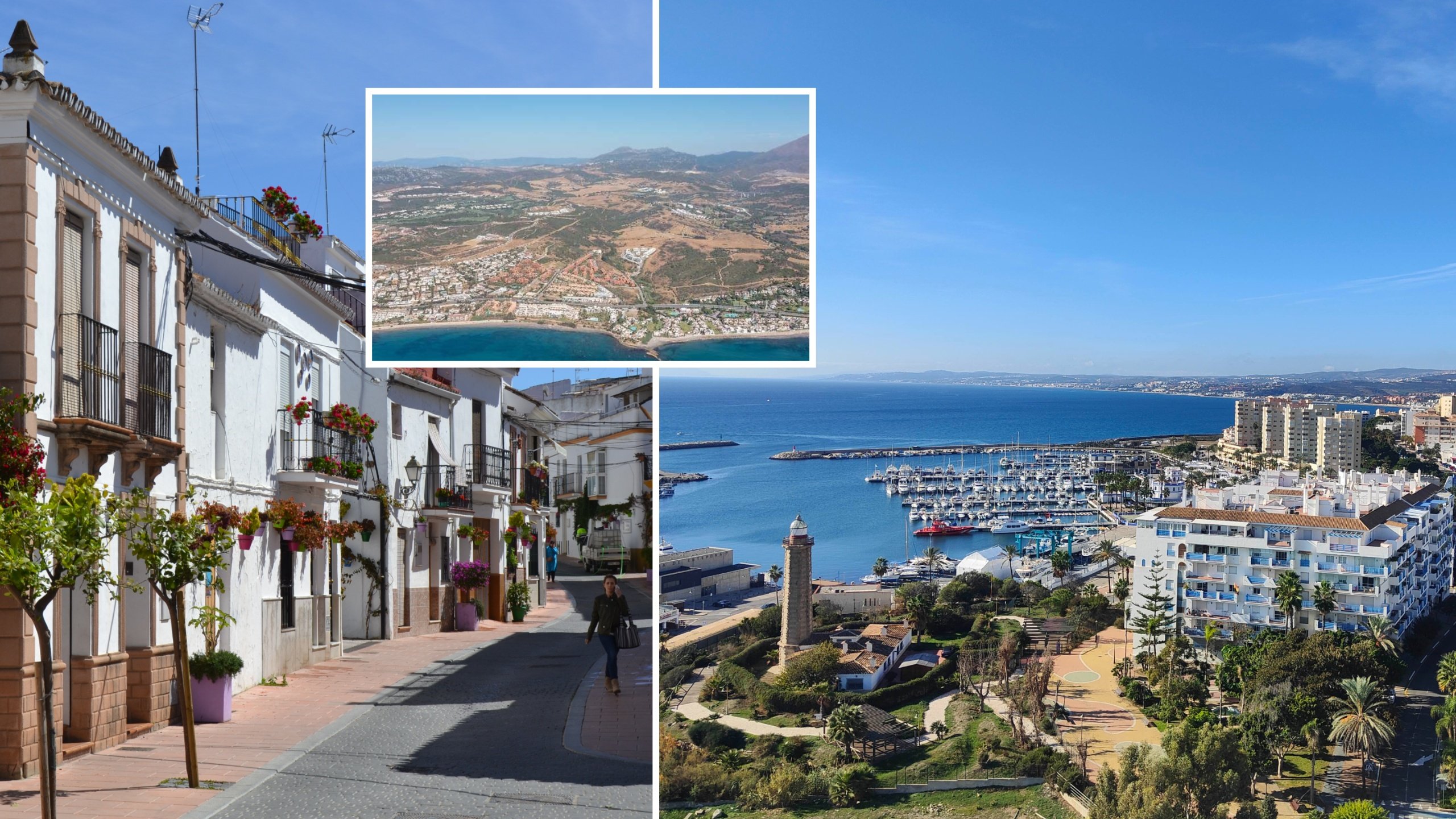
ESTEPONA has become one of the Costa del Sol’s most frenetic property markets, with thousands of homes built or sold to local and foreign buyers in recent years.
The rush has seen the municipality regularly lauded for high-end development and brisk construction.
But – as with so many things on the Malaga coast – beneath the glossy exterior and impressive-sounding numbers lies an uglier reality.
It is most visibly revealed by the plight of dozens of families who currently find themselves homeless after shelling out for expensive apartments in the town.
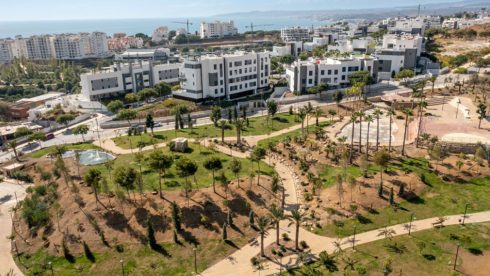
There are 72 homes in the Alma development at the top of Avenida Juan Carlos that remain without electricity more than seven months after completion.
The situation has sparked protests, legal action and a battle of responsibility between residents, the town hall and the electricity company.
The problem can be traced back to 2021, when the town hall began procedures to reserve electrical capacity for the sector.
According to Endesa, the required documentation was never completed at that stage, so the formal power reservation was not processed.

The company later suspended applications for supplies of more than 1 megawatt in August 2024 amid grid saturation on the Costa del Sol.
The result is that a finished apartment block with a valid licence remains powerless.
Estepona’s municipal government has asked Endesa to activate supply to the apartment block and has written to the national minister for ecological transition warning that the regional grid is showing ‘signs of incapacity’ to provide electricity for new developments.
However, residents say they remain in limbo, unable to live in, register or mortgage homes they bought years ago.
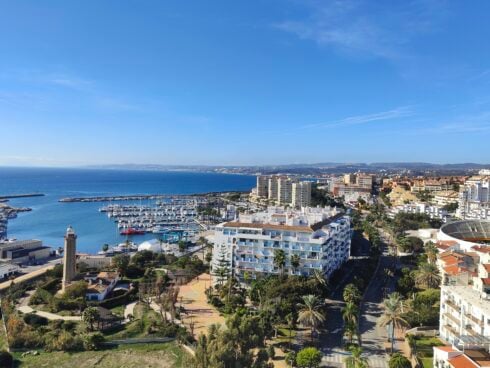
The Alma case, while dramatic, is a symptom of a much broader pattern.
Estepona’s population has grown markedly in recent years — from about 67,000 in 2011 to nearly 80,000 in 2025 — placing ever greater strain on municipal systems.
Despite this demographic surge and a seemingly continuous pipeline of new construction, fundamental capacity planning for infrastructure has lagged.
In 2024 alone, 3,162 high-end homes were sold in Estepona — part of the 8,708 luxury transactions recorded across Marbella, Estepona and Benahavis, according to figures reported by Cadena SER.
Electricity supply across the Costa del Sol is under pressure, with Endesa confirming that the provincial grid is operating at or near capacity and applications for large power supplies frozen pending the activation of a long-delayed substation in nearby Benahavís.
That substation has been held up for more than five years owing to disputes involving the landowner.

Water infrastructure, already challenged by periodic drought conditions on the Costa del Sol, has been improved in parts of the municipality but not always at a scale that keeps up with new demand.
The town hall announced the construction of a 15,000 cubic metre water tank at Las Mesas — a €3.7 million investment — explicitly framed as a way to guarantee supply and support areas of demographic growth
But this and recent work on network upgrades reflect efforts to catch up rather than evidence of proactive capacity planning.
READ MORE: Famous five-star Kempinski Hotel in Estepona to be rescued after buyout by famous luxury chain
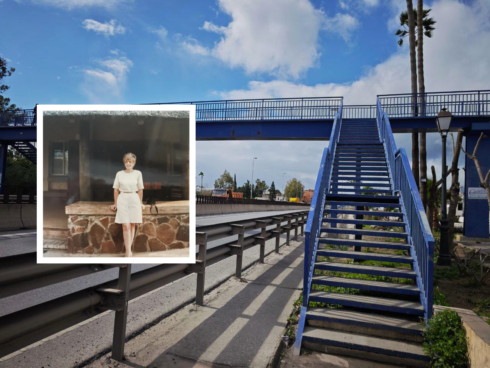
Roads around Estepona illustrate similar strain. The A-7 coastal highway, the main artery linking the town with Marbella and further east, routinely experiences heavy congestion at peak times.
Traffic modelling and transport planning experts have long called for investment in access roads and junction improvements, but major upgrades trail behind the rapid expansion of housing estates and residential clusters that depend on the same road network.

Drainage and environmental resilience are also pressing concerns.
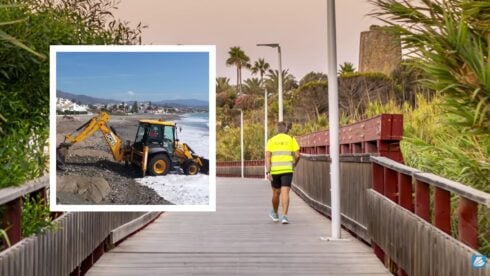
Wildfire damage in the Sierra Bermeja has increased flood risk across the western Costa del Sol, according to a University of Malaga (UMA) study, and the interplay between expanding urban sprawl and stormwater capacity has created greater vulnerability to intense rainfall events.
Such risks demand infrastructure investment in drainage and flood defences that simply has not matched the pace of development.
Social infrastructure — including healthcare provision, schools and community services — is also being required to absorb a larger and more diverse population.
While new facilities have been added, reviews by analysts of municipal planning documents suggest that service expansion often follows population growth rather than anticipating it.
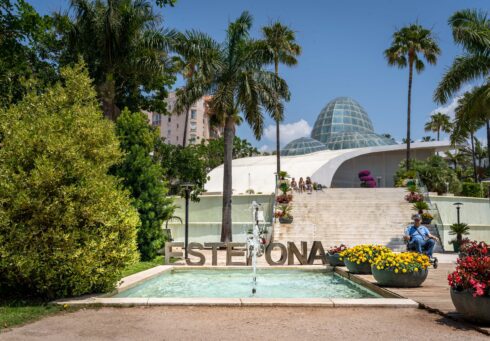
It is easy to see why Estepona’s development model has been attractive.
The town’s real-estate market has thrived, appealing to well-heeled buyers and long-term investors alike, and new builds often sell quickly.
But the Alma case lays bare the cost of building homes without first ensuring that the wires, pipes and roads that make them liveable are in place.
Local councillor Emma Molina told the Olive Press the episode exposed a deeper issue with how growth has been managed in Estepona.
“The services are the same as before — the same roads, the same schools, the same access points into and out of the town,” she said.
“This way of building, without moving towards an organised and sustainable model, is a serious problem.
She added that without improvements to infrastructure and basic provision, ‘it will simply become difficult to live here.’
Residents at Alma talk not of politics but of practicalities — wanting only the basic functionality of a home: light, water, access and security.
“If there’s a licence, there should be electricity,” one affected buyer told local press, reflecting a frustration echoed in protests outside the town hall and in letters written to Endesa and national ministries.
Estepona may still sell the lifestyle, but the lights will not turn on until the infrastructure matches the ambitions that sit behind its skyline.
Click here to read more Property News from The Olive Press.