

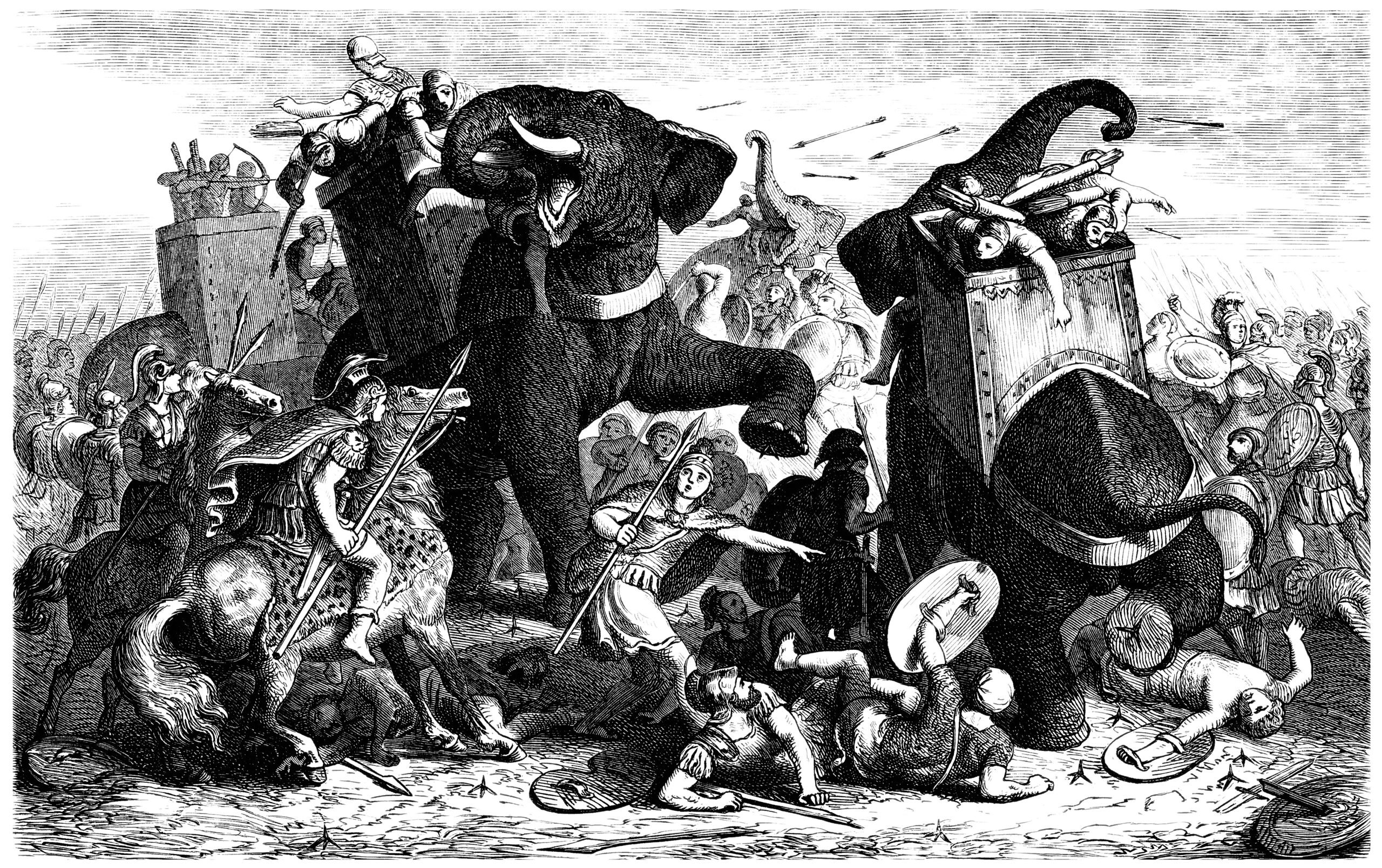
AN ELEPHANT bone discovered at a Spanish archaeological site may provide the first physical proof that war elephants used by Hannibal’s army once marched through the Iberian Peninsula, according to a new study.
Archaeologists uncovered the bone during excavations at Colina de los Quemados, a large ancient settlement in the city of Córdoba, southern Spain.
The find is being described as historic because confirmed skeletal remains of war elephants from the Punic Wars have never before been found in Spain or western Europe.
The bone is a wrist bone from the right forefoot of an elephant and is roughly the size of a baseball.
Researchers say it dates from between the late fourth and early third centuries BCE, placing it firmly within the period of the Second Punic War.
The Punic Wars were fought between Rome and the Carthaginian Empire between 264 and 146 BCE.
Carthaginian general Hannibal famously used war elephants in his campaigns, including his legendary march towards Rome.
READ MORE: Archeological find in Estepona: A dozen 13th century Muslim tombs during works on new central boulevard
Until now, evidence of these elephants came only from ancient texts, coins and artworks.
The Córdoba bone provides rare physical confirmation that elephants were present on Iberian battlefields.
The bone was found beneath a collapsed adobe wall in a destruction layer that shows clear signs of armed conflict.
In the same archaeological layer, researchers also uncovered siege weapon ammunition and a Carthaginian coin minted between 237 and 206 BCE.
Experts say this strengthens the link between the bone and Carthaginian military activity in the region.
The exact species of elephant remains unclear.
Scientists believe it could have been an Asian elephant or a now-extinct North African elephant, both of which were used by Carthaginian forces.
Poor preservation of the bone means DNA testing was not possible.
Even so, archaeologists say the discovery is one of the clearest pieces of direct evidence ever found for the use of war elephants in classical Europe.
The study was published in the Journal of Archaeological Science.
Click here to read more La Cultura News from The Olive Press.