
IT has been a rough few weeks, but Spain’s beleaguered rail industry finally has something to cheer about.
Saudi Arabia has struck a multi-billion-euro deal to purchase 20 new high-speed trains from Spanish locomotive manufacturer Talgo, the company announced on Sunday.
In a statement, Talgo said the agreement also covers maintenance for the trains and would add €1.33 billion to its order backlog, bringing it to a record total of nearly €6 billion.
The new trains will be supplied to Saudi Arabia Railways and will operate on a high-speed line connecting major cities including Mecca, Medina and Jeddah which has used Talgo rolling stock since 2018.
Each new train will operate at a maximum speed of 300km/h and will consist of two power cars and 13 passenger coaches, offering a total capacity of 417 seats.
The agreement was hailed as an ‘important agreement’ by under-fire transport minister Oscar Puente on social media.
He wrote on X: “We guarantee the continuity of Renfe [Spain’s national rail operator] as manager of Saudi high-speed rail until 2038 and the purchase of 20 new trains from Talgo with an injection of more than €2.8 billion for our companies.
“An important demonstration of confidence in our railway model.”
The deal represents a much-needed boost of confidence for a sector rocked by a string of fatal accidents last month.
On 18 January, two high-speed trains derailed in Adamuz, Cordoba in Spain’s deadliest rail accident since 80 people were killed in Santiago de Compostela in 2013.
Some 46 people were killed and hundreds injured after the rear carriages on a Madrid-bound Iryo service carrying over 300 passengers flipped onto an adjacent line and collided with an oncoming train destined for Huelva.
A preliminary report published by the rail accident investigation commission suggested that the crash was caused by a 30cm fracture in the track.
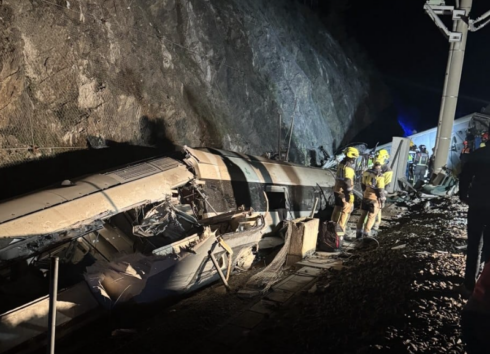
Two days later, a train driver was killed and over 40 passengers hurt on Barcelona’s Rodalies network after a R4 line service came off the tracks between Gelida and Sant Sadumi.
The train derailed after colliding with a retaining wall that collapsed onto the line following a spell of heavy rain.
Two days later, six people were injured in Cartagena, Murcia after a passenger train collided with a crane arm that swung onto the track.
The spate of accidents have raised urgent questions about the state of infrastructure on Spain’s rail network – often hailed as one of Europe’s best – and intensified pressure on government figures including Puente and prime minister Pedro Sanchez.
On Monday, more than 330 high-speed services were cancelled after Semaf, the train drivers’ union, led a walkout in protest at what it slammed as ‘the constant deterioration of the rail network’.
But the three-day nationwide strike came to an end two days early after trade union leaders and representatives from the transport ministry finally thrashed out a deal at the fourth attempt.
Click here to read more Spain News from The Olive Press.