
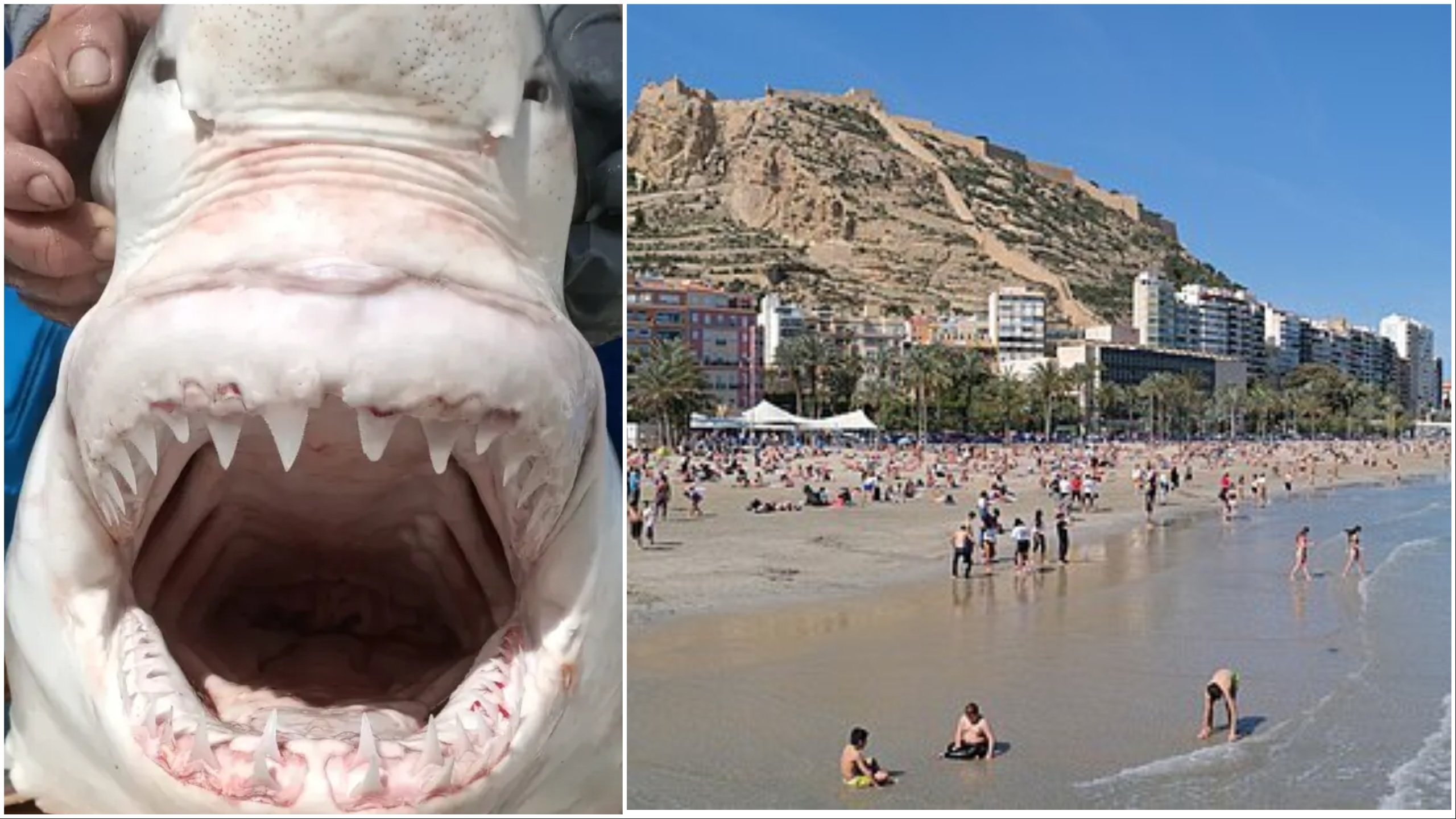
SCIENTISTS have confirmed a 2023 sighting of the apex predator in Mediterranean waters.
The juvenile shark was accidentally caught by tuna fishermen in April 2023, around 20km off the coast of Denia and Javea.
It measured 210cm and weighed between 80 and 90kg.


Adult great whites can measure up to six meters and weigh a whopping two tonnes.
Researchers from the Spanish Institute of Oceanography (IEO-CSIC) verified the sighting earlier this week confirming that the shark was a 98% genetic match for a great white.
Their study offers new insights into the shark’s presence in Spain, indicating its “persistent, but extremely infrequent presence in the Spanish Mediterranean.”
This is one of the rare confirmed sightings of the species in Spanish seas in recent decades.
The great white shark, an apex predator in the ocean ecosystem, was last recorded in Spain in June 2018 when marine researchers spotted a five-meter-long shark near Cabrera, an island in the Balearics.
Another group of fisherman accidentally caught great white over five meters in length near Bolonia Beach in Tarifa June 2015.
Great white sharks are critically endangered in the Med, where the population has declined by an estimated 70% in 40 years, with illegal fishing contributing to their vast decline.
Although great white sharks are among over 20 Mediterranean species protected by international law, prohibiting their capture and sale, researchers monitoring fishing ports along North Africa’s Mediterranean coast recorded at least 40 killings in 2025 alone.
READ MORE: Revealed: Which Costa del Sol beaches are more prone to maddening jellyfish invasions – and why
Areas of the Mediterranean, specifically the Strait of Sicily and Tunisia’s Gulf of Gabes, are considered key breeding grounds for the species.
Scientists suggest the shark was likely born in these central Mediterranean ‘nurseries’ and later migrated towards Spain.
Each confirmed sighting helps researchers understand the species’ distribution and movements in the Mediterranean.
Click here to read more Animals News from The Olive Press.